
Here are today’s most important updates from the realm of Science and Space.
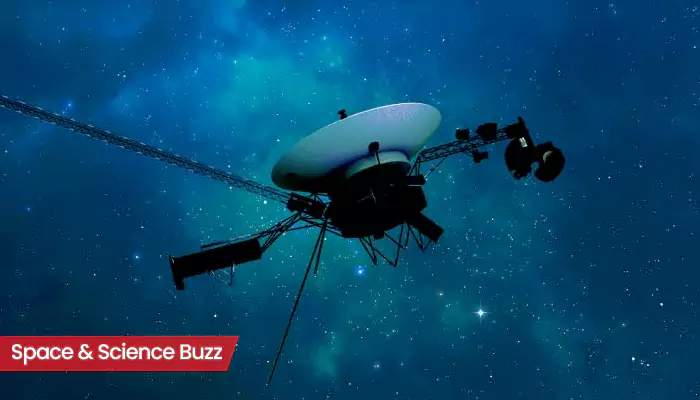
NASA Makes Tough Call to Extend Voyager 1’s Lifespan
NASA engineers...

Here are today’s most important updates from the realm of Science and Space. Astronauts Share Clip Of Comet Breaking Apart In Real Time The European Space Agency (ESA) has shared dramatic and rare footage of a comet breaking apart in real time. The clip, shared on Instagram, showed NASA's Hubble Space Telescope capturing comet C/2025 K1 (ATLAS) in the act of fragmenting that occurred in November 2025. The space agency shared a sequence of three images taken on November 8, 9 and 10 showing the comet splitting into at least four distinct pieces, each surrounded by its own cloud of gas and dust, called a coma. One of the smaller fragments even split again during the three-day observation window. ESA explained that the comets are "ancient leftovers" from the birth of our Solar System, and over time, sunlight and cosmic radiation reshape them. Scientists Suggest Existence of Mysterious "Fifth Force" ...
Here are today’s most important updates from the realm of Science and Space. Astronauts Share Clip Of Comet Breaking Apart In Real Time The European Space Agency (ESA) has shared dramatic and rare footage of a comet breaking apart in real time. The clip, shared on Instagram, showed NASA's Hubble ...
Here are today’s most important updates from the realm of Science and Space. Astronauts Share Clip Of Comet Breaking Apart In Real Time The European Space Agency (ESA) has shared dramatic and rare footage of a comet breaking apart in real time. The clip, shared on Instagram, showed NASA's Hubble ...
Here are today’s most important updates from the realm of Science and Space. Astronauts Share Clip Of Comet Breaking Apart In Real Time The European Space Agency (ESA) has shared dramatic and rare footage of a comet breaking apart in real time. The clip, shared on Instagram, showed NASA's Hubble ...













buzztribe.news is our initiative through which we wish to create a journalistic impact that acts as the foundation of an informed and happy society. In a world that’s changing fast, joy is fleeting, and the news is disturbing, we bring you your daily dose of buzzworthy news that has the “joy of knowledge” and the “happiness in truth” at its core.
More from Buzztribe News
Get in Touch
39A,
Shanti Kunj Main, Sector D,
Vasant Kunj,
New Delhi
110070
India