Science & Space Roundup: Top News of the Day (March 25)
- Rohit Chatterjee
- 6 months ago
- 3 minutes read

Here are today’s most important updates from the realm of Science and Space.
New Study Identifies 45 Worlds With Life-Friendly Conditions
Astronomers have identified 45 rocky planets beyond our solar system that may have the right conditions to support life, according to a new study published in the Monthly Notices of the Royal Astronomical Society. With more than 6,000 exoplanets discovered so far, scientists say finding life beyond Earth is a challenging task. To simplify the search, researchers have narrowed down a list of planets that are most likely to host liquid water-an essential ingredient for life. The study includes well-known planets such as Proxima Centauri b, TRAPPIST-1f, and Kepler-186f, along with lesser-known candidates like TOI-715 b. These planets orbit within what scientists call the "Goldilocks zone," where temperatures are suitable for liquid water to exist.
Radiation From Sunken Sub Could Threaten Ocean Ecosystems

A Cold War-era Soviet nuclear submarine lying deep in the Norwegian Sea is continuing to leak radioactive material, according to a new scientific survey. The submarine, K-278 Komsomolets, sank in April 1989 after a fire onboard, killing most of its crew. It carried a nuclear reactor and two nuclear torpedoes, raising long-term environmental concerns. A team led by marine radioecologist Justin Gwynn from Norway's Radiation and Nuclear Safety Authority has now analysed data from a detailed survey of the wreck. Their findings show that while the submarine is leaking radiation, the overall impact on the surrounding environment remains limited so far.
Living on the Moon: How Long Artemis IV Crew Will Stay
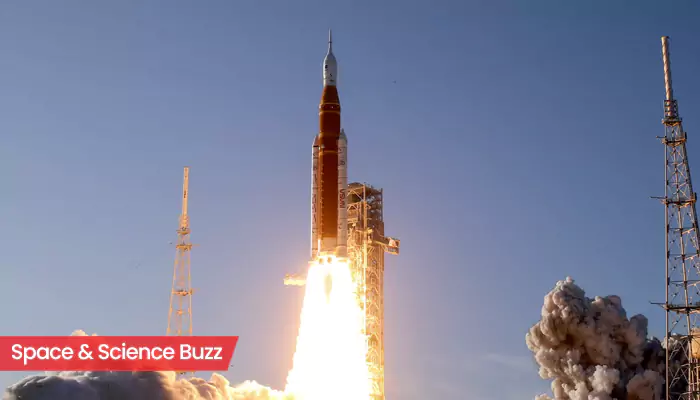
Nasa has revealed new details about how long astronauts will live and work on the Moon during its first crewed lunar landing in over five decades, marking a major step forward in the agency’s Artemis programme. The mission, known as Artemis IV, will see four astronauts travel to lunar orbit, with two of them descending to the Moon’s south polar region, an area of intense scientific interest due to the presence of water ice deposits. According to Nasa’s updated architecture, Artemis IV will last approximately 21 days from launch to return. During this time, the two astronauts assigned to the surface mission will be living and conducting experiments on the Moon. Artemis-IV mission is a significant upgrade over the Apollo missions, where astronauts typically spent just a few days on the lunar surface.
Physics Meets Road Trip: Antimatter Experiment Breaks New Ground
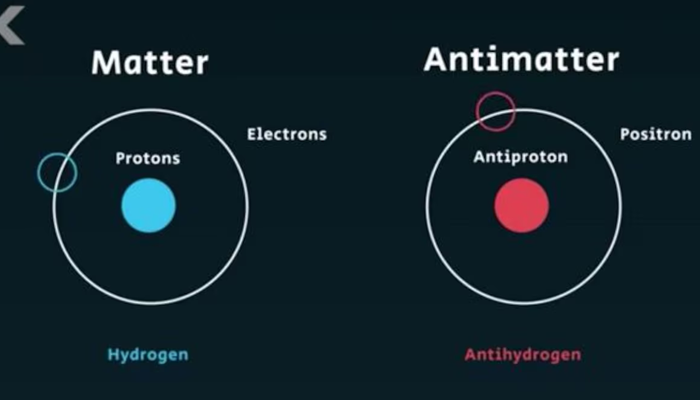
If this so-called antimatter comes into contact with actual matter, even for a fraction of an instant, it will be annihilated in a quick flash of energy. So experts at the European Organization for Nuclear Research, known as CERN, will, over the course of four hours Tuesday, are taking about 100 antiprotons on the road. The antiprotons are suspended in a vacuum inside a specially designed box and held in place by supercooled magnets. After easing them from the lab and onto the truck, the scientists are taking the antimatter on a half-hour drive to test how - if at all - the infinitesimal particles can be transported by road without seeping out. If all goes well, the antiprotons will be returned back to the lab.