Here are today’s most important updates from the realm of Science and Space.
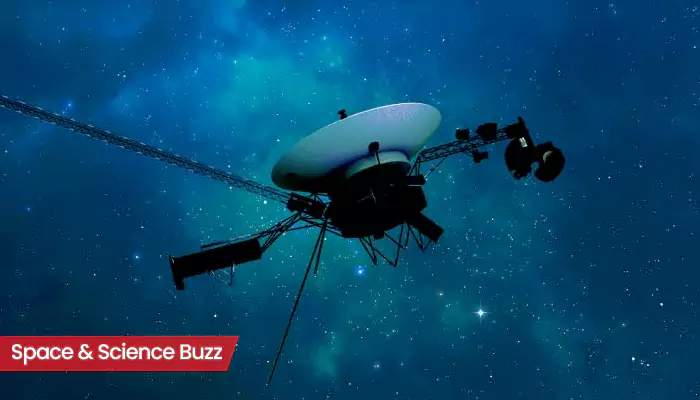
NASA Makes Tough Call to Extend Voyager 1’s Lifespan
NASA engineers have turned off another science instrument aboard Voyager 1, choosing to sacrifice data collection to extend the spacecraft's life. The move is part of a deliberate power-saving strategy aimed at keeping the 47-year-old probe sending signals from interstellar space into the 2030s. The space agency confirmed that mission engineers at Jet Propulsion Laboratory (JPL) in Southern California sent commands on April 17 to shut down an instrument called the Low-energy Charged Particles experiment (LECP). As per the US-based space agency, this move was the best course of action to keep this nuclear-powered spacecraft, which is running low on power, to keep it going beyond our solar system.
Calmer Young Stars May Create Better Conditions for Life

A new study has revealed an important change in how young stars behave, offering fresh clues about the chances of life beyond Earth. Scientists have found that stars similar to our Sun become quieter and dim faster in X-rays than earlier believed. The findings come from observations made using NASA's Chandra X-ray Observatory, with the research published in The Astrophysical Journal on Monday, reported NASA. According to NASA, unlike the scenario shown in the film Project Hail Mary, where stellar dimming is linked to a threat, scientists say this natural quieting of young stars could actually support the development of life on nearby planets.
Comet Disintegrates in Fiery Close Encounter With Sun
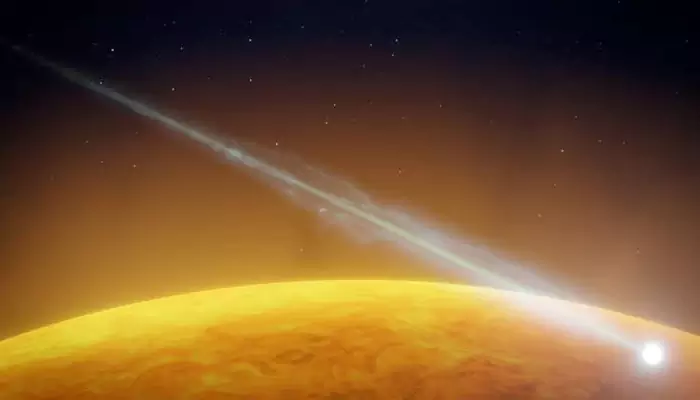
A comet that recently moved very close to the Sun has been destroyed, scientists confirmed after observing its final moments. The event has provided important insights into how comets behave under extreme heat, reported NASA. On April 4, comet C/2026 A1 (MAPS) moved toward the Sun, passing at a distance about twice as far from the Sun as the Moon is from Earth. Scientists and comet watchers closely followed its journey to see if it would survive the intense heat. The Solar and Heliospheric Observatory (SOHO), a joint mission of NASA and the European Space Agency, tracked the comet using a special instrument called a coronagraph. This device blocks the bright light of the Sun, allowing scientists to observe faint objects like comets.
The Mystery of Final Dreams Gets a Scientific Clue

New research suggests that people in the final days of their lives tend to experience remarkably similar dreams and visions, offering comfort, and occasionally distress, as death approaches. Scientists from the Azienda USL-IRCCS di Reggio Emilia in Italy questioned 239 palliative care workers, including nurses, hospice volunteers and psychologists, about the dreams their dying patients had described to them. Their findings, published in the journal Death Studies, point to a clear pattern of recurring images and themes in the final stage of life. Many patients reported vivid dreams of being reunited with loved ones who had already passed away. Others described visions linked to the idea of crossing over - bright lights, staircases and open doorways. One patient recalled dreaming of her late husband telling her he was waiting for her. Another described climbing barefoot towards a glowing open door. A third recounted seeing a white horse galloping along a shoreline.