
Here are today’s most important updates from the realm of Science and Space.
Texas Witnesses Fiery Meteor Explosion Across the Night Sky
A bright and fast-moving object in the sky surprised many people in Texas on March 21, drawing attention and curiosity across the region. Witnesses reported seeing a glowing fireball, followed by loud sounds, making the event both exciting and unusual. On March 21 at 4:40 PM (CDT), eyewitnesses in Texas observed a brightly glowing fireball in the sky. This meteor was sighted at an altitude of approximately 49 miles above Stagecoach, located northwest of Houston. It traveled southeastward at a speed of 35,000 miles per hour and disintegrated at an altitude of about 29 miles above Bammel, situated west of Cypress Station, reported NASA.
Sky Turns Emerald: Magnetic Storm Sparks Aurora Display

The skies over Russia recently turned into a stunning display of green lights as a magnetic storm lit up the atmosphere. The rare and beautiful sight was shared by the Russian Embassy in Kenya on social media, drawing attention from viewers online.
The embassy stated in its post that the northern lights shone in the skies over Russia due to a powerful magnetic storm on Earth. The beauty of the northern lights, known as the aurora borealis, was clearly visible in the photos. The green glow added to the scene, making it a captivating and impressive sight.
Jezero Crater Holds Fresh Clues to Mars’ Watery Past
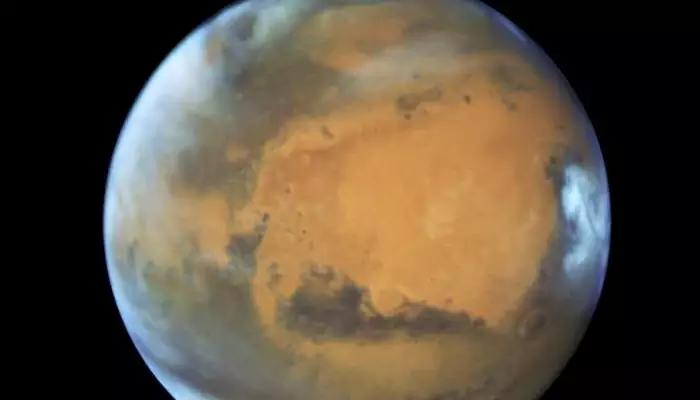
Scientists have found new clues that water once flowed on Mars, helping us better understand the planet's past. Using advanced tools, a rover has uncovered hidden signs beneath the surface that point to an ancient, water-rich environment, reported CGTN. Using ground-penetrating radar, NASA's Perseverance rover has discovered subsurface traces of an ancient river delta on Mars-among the oldest evidence found to date-indicating that water once flowed across the planet's surface.
From 2015 to 2025, Temperatures Hit New Highs Worldwide

The amount of heat trapped by the Earth reached record levels in 2025, with the consequences of such warming feared to last for thousands of years, the UN warned. The 11 hottest years ever recorded were all between 2015 and 2025, the United Nations' WMO weather and climate agency confirmed in its flagship State of the Global Climate annual report. Last year was the second or third hottest year on record, at about 1.43 Celsius above the 1850-1900 average, the World Meteorological Organization said. "The global climate is in a state of emergency. Planet Earth is being pushed beyond its limits. Every key climate indicator is flashing red," said UN Secretary-General Antonio Guterres.