Here are today’s most important updates from the realm of Science and Space.
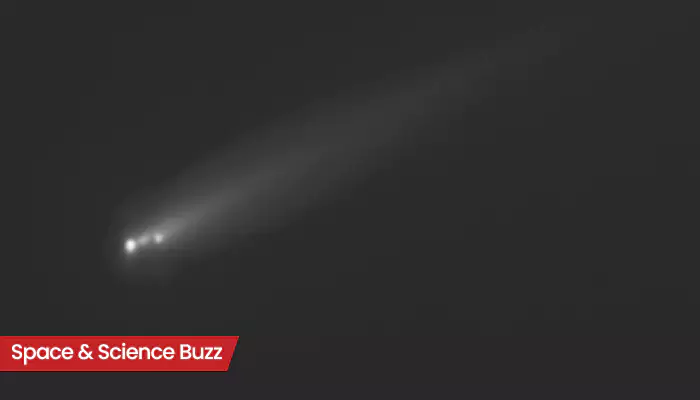
Astronauts Share Clip Of Comet Breaking Apart In Real Time
The European Space Agency (ESA) has shared dramatic and rare footage of a comet breaking apart in real time. The clip, shared on Instagram, showed NASA's Hubble Space Telescope capturing comet C/2025 K1 (ATLAS) in the act of fragmenting that occurred in November 2025. The space agency shared a sequence of three images taken on November 8, 9 and 10 showing the comet splitting into at least four distinct pieces, each surrounded by its own cloud of gas and dust, called a coma. One of the smaller fragments even split again during the three-day observation window. ESA explained that the comets are "ancient leftovers" from the birth of our Solar System, and over time, sunlight and cosmic radiation reshape them.
Scientists Suggest Existence of Mysterious "Fifth Force" In Our Solar System
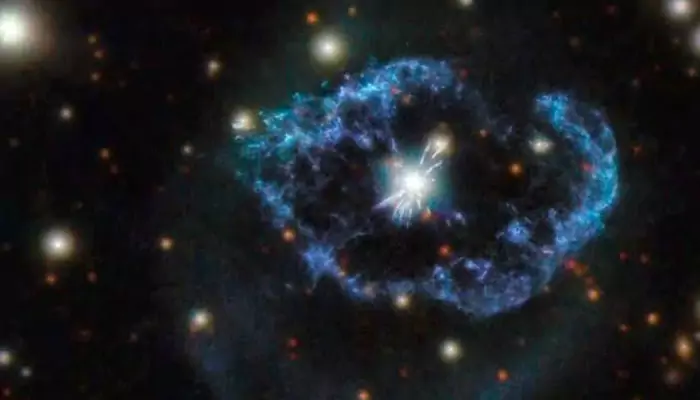
We know about the four fundamental forces of nature: gravity, electromagnetism, the strong nuclear force, and the weak nuclear force. They govern all physical interactions in the universe. But scientists believe there's a mysterious "fifth force" as well, Science Daily reported. A NASA physicist says we might need to look closer to home, not just at distant galaxies, to find evidence of the new fundamental force of nature. In a paper published in Physical Review D, Dr Slava G Turyshev of NASA's Jet Propulsion Laboratory argues that precision experiments within our own solar system could reveal a "fifth force" tied to dark energy and dark matter. The four already known forces don't fully explain the universe. Gravity works beautifully for planets, but it can't account for why galaxies hold together or why the universe's expansion is accelerating. That gap is usually filled by "dark matter" and "dark energy". But no one knows what they are. It might be evidence of a fifth force.
Fungi Can Survive Mars-Like Conditions Despite Strict Spacecraft Cleaning: Study
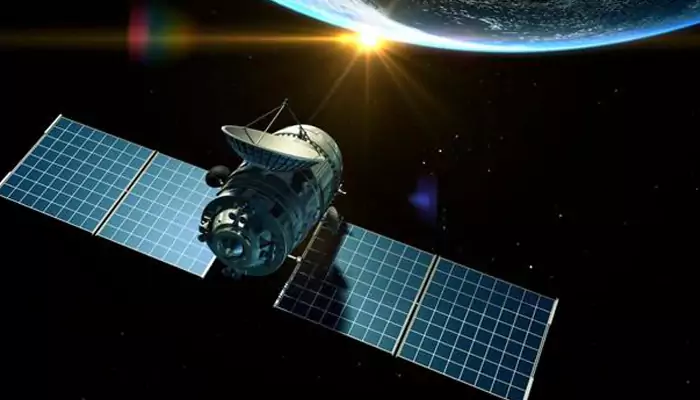
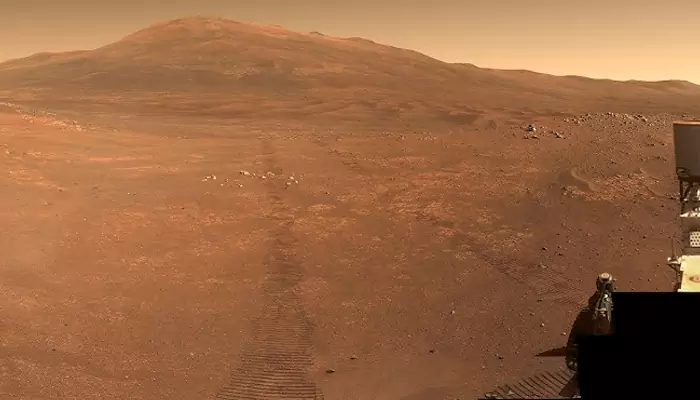
Scientists often take extreme care to ensure that spacecraft sent to other planets do not carry microbes from Earth. Before launch, equipment is cleaned in advanced high-tech cleanrooms to reduce any chance of contamination. So far, most concerns have focused on bacteria. However, a new study has now turned attention to fungi and their surprising ability to survive harsh conditions, reported BBC. The study focused on a small filamentous fungus called Aspergillus calidoustus. This fungus does not produce mushrooms but reproduces through tiny spores known as conidia. It is commonly found in indoor environments such as plumbing systems and ventilation units. These experiments showed that the fungal spores were able to survive even in these extremely harsh conditions.
Protein Found In Whales Could Help Humans Live Up To 200 Years
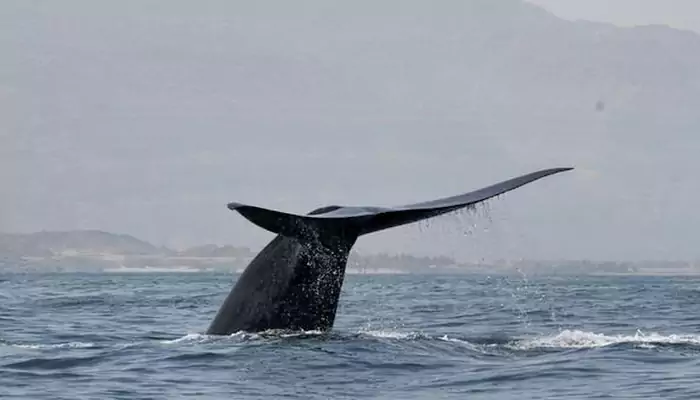
Scientists may be closing in on an important clue to extending human lifespan and it comes from one of the ocean's largest inhabitants. Bowhead whales, known for their extraordinary longevity, can live as long as 200 years while remaining unusually resistant to disease, making them a compelling focus for researchers studying the biology of aging. Now, researchers want to know if their biology could help humans do the same. A new study published in the journal Nature, led by scientists at the University of Rochester, found that the answer may lie in a protein called CIRBP - which plays a key role in repairing double-strand breaks in DNA, a type of genetic damage that can cause disease and shorten lifespan.