
Here are today’s most important updates from the realm of Science and Space.
After Years of Mystery, Astronomers Find Source of Galactic Pulses
Scientists may have found the source of the mysterious signals coming from the centre of our galaxy, the Milky Way. Detection of these strange signals led to bizarre theories linked to aliens and extraterrestrial life. But the scientists at King's College London have proposed that the signals, detected by space telescopes, are believed to be linked to "excited dark matter".
"When we look at well-known astrophysical events, like star explosions, they haven't been able to provide a full explanation for mysteries like the specific energy and shape we've observed coming from the centre of the Milky Way," said lead author.
Brilliant Fireball Stuns Europe as Experts Search for Answers

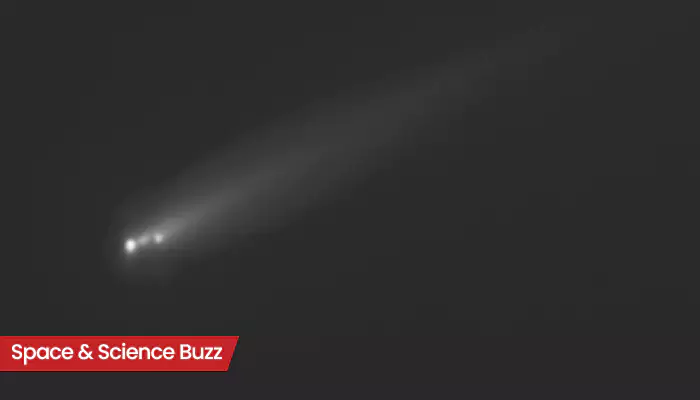
A bright fireball streaked across the skies of Western Europe Sunday evening (March 8), witnessed by people in Belgium, France, Germany, Luxembourg, and the Netherlands. The mysterious light left a trail of excitement and curiosity among those who witnessed it as they shared videos and photos on social media, asking what it was. The fireball, estimated to be a few meters in diameter, moved from southwest to northeast, glowing for about six seconds before fracturing into pieces at approximately 18:55 CET (17:55 UTC). The event was captured by meteor cameras, mobile phones, and other cameras, with some observers reporting audible sounds. Although it's not clear what exactly it was, one house was reported to have been struck by small pieces of the resulting meteorites in the city of Koblenz in the west of Germany. There are no reported injuries.
Prehistoric Surprise: 200-Million-Year-Old Reptile Walked on Two Legs

Scientists have discovered a new ancient reptile species that once lived in what is now the United States. The creature existed between 225 and 201 million years ago, during a time when some ancestors of modern crocodiles were able to walk on two legs, reported Newsweek. The discovery was shared by paleontologists from the University of Washington and the Burke Museum of Natural History and Culture in Seattle. Researchers reported that this newly identified species belongs to a group of reptiles called shuvosaurid. Fossils of this creature were found in Arizona's Petrified Forest National Park, a region renowned for its large deposits of fossilized wood.
Scientists Explore Cannabis as Potential Weapon Against Fatty Liver

Researchers from Hebrew University of Jerusalem say compounds found in cannabis could offer a potential new way to treat one of the world's most common liver diseases. The study, published in the British Journal of Pharmacology, found that two cannabis-derived compounds, Cannabidiol (CBD) and Cannabigerol (CBG), significantly reduced liver fat and improved metabolic health in experimental models. Unlike Tetrahydrocannabinol (THC), the psychoactive component of cannabis, both CBD and CBG do not create a "high", making them potential candidates for long-term medical treatments. The condition targeted in the research is Metabolic dysfunction-associated steatotic liver disease (MASLD), previously known as fatty liver disease.