Here are today’s most important updates from the realm of Science and Space.
Earth Without the Moon? Experts Reveal What Could Happen
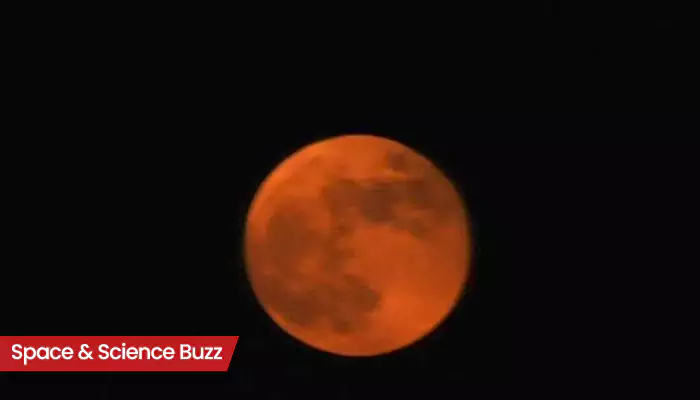
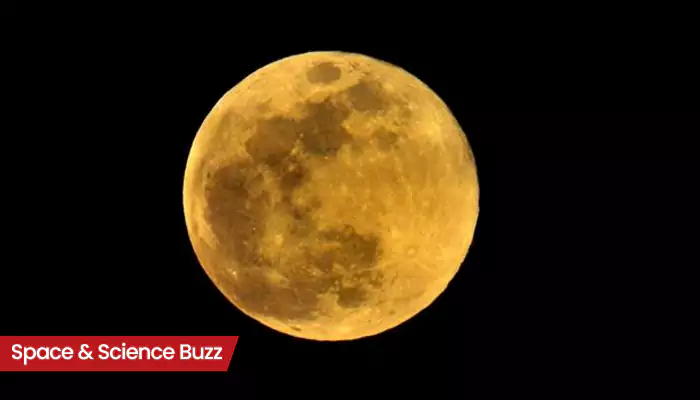
The Moon - Earth's closest celestial neighbour - is slowly shrinking as its interior cools, according to research by scientists studying lunar geology. While the process has been unfolding for billions of years, new analysis suggests the contraction may be happening faster than previously estimated. Researchers at the National Air and Space Museum's Centre for Earth and Planetary Studies say the phenomenon is linked to the gradual cooling of the Moon's interior. As the Moon loses heat over time, its interior contracts, causing the surface crust to wrinkle and compress. The discovery builds on work by Thomas R Watters, a senior scientist emeritus at the centre, who first presented evidence in 2010 that the Moon has been shrinking over geological time.
Shrinking Moon Raises Questions for Artemis and Beyond
The Moon, Earth's closest celestial neighbour, is shrinking at a faster rate than previously thought. According to scientists at the National Air and Space Museum's Center for Earth and Planetary Studies, this phenomenon is caused by the Moon's cooling interior, which is leading to a gradual contraction of its surface. The process has been ongoing for billions of years, but recent research suggests it's happening more rapidly than estimated. For the first time in 2010, Tom Watters, a senior scientist emeritus at the Center for Earth and Planetary Studies, found evidence that the Moon is gradually shrinking. Researchers are working to understand the Moon's internal dynamics and how its shrinking will impact future exploration. By studying the Moon's tectonic activity, scientists hope to gain insights into its history and evolution.
As SpaceX Debris Grows, India Turns to NETRA for Protection

When you look at the night sky, the shimmering trail of SpaceX’s Starlink satellites might look like a sign of progress. But beneath that glow, a double-edged sword is hanging over our planet. For a long time, the world thought that burning up old space junk in the atmosphere was a clean way to get rid of it. Science suggests we were wrong. The scale of this expansion is set to explode, with SpaceX recently announcing a massive surge in its second-generation Starlink Mobile satellites. Starting in mid 2027, each Starship launch will carry 50 of these V2 satellites, aiming to deploy 1,200 units within just six months for global 5G coverage from space.
Giant Predator From the Sahara Rewrites Dinosaur History
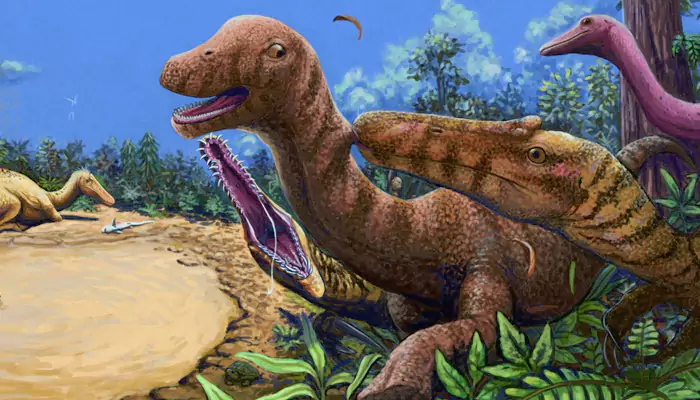
Paleontologists have announced the discovery of a new species of Spinosaurus, a large meat-eating dinosaur that may have rivaled Tyrannosaurus rex in size. The finding provides fresh insight into the diversity and lifestyle of these prehistoric predators.
This newly discovered species has been named Spinosaurus mirabilis. It existed on Earth approximately 95 to 100 million years ago. Its fossils were found in a remote area called Zenguebi, Niger, in the Sahara Desert, reported Fox News. The study shows that Spinosaurus mirabilis was a shallow-water predator, its primary diet consisting of fish. Although its habitat was approximately 600 miles within the ancient Tethys Sea, it was well adapted to the watery environment.