
Here are today’s most important updates from the realm of Science and Space.
Space Station Captures India Sparkling Under the Night Sky
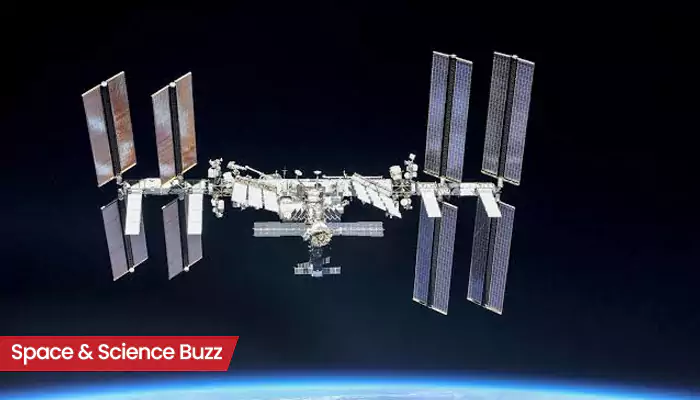
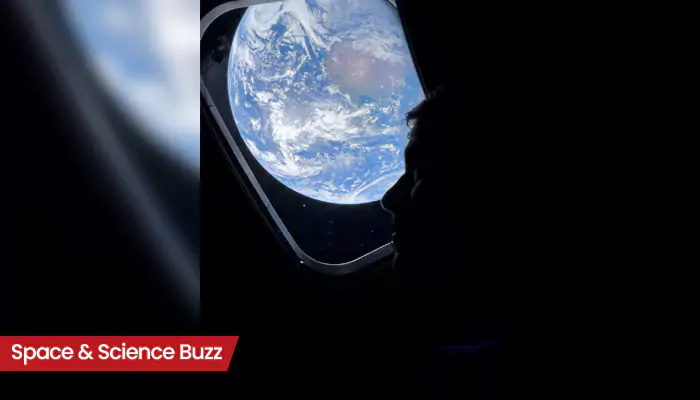
Astronauts aboard the International Space Station (ISS) have shared a breathtaking set of photos showing India glowing at night. These images, posted on social media platform X (formerly Twitter), capture the country's glowing cities from thousands of kilometres above Earth. The photos were taken as the ISS zoomed over the region, offering a unique bird's-eye view that highlights both natural beauty and human activity. The pictures show bright clusters of lights from big cities like Mumbai and Delhi, standing out against the dark Arabian Sea. In the background, you can also make out the faint shape of the towering Himalayas.
Scientists Find Protein That May Help Defeat Malaria

Scientists have made a major breakthrough in the fight against malaria, identifying a unique protein that is essential for the parasite's survival and transmission. The discovery, made by an international team of researchers, centres on a molecule called Aurora-related kinase 1 (ARK1), which acts as a 'traffic controller' during the parasite's cell division and growth process. The team, which includes researchers from the University of Nottingham, National Institute of Immunology (NII) in India, University of Groningen, and the Francis Crick Institute, believes that targeting ARK1 could lead to the development of new antimalaria drugs.
Just Snap a Photo: Study Finds Clue to Detect Rare Disease

A simple photograph of the back of a person's hand could help doctors detect a rare but serious hormone disorder, according to a new study by researchers at Kobe University. The condition, known as Acromegaly, occurs when the body produces too much growth hormone. The disease often develops in middle age and can cause enlarged hands and feet. If left untreated, it can lead to serious health complications and reduce life expectancy by around 10 years. “Because the condition progresses so slowly, and because it is a rare disease, it is not uncommon to take up to a decade for it to be diagnosed," says Kobe University endocrinologist FUKUOKA Hidenori. He further explains, "With the progress of AI tools, there have been attempts to use photographs for early detection, but they have not been adopted in clinical practice.”
From Lava to Rain: Volcanoes Linked to Monsoon Patterns

For billions of people across South and Southeast Asia, the summer monsoon is life itself. It fills rivers, grows crops, and determines whether a year will bring plenty or just drought. But why do these rains swing so wildly from decade to decade? A new study by Dr Wenmin Man at the Institute of Atmospheric Physics, Chinese Academy of Sciences, has found a surprising answer. Analysing climate data and computer simulations spanning the past 1,000 years, the team mapped a striking connection in rainfall patterns across Asia. In simpler terms, it was found that when South Asia gets wetter, Southeast Asia dries up, while northern East Asia tends to mirror South Asia's conditions.