
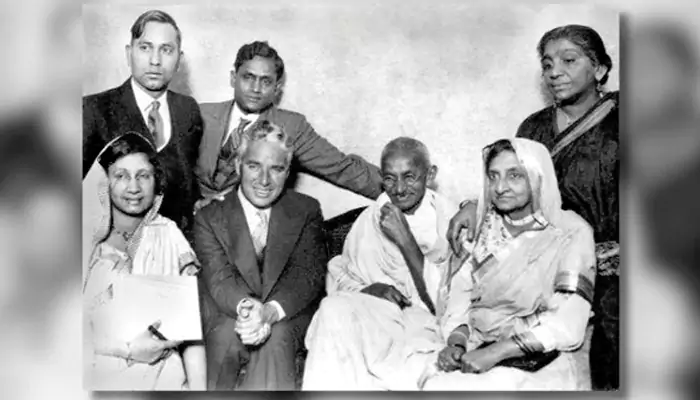
One wanted machines to liberate the working class. The other saw the spinning wheel as salvation. It was brilliantly awkward.
It was 1931, somewher...

Allu Arjun’s Journey: How Arya Created a Star and Pushpa Made Him a Phenomenon! In the ever-evolving landscape of Indian cinema, only a few actors manage to consistently reinvent themselves. Allu Arjun is one such star, a performer whose journey from a charming romantic hero to a rugged mass icon has been nothing short of extraordinary. On his birthday, let’s take a closer look at how he transformed from Arya’s lovable boy-next-door into the unstoppable force of Pushpa. The Breakthrough: Arya and the Rise of a Youth Icon Allu Arjun’s major breakthrough came with Arya, a film that redefined romance for a new generation. His portrayal of a carefree, passionate lover struck a chord with young audiences. The film’s success not only established him as a promising actor but also gave him a distinct identity in Telugu cinema. His expressive acting, stylish looks, and effortless charm made him an instant ...

Allu Arjun’s Journey: How Arya Created a Star and Pushpa Made Him a Phenomenon! In the ever-evolving landscape of Indian cinema, only a few actors manage to consistently reinvent themselves. Allu Arjun is one such star, a performer whose journey from a charming romantic hero to a rugged mass icon ...

Allu Arjun’s Journey: How Arya Created a Star and Pushpa Made Him a Phenomenon! In the ever-evolving landscape of Indian cinema, only a few actors manage to consistently reinvent themselves. Allu Arjun is one such star, a performer whose journey from a charming romantic hero to a rugged mass icon ...

Allu Arjun’s Journey: How Arya Created a Star and Pushpa Made Him a Phenomenon! In the ever-evolving landscape of Indian cinema, only a few actors manage to consistently reinvent themselves. Allu Arjun is one such star, a performer whose journey from a charming romantic hero to a rugged mass icon ...























buzztribe.news is our initiative through which we wish to create a journalistic impact that acts as the foundation of an informed and happy society. In a world that’s changing fast, joy is fleeting, and the news is disturbing, we bring you your daily dose of buzzworthy news that has the “joy of knowledge” and the “happiness in truth” at its core.
More from Buzztribe News
Get in Touch
39A,
Shanti Kunj Main, Sector D,
Vasant Kunj,
New Delhi
110070
India