Could Humans One Day Walk Through Mars’ ‘Crocodile Bridge’? NASA’s Discovery Sparks Big Questions
- Soham Halder
- 5 months ago
- 3 minutes read
A Strange Landscape That Looks Surprisingly Familiar!
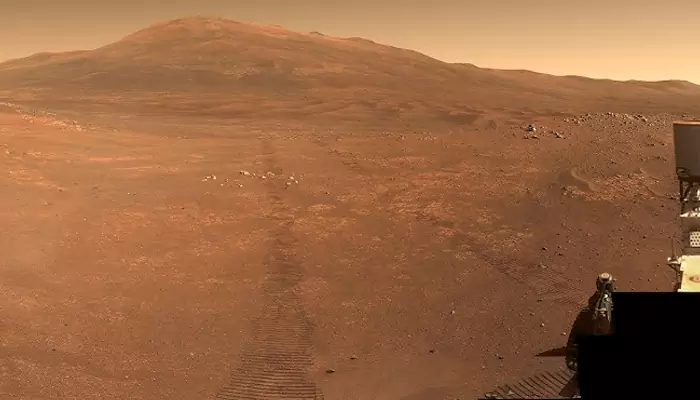
Mars may be millions of kilometres away, but NASA’s latest discovery is making the Red Planet feel closer than ever. A newly released panoramic image captured by NASA’s Perseverance Rover has revealed a rugged rocky formation nicknamed “Crocodile Bridge” and scientists believe this mysterious region could hold clues not just about Mars’ past, but humanity’s future in space.
The dramatic terrain has already gone viral online, with many comparing it to scenes from science fiction films. But behind the unusual name lies something much bigger: a location that could one day become part of future human exploration missions.
NASA Explores an Ancient Martian Region
NASA’s Perseverance Rover recently surveyed a region near Jezero Crater known informally as “Crocodile Bridge.” Scientists say the area contains extremely old rock formations that may date back billions of years.
These rocks are important because ancient geological layers can preserve evidence of water activity, climate history, and possibly even signs of microbial life from Mars’ distant past.
The images also show rugged ridges and pathways that appear surprisingly Earth-like, making the discovery especially fascinating for researchers and space enthusiasts alike.
Why This Matters Beyond Science Fiction
This isn’t just another Mars photo. The discovery matters because areas like this may help answer some of humanity’s biggest questions:
- Did Mars once support life?
- Could humans safely explore the planet one day?
- What can Mars teach us about Earth’s future?
Scientists believe ancient regions with signs of water are among the best places to study because water is considered one of the essential ingredients for life.
What Happens Next: Could Humans Visit Areas Like This?
NASA and other space agencies are already preparing for future human missions to Mars. Regions like “Crocodile Bridge” could become valuable exploration zones because they offer clues about terrain, minerals, and environmental history.
For future astronauts, understanding these landscapes is critical. Missions will need safe landing sites, access to resources, and knowledge about how Mars evolved over time.
Researchers are also studying whether ancient Martian rocks contain preserved organic compounds that could hint at prehistoric microbial activity.
Why the World Is Paying Attention
Mars exploration is no longer just about robots sending photos back to Earth. It has become part of a larger global conversation about:
- Space colonisation
- Advanced robotics and AI
- Human survival beyond Earth
- The search for extraterrestrial life
What makes “Crocodile Bridge” exciting is that it transforms Mars from a distant red dot into a place that feels real, physical, and possibly explorable in the future.
A Discovery That Fuels Human Imagination
No one knows exactly when humans will walk on Mars, but discoveries like this make the idea feel less impossible. NASA’s “Crocodile Bridge” is more than a strange-looking landscape. It’s a reminder that space exploration continues to push the boundaries of what humanity can imagine and perhaps one day achieve.