.WEBP)
Here are today’s most important updates from the realm of Science and Space.
NASA’s New Image of the Red Spider Nebula Will Give You Space Chills
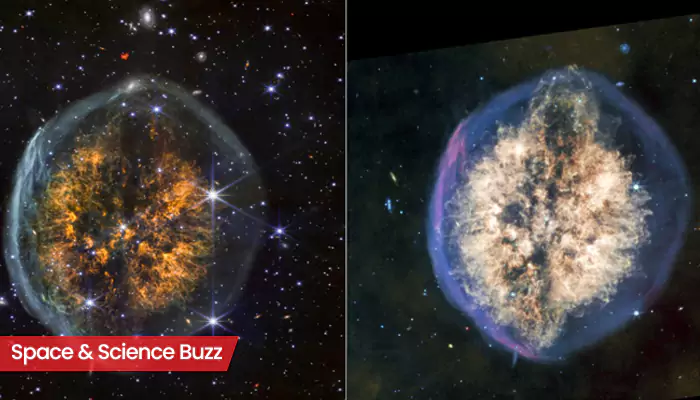
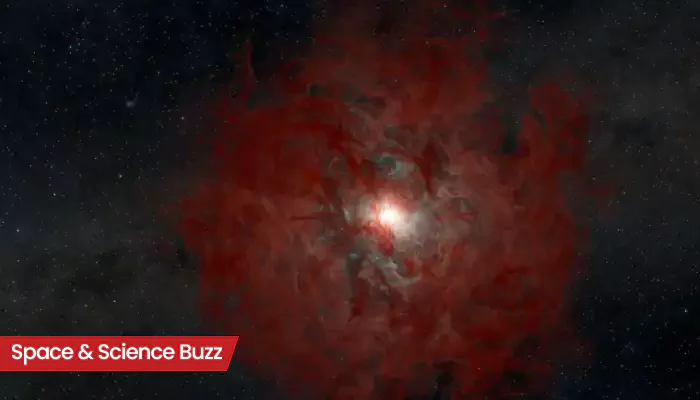
NASA has shared a new image of the Red Spider Nebula, also known as NGC 6537, with never-before-seen details. The photo taken by the James Webb Space Telescope (JWST) for the first time shows the full extent of the nebula's lobes, shown in blue colour. These lobes are closed, bubble-like structures that each extend about three light-years. They look like giant 'legs' of the spider, with the European Space Agency (ESA) calling it "cosmic creepy-crawly". The Red Spider Nebula is a breathtaking planetary nebula approximately 3,000 light-years away from Earth. This stunning celestial object is the result of a star's final evolutionary stage, where it sheds its outer layers, creating a shell of gas and dust.
Cosmic Game-Changer: Scientists Detect Possible Dark Matter Signature
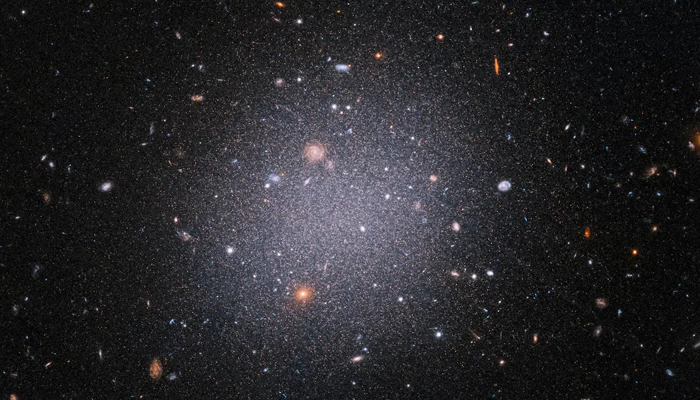
Scientists may have observed dark matter directly for the first time, using data from NASA's Fermi gamma-ray space telescope - a finding that, if verified, would mark a major shift in modern physics, according to reports. Dark matter has been one of astronomy's biggest mysteries for nearly a century. The idea first emerged in the 1930s, when Swiss astronomer Fritz Zwicky realised that galaxies in the distant Coma Cluster were moving far too fast to be held together by the gravity of their visible stars. Decades later, Vera Rubin's studies of spiral galaxies showed that the outer regions rotated just as quickly as their centres - something that only made sense if an unseen mass was providing extra gravitational glue.
A Celestial Symphony: Southern Lights Shine in Mesmerising Photo Taken from Orbit
Southern lights. pic.twitter.com/fLKNakP8kv
— Jonny Kim (@JonnyKimUSA) November 25, 2025
(Credit: X/@JonnyKimUSA)
The International Space Station (ISS) has shared a breathtaking video of the Southern Lights, also known as Aurora Australis, visible from high southern latitudes. These dazzling displays of lights look so unreal from space in the night sky filled with stars, which twinkle like diamonds against Earth's dark backdrop of space. The video was shared by NASA astronaut Jonny Kim, who is Lieutenant Commander (LCDR, U.S. Navy), but he didn't mention when the video was exactly captured. The aurora australis is caused by charged particles from the solar wind interacting with the Earth's magnetic field and atmosphere. These particles, mainly electrons and protons, precipitate into the upper atmosphere, exciting atoms of oxygen and nitrogen, which emit light as they return to their ground state.
Scientists Discover the Fruit That Turns Blue Without Any Dye or Pigment
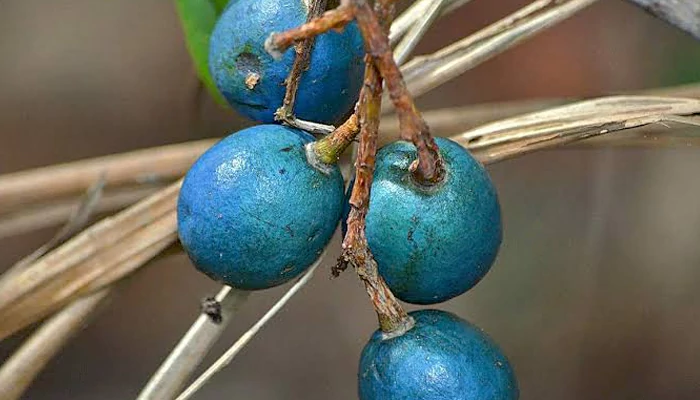
Scientists have long believed that truly blue fruits do not exist in nature. Even common "blue" foods such as blueberries or blue corn are actually shades of purple or indigo. But a rare rainforest tree proves otherwise. The Elaeocarpus angustifolius, known as the blue quandong, blue fig, or blue marble tree, grows in Australia, Papua New Guinea, and parts of Indonesia, and produces the only known fruit with a genuine, vivid blue appearance. The fruit looks so bright and metallic that many assume its colour is digitally edited. But researchers confirm that the blue marble fruit's intense hue is natural and does not come from pigments. Instead, it results from structural colouration, a light-bending optical effect similar to the colours seen in peacock feathers or butterfly wings.