Here are today’s most important updates from the realm of Science and Space.
- Soham Halder
- 1 month ago
- 3 minutes read
Here are today’s most important updates from the realm of Science and Space.
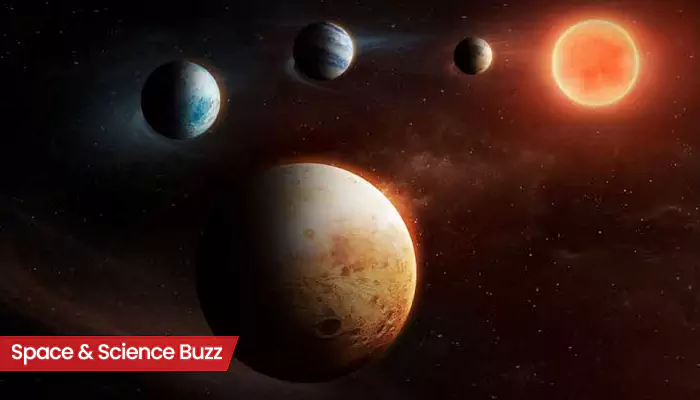
Astronomers Spot Rare ‘Inside-Out’ Solar System, Challenging Science
Astronomers have discovered a strange planetary system that is making scientists rethink how planets form. In this system, a rocky planet is located beyond two gas planets, something that current theories say should not normally happen, reported Reuters. The discovery was made using the European Space Agency's Cheops space telescope. This system consists of four planets, two rocky and two gaseous,all orbiting a small, dimly luminous red dwarf star. This star is located approximately 117 light-years from Earth, in the direction of the Lynx constellation. A light-year is the distance light travels in one year, which is approximately 5.9 trillion miles (9.5 trillion kilometers).
A Cosmic Valentine: NASA Shares Heart-Shaped Nebula Image
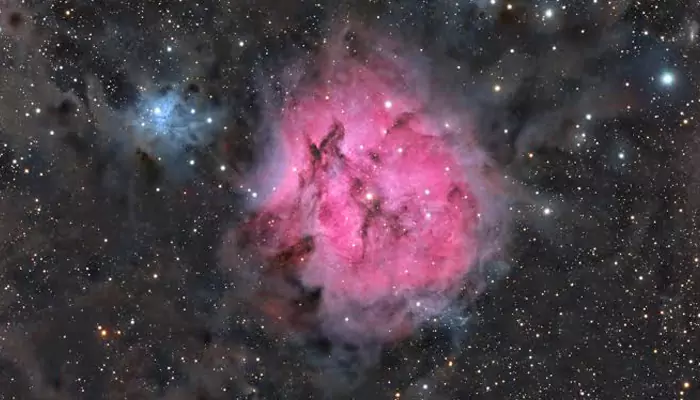
NASA has shared a special space image to mark Valentine's Day, showing a heart-shaped nebula where new stars are being born. The agency released a new image of the Cocoon Nebula (IC 5146), calling it a fitting symbol for the day. The nebula is a star-forming region in the Milky Way galaxy and appears in the shape of a heart. The image incorporates X-ray data from the Chandra X-ray Observatory, shown in red, green, and blue. This data reveals a cluster of young stars just emerging from within the glowing nebula. These newborn stars are very active and emit large amounts of X-rays, which Chandra easily detects, reported NASA.
Glaciers on the Move: New Study Flags Hidden Dangers
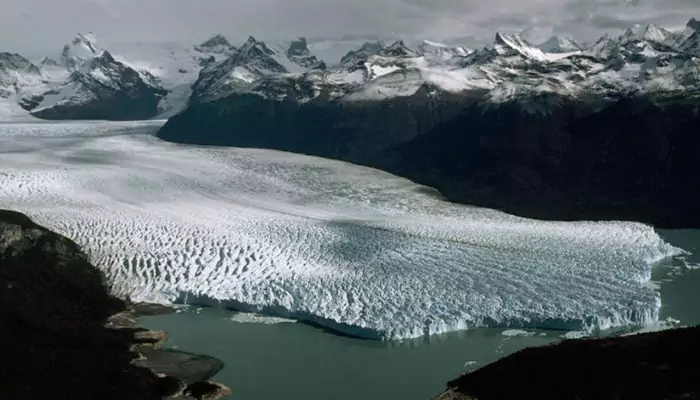
Scientists confirmed that over 3,100 glaciers have surged. They have also identified 81 glaciers that pose the greatest danger once they have surged. As per a study published in Nature Reviews Earth and Environment, the glaciers are moving densely in clusters around the Arctic, High Mountain Asia, and the Andes. It added that most of the surges have been found in the Karakoram Mountains, High Mountain Asia. The study was conducted by the University of Portsmouth. Scientists have analysed the movement and the nature of the glaciers. They have also examined what led to the surge and how it can affect the planet. The study also stressed “how climate change is fundamentally altering when and where these dramatic events occur.”
A New Ocean in the Making? Study Highlights Africa’s Tectonic Shift
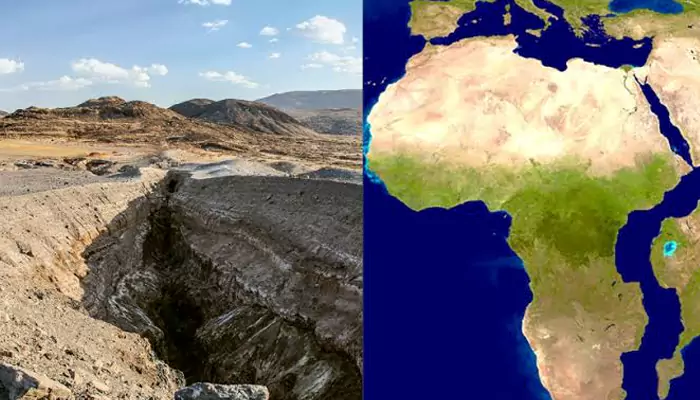
A huge crack is slowly opening across Africa, and scientists say it could one day create a brand-new ocean. Although this change will take millions of years, researchers are closely watching how the land is gradually pulling apart. This rift is developing along the East African Rift (EAR), where the eastern part of Africa, called the Somalian Plate, is separating from the larger Nubian Plate that forms the rest of the continent. This process is very slow, with the plates moving only a few millimeters each year. Experts estimate that complete separation will take millions of years.