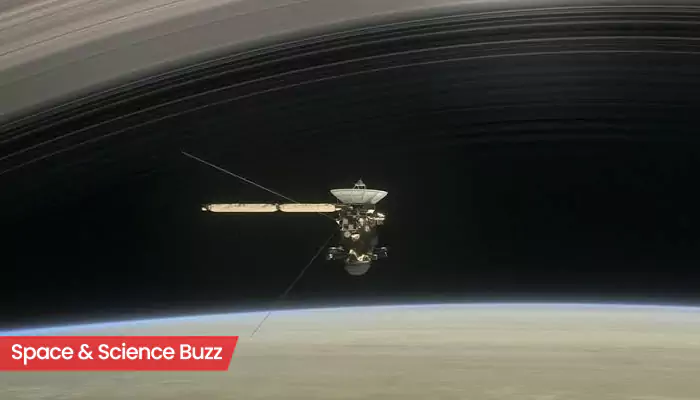
behind the icy moon. The findings show how powerful plumes of water vapour and dust erupting from Enceladus' southern surface become electrically charged in space, interacting with Saturn's magnetic field and playing a key role in shaping the planet's space environment.
GalaxEye Bets Big on AI With New Earth Observation Satellite
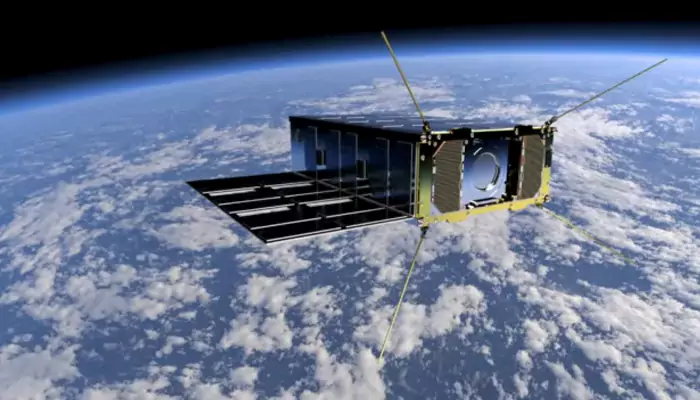
Indian spacetech startup GalaxEye today announced "Mission Drishti," its groundbreaking satellite slated for a 2026 launch, featuring the world's first SyncFused OptoSAR architecture. The company aims to capture clearer and more reliable images of Earth in all weather conditions, both day and night. What makes Mission Drishti unique is its ability to combine two different ways of taking pictures from space on a single satellite. One system captures detailed visual images similar to photographs taken from orbit, while the other uses radar to see through clouds, darkness, and even heavy rain.
Breakthrough Treatment Uses Light to Tackle Hair Loss
Scientists in South Korea are developing a flexible light therapy that could offer a new way to treat hair loss. Researchers at the Korea Advanced Institute of Science & Technology said their specially tuned near-infrared light system reduced a key ageing marker in human hair cells by nearly 92 per cent in laboratory tests. The new treatment targets human dermal papilla cells, which play an important role in hair growth at the base of hair follicles. As hair follicles age, they produce higher levels of an enzyme called beta-galactosidase, a recognised biomarker linked to cell ageing and hair loss.
A Tiny Beating Heart May Hold Answers to Cardiac Disorders
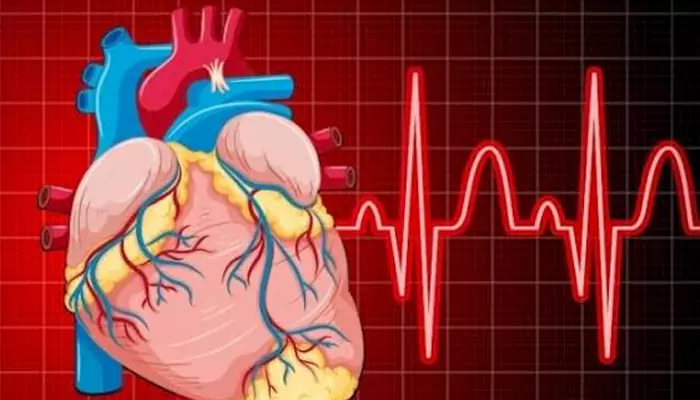
Scientists in Canada have developed a three-dimensional "heart-on-a-chip" that could mark a major step forward in tackling cardiovascular disease, the world's leading cause of death. Researchers from the University of Montreal and other Canadian institutions created engineered heart tissue that beats on its own, mobilises calcium to trigger muscle activity and responds predictably to common medicines. One of the biggest challenges in heart research is testing how human heart tissue reacts to drugs or disease without putting patients at risk. The new platform aims to solve this problem by offering detailed monitoring of heart function in the laboratory. The key advance lies in a dual-sensing system that tracks both large-scale and cellular-level activity in real time.