On This Day (Feb 5, 1971): Apollo 14 Landed on the Moon - 5 Myths People Still Get Wrong About Moon Missions
- Devyani
- 8 months ago
- 5 minutes read
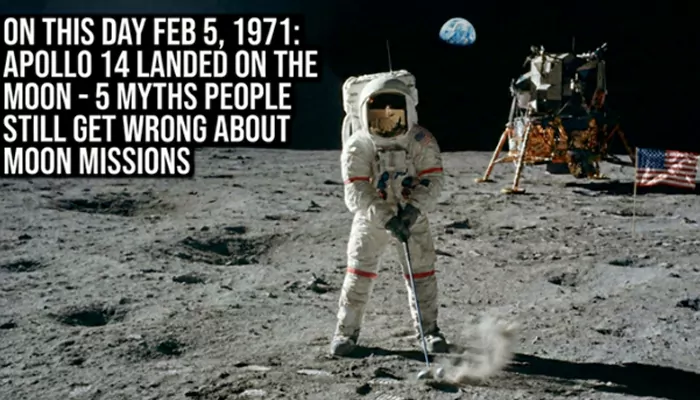
Fifty-five years ago today, Alan Shepard turned the Moon into the world’s most exclusive country club. But while the golf shot was real, the conspiracy theories trailing behind the Apollo missions are still stuck in the bunker.
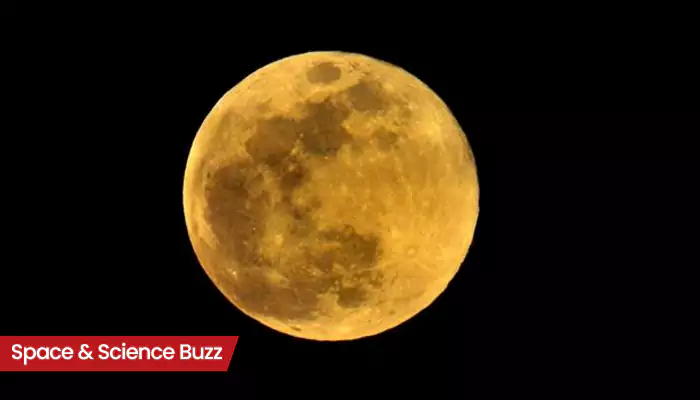
February 5, 1971. It was a Friday, and honestly, the vibes at NASA were tense. The ghost of Apollo 13 was still haunting the corridors of Mission Control. We hadn't landed on the Moon in over a year, and the whole world was watching to see if America had lost its nerve.
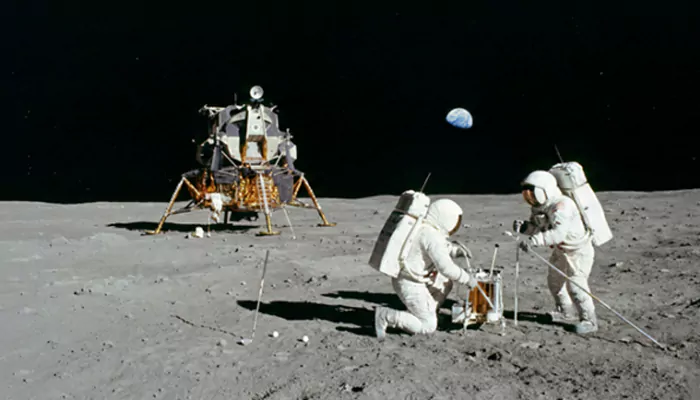
But then, Antares - the Lunar Module that looked like a spider wrapped in gold foil - touched down in the Fra Mauro highlands. Alan Shepard and Edgar Mitchell didn't just walk; they worked. And yes, Shepard famously whipped out a makeshift six-iron and shanked a couple of golf balls into the gray dust.
It was a moment of pure human absurdity. Yet, half a century later, there is a vocal slice of the internet that believes none of it happened. They think it was all a soundstage in Burbank. It drives me up the wall.
So, on this anniversary, let’s do a little housekeeping. Here are five myths about the Moon missions that need to be put out to pasture.
1. "The Flag Was Waving in the Wind"
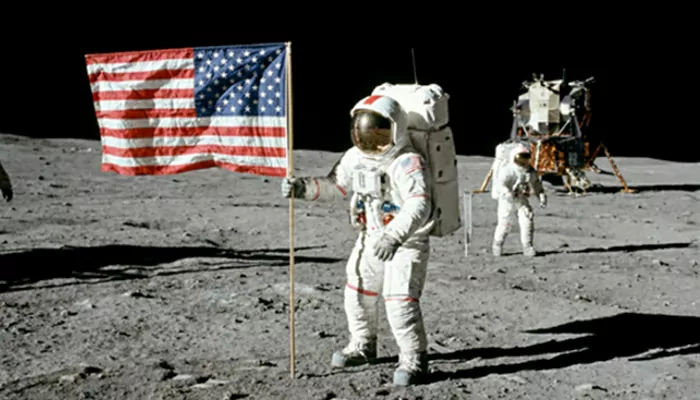
This is the granddaddy of them all. You’ve seen the footage: the Stars and Stripes appearing to flutter as the astronauts plant it. "Aha!" cries the skeptic. "There’s no wind in a vacuum!"
They’re right about the vacuum, but wrong about the physics. The flag didn't wave because of a breeze; it waved because of inertia. The flag had a horizontal rod stitched into the top seam to keep it extended (otherwise it would just droop). When the astronauts twisted the pole to jam it into the lunar soil, that motion traveled down the fabric. Without air resistance to dampen the movement, the cloth just kept rippling. It wasn’t a breeze; it was momentum refusing to quit.
2. "The Radiation Should Have Fried Them"
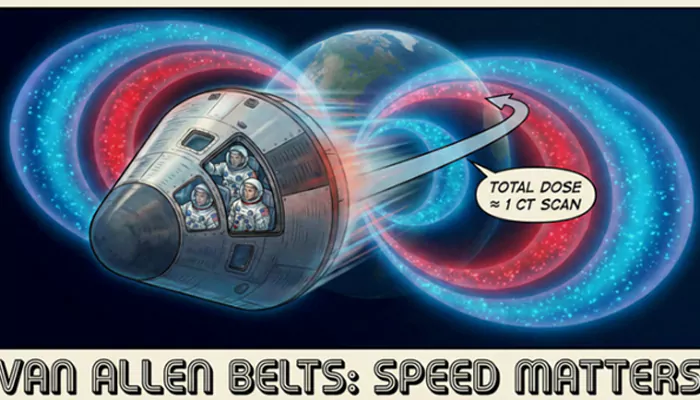
The Van Allen Belts. Sounds like a 70s rock band, but it’s actually a zone of energetic charged particles around Earth. Critics love to claim that passing through this zone would be instantly lethal.
Here’s the thing: speed matters. The Apollo spacecraft blasted through the belts at about 25,000 mph. They were in the danger zone for less than an hour. The total radiation dose the astronauts received was roughly the same as getting a CT scan. Not great for your long-term health, perhaps, but certainly not the "instant death ray" people imagine.
3. "Where Are the Stars?"
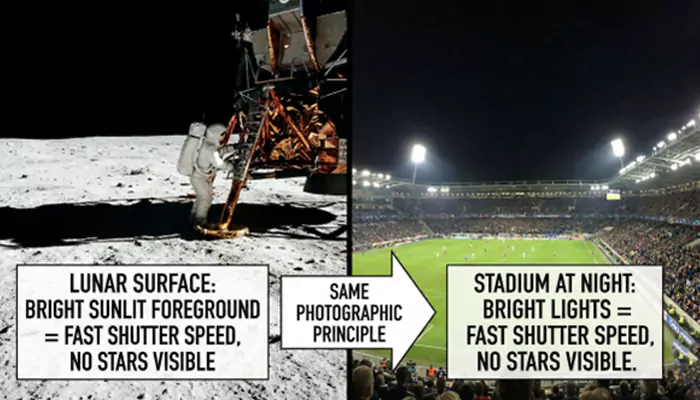
Look at any photo from the lunar surface. The sky is pitch black. No stars. Suspicious? Not if you own a camera.
The lunar surface is incredibly bright - it’s essentially daylight. To take a photo of the astronauts in their bright white suits, the camera shutter speed has to be fast, and the aperture small. Stars are faint. You can’t capture a sunlit foreground and dim stars in the same shot. It’s the same reason you don't see stars in a photo taken at a football stadium at night.
4. "Shepard’s Golf Ball Went for 'Miles and Miles'"
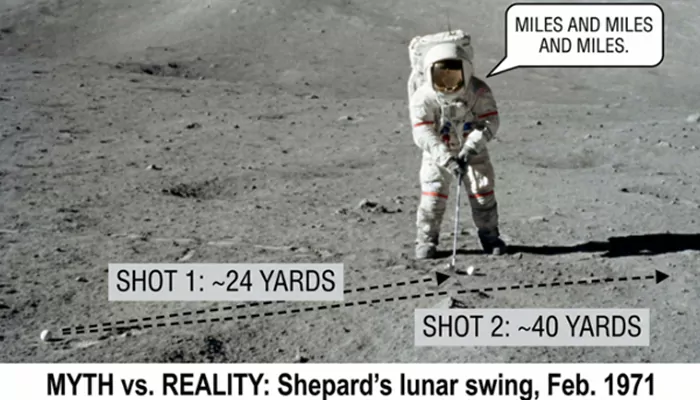
Okay, this one is a "pro-Apollo" myth, but a myth nonetheless. After his swing, Shepard radioed back that the ball went "miles and miles and miles."
He was exaggerating. We can forgive him - he was excited. Later analysis of the landing site photos showed the first ball traveled about 24 yards. The second one? A respectable 40 yards. Impressive for a guy swinging one-handed in a pressurized suit that made him move like the Michelin Man, but hardly an orbital trajectory.
5. "Stanley Kubrick Filmed It"
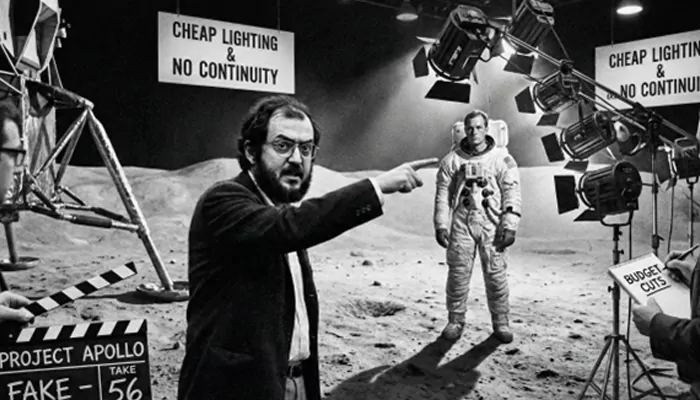
I love this one because it implies the government was competent enough to manage a massive secret film set but too cheap to hire a continuity editor.
Filmmakers have pointed out that the lighting in the Apollo footage is physically impossible to fake with studio lights. On the Moon, the sun is a single, parallel light source. Studio lights diverge. The shadows in the footage are perfectly parallel - something you couldn't replicate in a studio without a laser the size of the sun. As one expert dryly noted, "It would have been cheaper to actually go to the Moon than to fake it with 1969 technology."
Apollo 14 wasn't just about rocks or golf. It was about resilience. It proved we could get back up after a failure. The footage is grainy, the audio is crackly, and the golf shot was a slice. But it was real. And that’s far more interesting than any fiction we could invent.