2025 Year-End Review: How India Became a Space Superpower – From Moon Landings to Nine World Records
- Devyani
- 4 months ago
- 4 minutes read
From gene edits that finally treat disease to fusion energy leaving the lab, 2025 was the year science stopped promising the future and started building it.
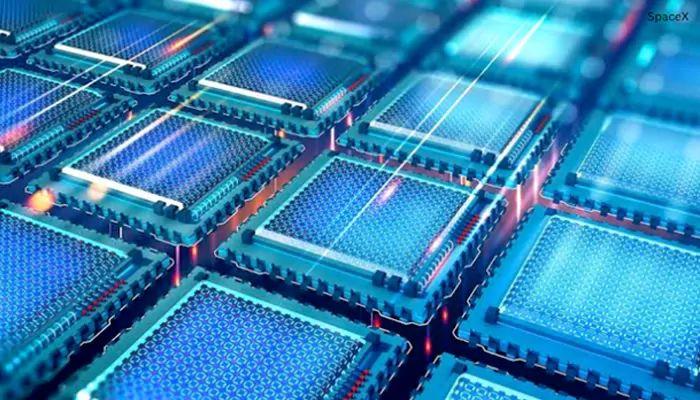
The United Nations tagged 2025 as the International Year of Quantum Science, and labs didn’t just nod politely - they delivered. While we were busy doom-scrolling, researchers quietly mounted an AI chip smaller than a grain of salt onto an optical fibre tip. Using a “diffractive neural network,” this speck decodes images at light speed while sipping barely any power - a nudge toward medical imaging that doesn’t need a room-sized machine humming in the basement.
Meanwhile, quantum hardware finally began trading its “cool experiment” badge for actual utility, with error rates dropping enough to make drug discovery simulations look less like guesswork and more like engineering.
Editing life, but precisely

Gene Prime Editing
If earlier years were about proving CRISPR works, 2025 was about refining the edit. A standout moment? The first‑ever clinical data for “prime editing” in humans dropped in May. Unlike the brute-force cutting of standard CRISPR, prime editing rewrites DNA without snapping both strands - a safety upgrade that feels like switching from a sledgehammer to a scalpel. We also saw a first-in-human trial where a single gene-editing dose slashed bad cholesterol (LDL) and triglycerides, teasing a future where heart disease risk is managed by a one‑time shot rather than a lifetime of daily pills. And in a quiet win for personalized medicine, doctors successfully designed and delivered a custom CRISPR therapy for a rare genetic disease in under six months - fast enough to actually matter for patients running out of time.
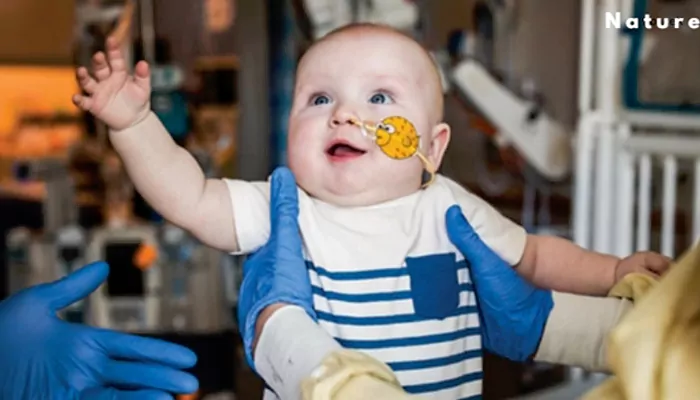
Nine-and-a-half-month-old K. J. Muldoon, who has a severe form of a rare, life-threatening metabolic disorder, is the first person to receive a bespoke CRISPR gene-editing therapy.
(Credit: Children’s Hospital of Philadelphia)
Star power gets real
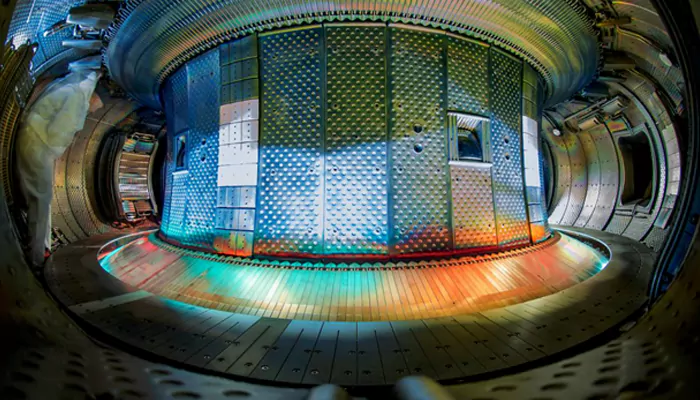
Vacuum chamber of the WEST fusion research reactor: longer and hotter
(Image: CEA-IRFM-C.ROUX)
Fusion energy - the “always 30 years away” joke - stopped being funny and started getting serious. France’s WEST reactor set records for sustaining super-hot plasma, proving we can keep the “soup” stable long enough to be useful. Private companies pushed the envelope too, with new high-temperature superconducting magnets allowing for smaller, cheaper reactor designs that don’t require the GDP of a small nation to build. By mid-year, the industry chatter shifted from “is it possible?” to “who connects to the grid first?” - with over 30 companies now aiming for pilot plants in the early 2030s.
Eyes on the sky
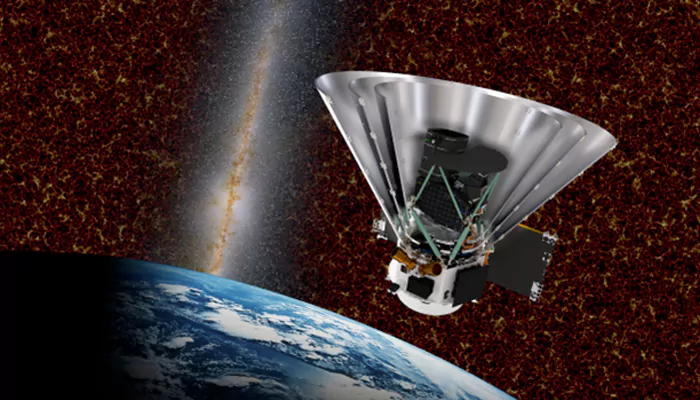
The Spectro-Photometer for the History of the Universe, Epoch of Reionization and Ices Explorer (SPHEREx)
(Astrobiology at NASA)
February saw NASA launch SPHEREx, a mission that sounds abstract until you realise what it’s doing: mapping the entire sky in 102 infrared colours to solve the history of everything. It’s hunting for water ice in our galaxy and the fingerprints of the Big Bang’s aftermath, creating a 3D map that will likely rewrite textbooks by the time today’s toddlers reach high school.
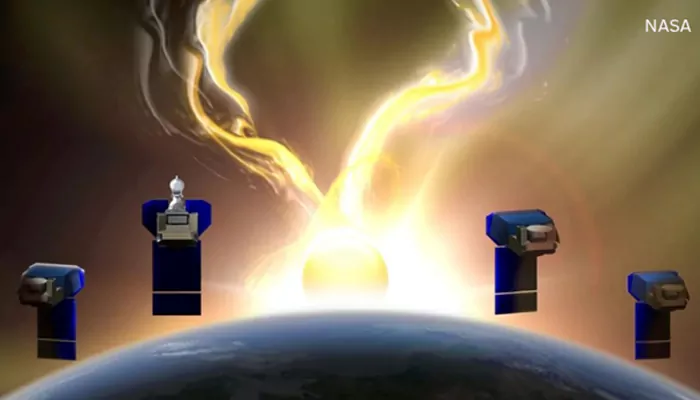
NASA’s Punch Mission
Riding shotgun was the PUNCH mission, a set of microsatellites staring at the Sun’s corona to finally explain how solar wind turns into the space weather that messes with our GPS.
What 2026 is holding back
If 2025 was the setup, 2026 looks like the following-through. Expect AI to move from “hype” to “hard hat” work, tackling messy physical problems in construction and climate modelling rather than just writing bad poetry.
We’re likely to see the first real efficacy data from those prime editing trials, telling us if the safety upgrade holds up in the long run. And with fusion pilots locking in designs, the race to light a bulb with star power is officially on. Science, it seems, is done with the warm‑up act.