Here are today’s most important updates from the realm of Science and Space.
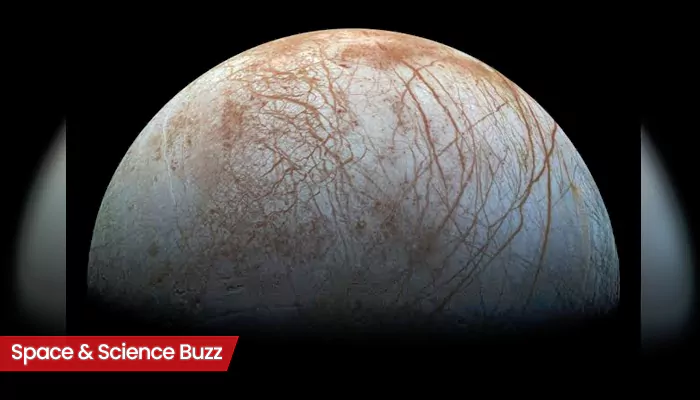
Vast Ocean, Slim Chances: Europa May Not Be as Life-Friendly as Once Thought
Europa, one of Jupiter's moons, has long been seen as a promising place to search for life beyond Earth. Scientists believe a large ocean of liquid water lies beneath its thick icy surface. However, a new study suggests that Europa may not have the right conditions to support life after all, according to reports. Europa is considered unique because it possesses several key elements believed to be essential for life. These include liquid water, organic compounds found on its frozen surface, and energy generated by Jupiter's intense gravitational influence. It is believed that Europa's salty ocean could contain nearly twice the amount of water contained in all of Earth's oceans combined. Scientists concluded that its rocky seafloor is likely too rigid and strong to support such activity.
Life Hacks for the Red Planet: Scientists Find Microbes That Could Transform Mars
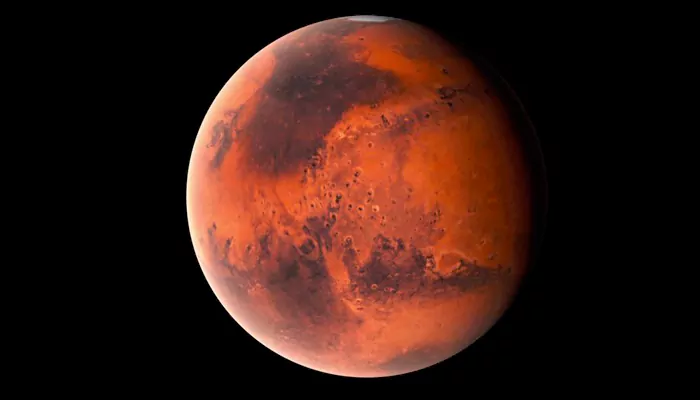
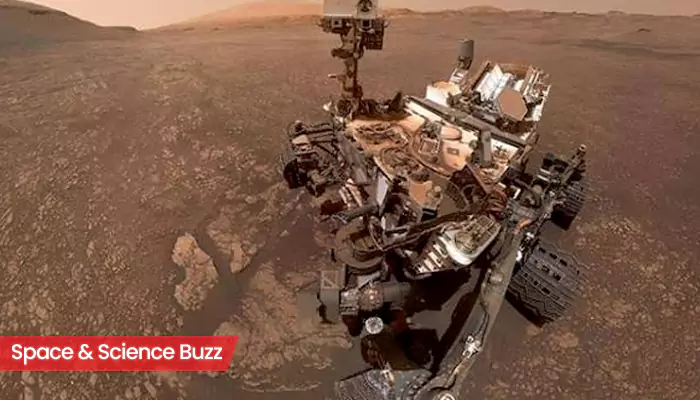
Scientists are exploring an unusual but promising idea to help humans live on Mars. They believe that some of Earth's strongest microbes could play a key role in building the first human habitats on the Red Planet. These tiny organisms may be able to turn Martian soil into a concrete-like material for shelters and also help produce oxygen needed to support life. This research focuses on using local resources on Mars to avoid the high cost of transporting construction materials from Earth, according to reports. One of the most promising methods for construction on Mars is the process of biocementation. This technique involves combining local loose soil with the help of microorganisms to create a strong, cement-like material that can be used in building construction.
Solar Orbiter Breaks Records by Monitoring Sun’s Most Active Zone for 94 Days
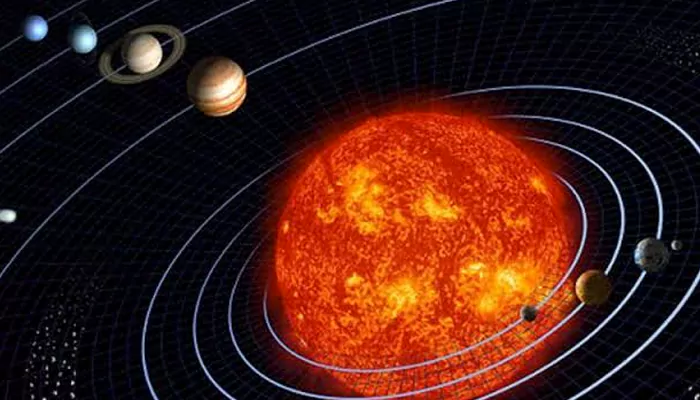
Astronomers have announced a new record for the longest continuous observation of a single active region on the Sun. An international team of researchers tracked the hyperactive region, designated NOAA 13664, for a record 94 consecutive days in 2024, which is considered a milestone in solar physics. This continuous observation, made possible by coordinating NASA's Solar Dynamics Observatory and ESA's Solar Orbiter, allowed researchers to see the region develop over three solar rotations. As per Science Alert, the region was monitored from its birth on the far side of the Sun on April 16, 2024, until its decay after July 18, 2024. This spanned three full solar rotations, far exceeding the typical two-week window usually available to Earth-based observers.
Aditya-L1 Exposes How October 2024 Solar Storm Shook Earth’s Magnetic Shield
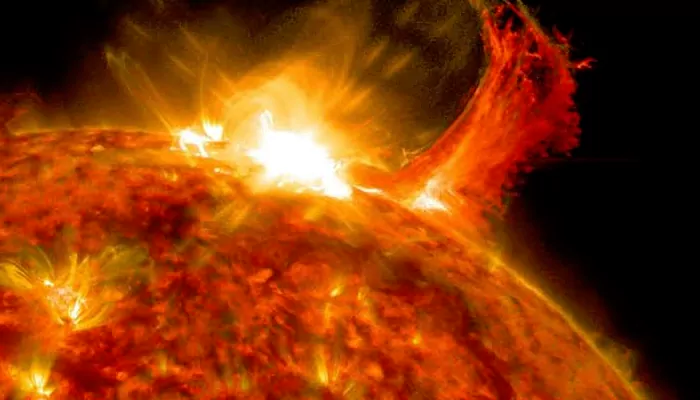
ISRO scientists and research students studied the solar storm using observations from India's Aditya-L1 mission and data from other international missions. During the disturbed phase very strong currents were generated in auroral regions in high latitudes, which could increase heating of the Earth's upper atmosphere and intensify the emission of atmospheric matter. The study found that the most severe effects were felt when the disturbed region of the solar storm hit Earth. This field greatly compressed Earth's magnetic field, bringing it unusually close to Earth and exposing some geostationary satellites to temporarily harsh space conditions. This study shows the importance of understanding space weather and monitoring it in real time, to ensure the safety of critical space assets.