
Here are today’s most important updates from the realm of Science and Space.
Mystery Dust Around Faraway Star Yields New Clues in Breakthrough Study
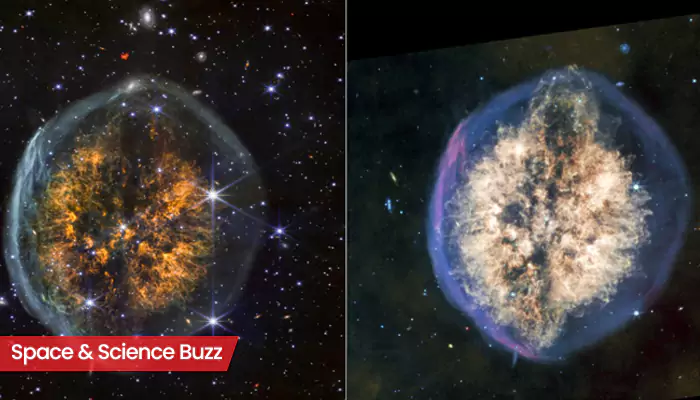
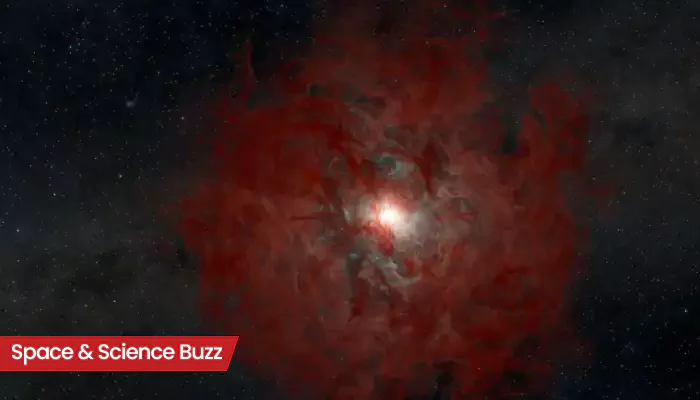
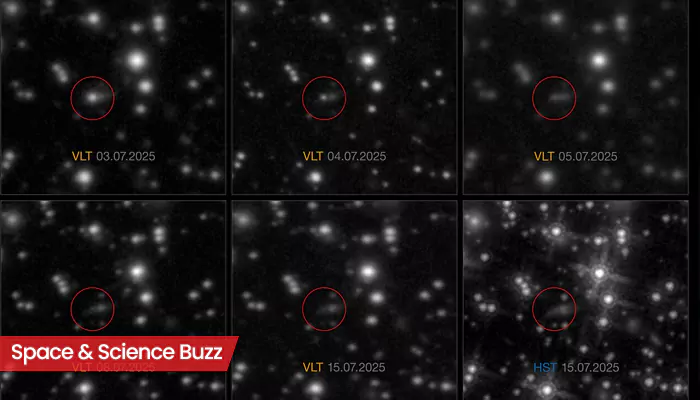
Scientists are stunned by a star called Kappa Tucanae A, seventy light-years from Earth, phys.org reported. This star harbours dust which is so hot that it glows at more than 1,000 degrees Fahrenheit. It also defies basic understanding of space by persisting near its host star, a region where it should have been vaporised or blown away by intense heat and radiation pressure. But in the latest development, astronomers at the University of Arizona's Steward Observatory discovered a companion star orbiting Kappa Tucanae A, offering a new perspective on the dust's persistence. Researchers stated that stellar magnetic fields might trap charged dust particles, extending their lifetime.
Cosmic Interference: NASA Warns Satellite Swarms Are Ruining Space Photos
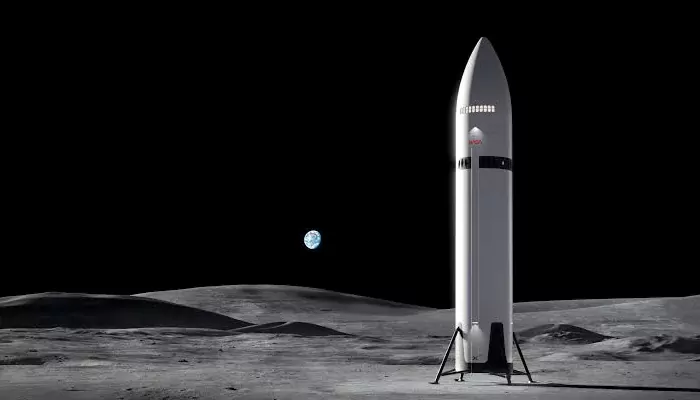
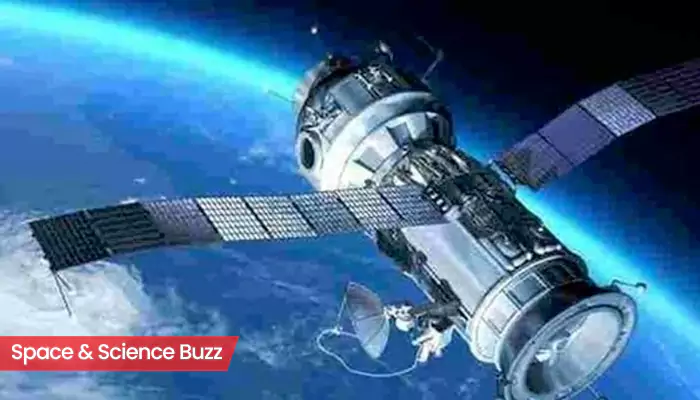
NASA warned that almost all space telescope images could soon be contaminated due to the increasing number of satellites in low-Earth orbit. The satellites, part of megaconstellations like Elon Musk's Starlink, reflect sunlight and emit light, causing streaks and interference in telescope images. This is not the first time experts have sounded an alarm over the increasing number of satellites, but the latest study, published in the journal Nature, is the first to estimate the magnitude of damage that can be done to space-based astronomy. The researchers revealed that NASA's SPHEREx telescope, the European Space Agency's ARRAKIHS telescope, and China's Xuntian telescope could have 96% of their images contaminated. Meanwhile, the Hubble Space Telescope, with its narrower field of view, could have around 39.6% of its images affected.
Why the S-500 Matters: Missile That Can Strike Jets, Missiles Even Satellites
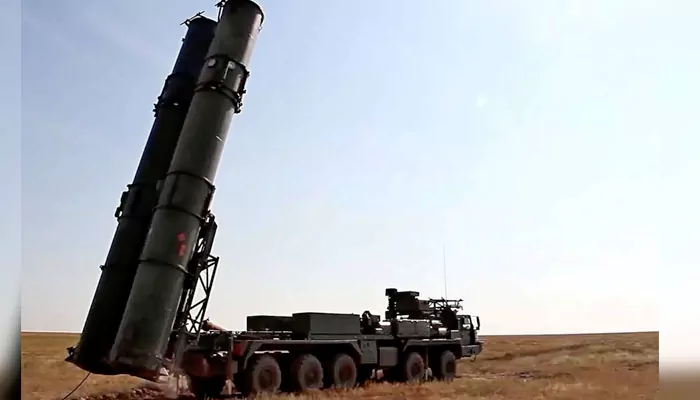
Russian President Vladimir Putin is set to arrive in New Delhi on December 4, 2025, for the 23rd India-Russia Annual Summit, which has placed Russia's advanced S-500 Prometheus air defense system in focus for India. Discussions are expected to cover potential deals for the S-500 alongside Su-57 fighters, building on India's existing S-400 squadrons that proved pivotal in recent operations. The S-500 represents a leap beyond the S-400, with a 600 km range for ballistic targets and interception altitudes up to 200 km, reaching low Earth orbit (LEO) where many reconnaissance and communication satellites operate.
Rise of the Bio-Computers: Human Brain Tissue Enters Tech

As prominent artificial intelligence (AI) researchers eye limits to the current phase of the technology, a different approach is gaining attention: using living human brain cells as computational hardware. These "biocomputers" are still in their early days. They can play simple games such as Pong, and perform basic speech recognition. But the excitement is fuelled by three converging trends. But plenty of questions remain. Are we witnessing genuine breakthroughs, or another round of tech-driven hype? And what ethical questions arise when human brain tissue becomes a computational component?