
Here are today’s most important updates from the realm of Science and Space.
Interstellar Mystery: 3I/ATLAS Could Be Breaking Into a Cosmic Swarm
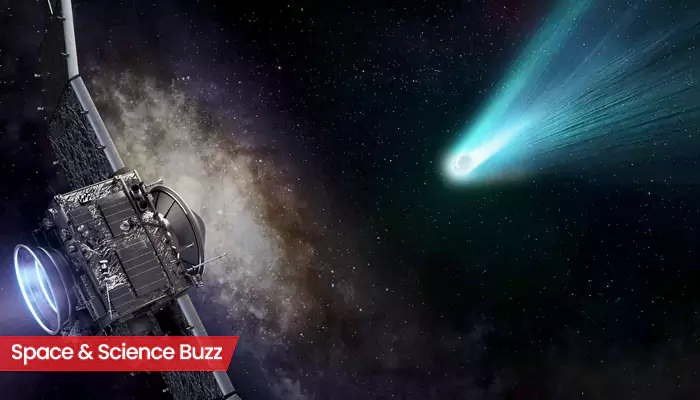
The interstellar object 3I/ATLAS, which NASA clearly described as a comet, still sparks intense debate among astronomers due to its unusual "anti-tail" pointing toward the Sun. Harvard astrophysicist Avi Loeb suggests this feature might not be a typical comet tail, but rather a swarm of solid objects accompanying 3I/ATLAS. While writing a new Medium blog post, Loeb said that the post-perihelion images of the interstellar object showed a tear-drop shape of its coma with an extension by about an arcminute towards the Sun, with the JPL Horizons reporting a non-gravitational acceleration during the same period. He suggested that this unusual anti-tail could be comprised of a swarm of non-evaporating objects, unlike typical comet tails composed of gas and dust. Loeb proposes that these objects don't experience the same non-gravitational acceleration as 3I/ATLAS, causing them to appear closer to the Sun.
Celestial Sibling: Indian Team Discovers Milky Way’s Near-Perfect Twin
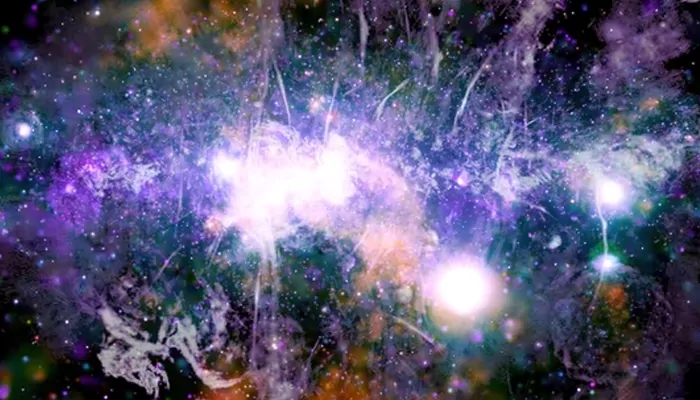
Indian astronomers have uncovered a cosmic surprise: a mature spiral galaxy, shaped like our own Milky Way, from an epoch when such orderly structures were thought impossible. The galaxy, named Alaknanda, was discovered by Indian researchers Rashi Jain and Yogesh Wadadekar using the James Webb Space Telescope (JWST), and its existence just 1.5 billion years after the Big Bang is now reshaping theories about galaxy formation and cosmic evolution. Named after a Himalayan river and the Hindi word for the Milky Way, Alaknanda boasts two sweeping spiral arms and a bright central bulge, spanning 30,000 light-years. Alaknanda is a powerhouse of stellar birth, creating stars at a rate equivalent to about 60 solar masses annually, roughly 20 times the pace of our modern Milky Way.
Biological Time Machine: Scientists Restore Ageing Cells Using Mitochondrial Boost
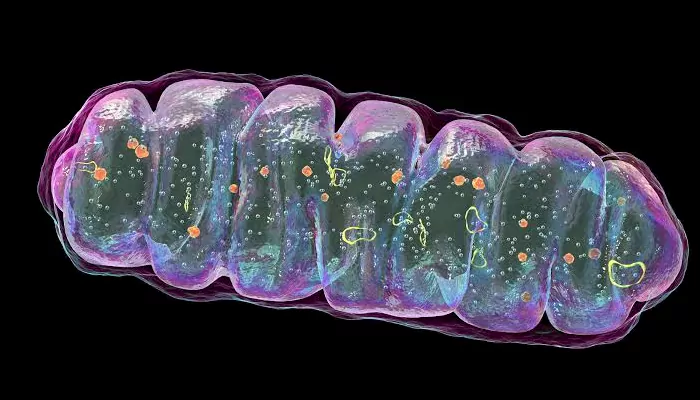
Researchers at Texas A&M University have developed a promising technique to rejuvenate aging human cells by enhancing their energy production systems. The study focuses on mitochondria - tiny structures within cells that generate energy-which tend to decline in number and efficiency as we age. This deterioration is linked to various age-related diseases, including those affecting the heart and brain. To counter this, scientists used specially designed "nanoflowers," which are microscopic particles shaped like flowers. These particles help reduce harmful oxygen molecules in cells and activate genes that stimulate the production of new mitochondria in human stem cells.
Your Daily Stress May Be More Dangerous Than You Think, Experts Caution

A recent study suggests that rapid changes in technology and the have far outpaced the slow process of human evolution. The researchers believe this disparity has negatively impacted people's mental and physical health. Researchers stated that humans in ancient times were able to cope with sudden stressors because such situations helped them escape or combat predators. Researchers found that the stress response, once designed for short-term emergencies, is now constantly activated due to modern life. Such pressure can weaken the immune system, affect memory, and disrupt hormone levels.