
Here are today’s most important updates from the realm of Science and Space.
Cosmic Mystery Deepens as Researchers Discover Possible ‘Dark Stars’
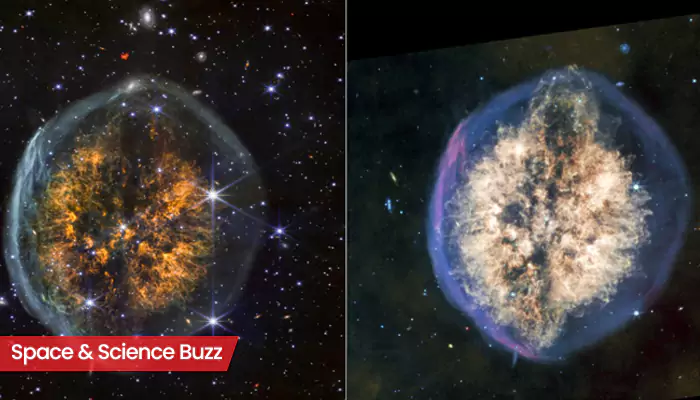
Scientists studying new data from the James Webb Space Telescope have found three strange objects in 2025 that may be something called dark stars. These objects could change how scientists understand the birth of the first stars in the universe. The idea of dark stars has existed for years, but these findings have brought it back into focus, according to reports. While the name may suggest otherwise, dark stars are neither truly dark nor typical stars. The word "dark" here refers not to their colour or brightness, but to a different type of energy they emit, called dark matter. According to scientists, dark stars are extremely large. Their massiveness distinguishes them from normal stars. Their most distinctive feature is that they emit light not from nuclear fusion like normal stars, but from energy released from dark matter.
India’s First Private Orbital Rocket Vikram-I Gets a Launch Window, Says Skyroot Founder

Skyroot Aerospace is gearing up for a landmark moment in India’s private spaceflight story, with its Vikram-1 rocket now on track for a maiden launch. The Hyderabad-based startup is preparing to become the first Indian private company to put a homegrown rocket into orbit, marking a major milestone in the country’s nascent commercial launch sector. Co-founder Bharat Daka said all subsystems are expected to be ready within about a month, after which the rocket will move into its final round of validation ahead of the debut flight. The upcoming mission will use roughly 25 per cent of the vehicle’s intended payload capacity to low Earth orbit, a typical strategy to de-risk an inaugural launch.
Cold, Calm, and Toxic: The Science Behind Delhi’s December Smog

While the Air Quality Index (AQI) has regularly fluctuated over and under the severe category, the blanket of smog continues to drape Delhi, putting its residents at risk. On Monday, AQI slipped into the "Severe Plus" category, breaching the 456 mark. A toxic haze covered the capital city, reducing visibility while posing a direct risk to residents. Low wind speeds, temperature inversion, and high humidity trap pollutants close to the surface, preventing dispersion. In simpler terms, foggy mornings and stagnant air conditions create a pollution cover over the region. This means even routine emissions from traffic during office hours or evening biomass burning adds up rapidly. As a result, pollution spikes overnight and worsens in the early morning hours, when visibility drops and health risks rise.
Lost Nuclear Device in the Himalayas Raises Fresh Fears for the Ganga River

A long-buried Cold War secret in the Indian Himalayas is back in the spotlight: a lost nuclear-powered device, abandoned near Nanda Devi nearly 60 years ago, may still be entombed in ice above the headwaters of the Ganga. The CIA and India’s Intelligence Bureau launched a covert mission to install a nuclear-powered listening device high on Nanda Devi, India’s second-highest peak. The system relied on a radioisotope thermoelectric generator (RTG) fuelled by several kilograms of plutonium, meant to power sensors that would eavesdrop on missile and nuclear tests across the border. The material slowly gives off heat as it naturally breaks down. Experts say an intact, wellshielded RTG buried deep in ice poses limited immediate risk, but any breach in its containment over time could release radioactive material into meltwater and sediments flowing towards heavily populated plains.