Here are today’s most important updates from the realm of Science and Space.
A Universe in Sync: 280 Galaxies Spinning Together Defy Expectations
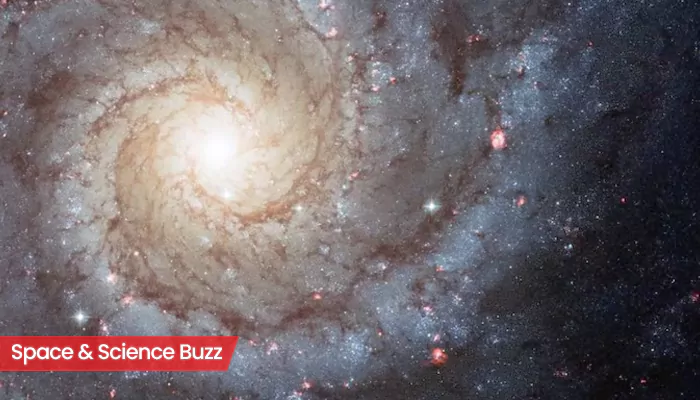
Astronomers from several countries have identified a strikingly narrow formation: fourteen galaxies rich in hydrogen, each spaced along a stretch spanning more than 5.5 million light-years, embedded within a significantly larger spinning cosmic filament. This filament, containing over 280 galaxies, runs approximately 50 million light-years in length. Together, these galaxies and their filament contribute to the intricate network of matter that defines the universe's grand structure. Recognised as the largest known constructs, cosmic filaments operate as channels where both matter and angular momentum stream into galaxies. This specific filament exhibits a synchronised rotation: not only do numerous galaxies share a common spin orientation, but the filament itself appears to turn collectively.
Moonbound Safety Check: NASA Begins Record-Breaking Vacuum Trial for Artemis

NASA has started its most complex series of ground tests to date within a massive spherical vacuum chamber at Langley Research Center in Hampton, Virginia. These plume-surface interaction (PSI) tests are designed to understand how moon lander engine exhaust affect lunar dust, soil, and rocks as part of preparations for the Artemis missions. The importance of these tests lies in assessing the hazards caused by engine plumes blasting away lunar regolith during landings and takeoffs, which could threaten spacecraft, payloads, and scientific instruments. The test campaign brings together multiple Nasa centers, academic partners, and commercial entities. The first phase employs an ethane plume simulation system engineered by NASA’s Stennis Space Center and Purdue University.
Black Death’s Secret Source? Evidence Suggests a Volcano Lit the Fuse
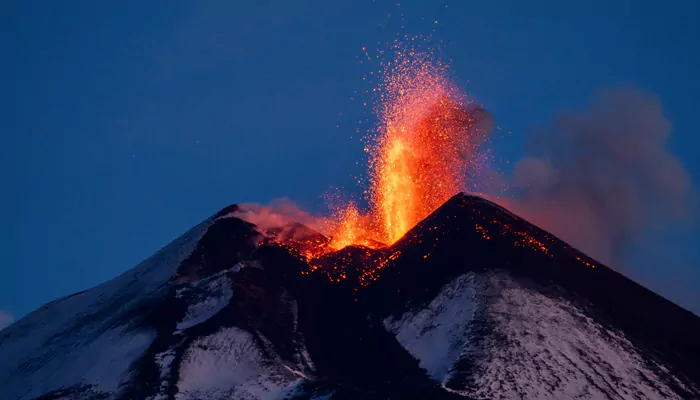
Previously unknown volcanic eruptions may have kicked off an unlikely series of events that brought the Black Death, the most devastating pandemic in human history to the shores of mediaeval Europe, new research has revealed. The outbreak of bubonic plague known as the Black Death killed tens of millions and wiped out up to 60 percent of the population in parts of Europe during the mid-14th century. By analysing the tree rings from the Pyrenees mountain range in Spain, the pair established that southern Europe had unusually cold and wet summers from 1345 to 1347. Comparing climate data with written accounts from the time, the researchers demonstrated that temperatures likely dropped because there was less sunlight following one or more volcanic eruptions in 1345.
Megaquake Threat Rises: Japan Faces Possibility of a 100-Ft Killer Wave

Japan, where tremors are extremely common, is living under an official “subsequent earthquake advisory”, a first for the Hokkaido–Sanriku coastal region. On December 8, a magnitude-7.6 earthquake struck off the eastern coast of Aomori Prefecture. The following day, the Japan Meteorological Agency (JMA) issued the advisory, warning that a much larger earthquake, a megaquake of magnitude 8 to 9, could hit the offshore trench from Hokkaido to Sanriku within the next week. Earthquakes often trigger tsunamis because sudden vertical movement of the seafloor displaces a huge column of water above it, releasing immense energy. The 2011 Tohoku earthquake, Mw 9.0, produced the highest instrumentally recorded tectonic tsunami run-up in history: 40.5 metres (133 feet) at Miyako, Iwate.