Union Budget 2026-27 : Creative Capital - Why the Budget is Betting Big on AVGC and the "Orange Economy”
- Devyani
- 2 months ago
- 4 minutes read
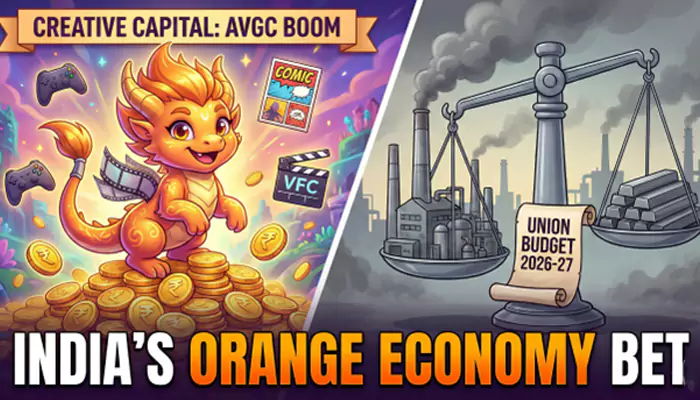
The Finance Minister just realized that Pikachu makes more money than some steel plants - here is why India is finally cashing in on its imagination.
For the longest time, India has been the world’s quiet, diligent animator. If you watched a blockbuster superhero movie in the last ten years, chances are the dragon’s scales or the spaceship’s explosion were rendered by a kid in a studio in Goregaon or Hyderabad. We did the work, but Hollywood kept the checks. And the IP.
Yesterday, the Union Budget 2026-27 decided to stop being the ghostwriter.
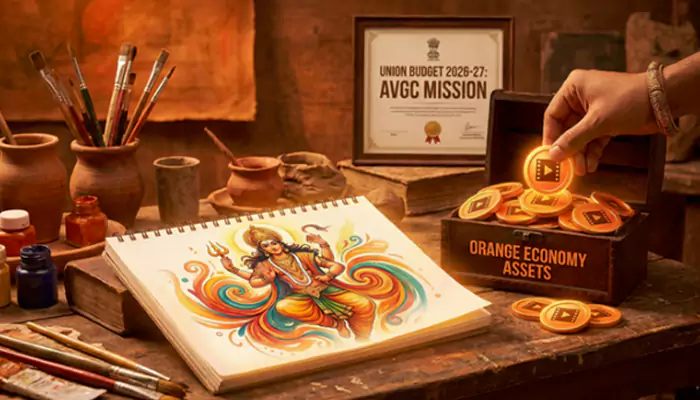
By allocating a record outlay for the AVGC (Animation, Visual Effects, Gaming, and Comics) sector, the government has officially pivoted toward the "Orange Economy." It’s a fancy term - coined by the Inter-American Development Bank - referring to the creative wealth of a nation. But in plain English? It means realizing that stories are an asset class, just like oil or gold.
From "Service" to "Source"
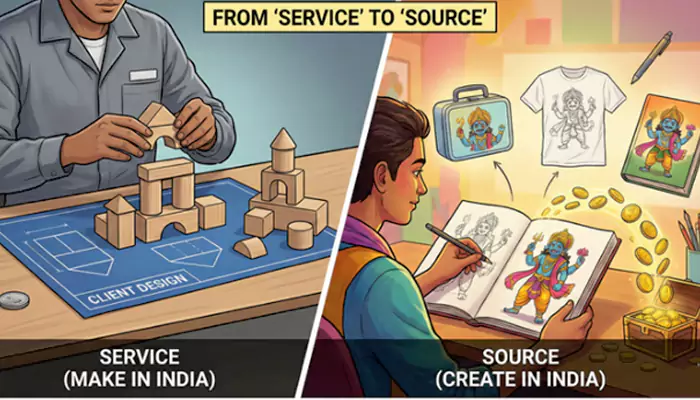
I have covered budgets for two decades, and usually, the arts get a polite nod and a pittance. This time, the tone was different. The Finance Minister spoke about "Create in India," not just "Make in India."
The distinction is subtle but massive. "Make" implies assembly - putting together parts someone else designed. "Create" implies ownership. The new AVGC Production Linked Incentive (PLI) scheme isn't just for big studios; it’s specifically tweaked for original IP creation.
Why does this matter? Because when you service a project, you get paid once. When you own a character like Chhota Bheem or a game like Raji, you get paid forever - through merchandise, licensing, and sequels. The government is effectively trying to incubate the next Disney or Nintendo in our backyard.
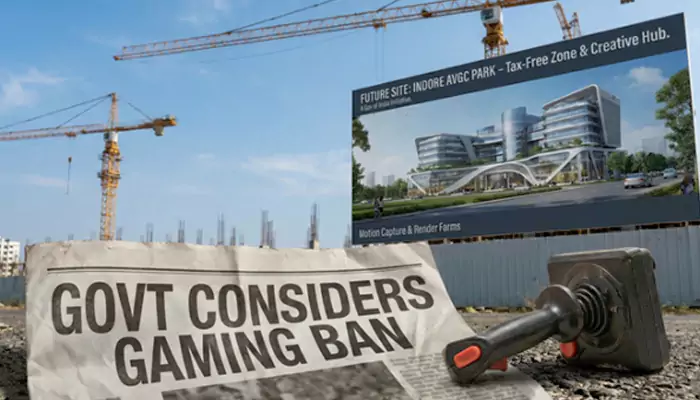
Ease of Gaming
Remember when the headlines were all about banning games? That feels like ancient history now.
The Budget acknowledges that the global gaming market is bigger than music and movies combined. The announcement of "AVGC Parks" in Tier-2 cities - think Indore or Kochi - is a strategic move. These aren't just office buildings; they are proposed as tax-free zones equipped with high-end motion capture tech and render farms that an indie developer could never afford on their own.
It seems the government has realized that if you can't stop the youth from gaming, you might as well help them build the games (and tax the exports).
The Cultural Export Strategy
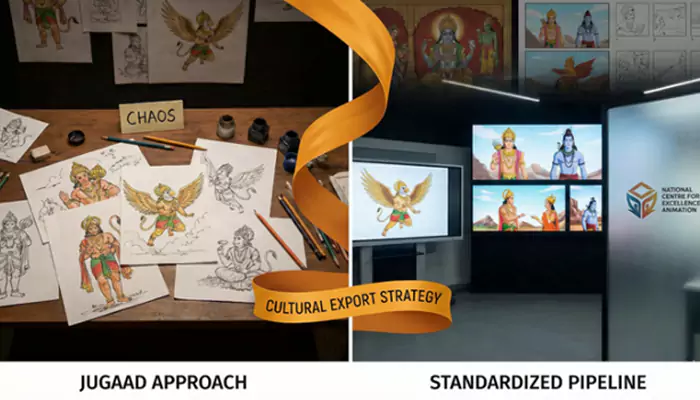
There is a soft power play here, too. Look at what South Korea did. They didn't just export Samsung phones; they exported K-Pop and K-Dramas. They made the world want to be Korean.
India has the mythology and the art styles to do the same. By funding a National Centre for Excellence in Animation, the Budget is trying to standardize the chaos. It’s an attempt to move away from the "jugaad" approach to a pipeline that Netflix and Amazon Prime can trust implicitly.
A Note of Caution
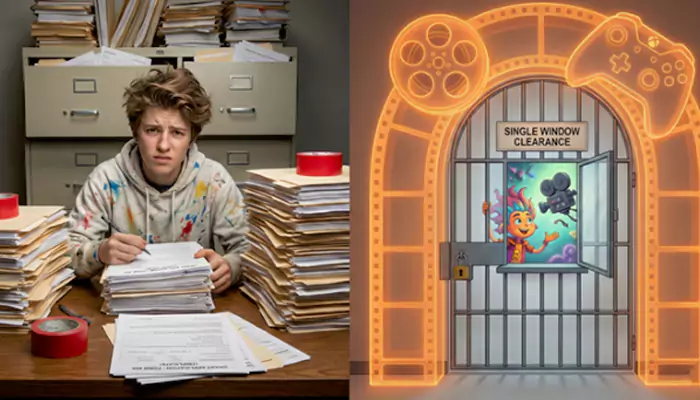
However, let’s not get too starry-eyed. Money is great, but creativity is notoriously allergic to bureaucracy.
The success of this "Orange" push depends on how easy it is to actually access these funds. If a 22-year-old game designer has to fill out 40 pages of forms in triplicate to get a grant, the revolution will die in a file cabinet.
The Budget promised a "Single Window Clearance" for AVGC shoots and production. If that window actually opens, we might be in business.
For years, Indian parents told their kids that drawing cartoons wasn't a "real job." With Budget 2026-27, the government just handed those kids a very expensive argument to the contrary.