Union Budget 2026-27 : Bharat-VISTAAR - The "GPT" for Indian Farmers
- Devyani
- 2 months ago
- 3 minutes read
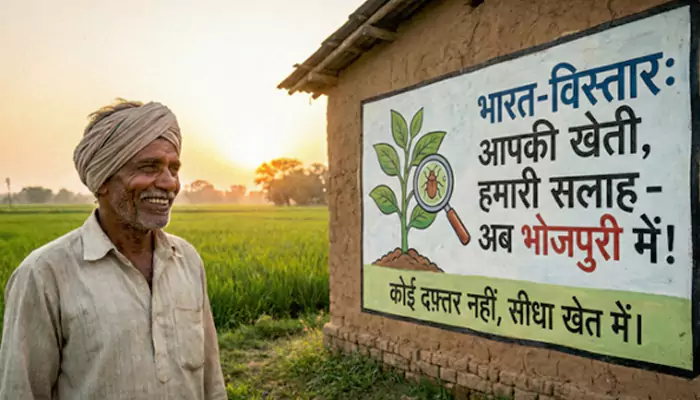
Finally, a government circular that speaks Bhojpuri, understands pests, and doesn't require a trip to the Taluka office.
If you have ever stood in a paddy field in West Bengal or a cotton patch in Vidarbha, you know the sound of confusion. It’s not silence; it’s the buzz of bad advice. A neighbor suggests a pesticide he saw on WhatsApp. The local shopkeeper pushes fertilizer because he gets a commission. The actual scientific advice? That’s locked away in a PDF on a government website, written in bureaucratic English that even English professors struggle to parse.
Yesterday, the Union Budget 2026-27 tried to fix this broken telephone game.
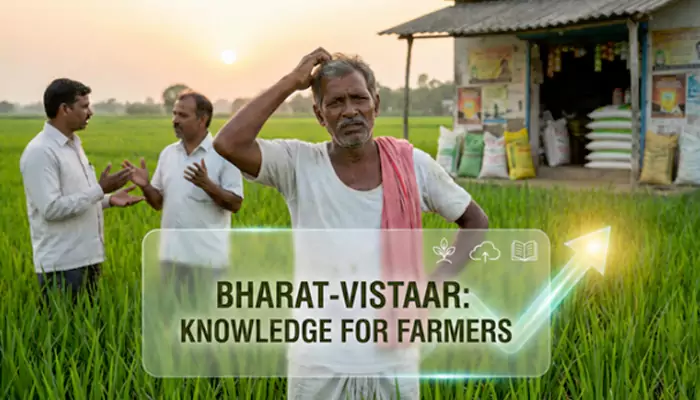
Finance Minister Nirmala Sitharaman didn't just announce another subsidy. She announced Bharat-VISTAAR (Virtually Integrated System to Access Agricultural Resources). It’s a mouthful of an acronym, sure. But stripped of the jargon, it is essentially ChatGPT for the Indian farmer.
Breaking the "Language Wall"
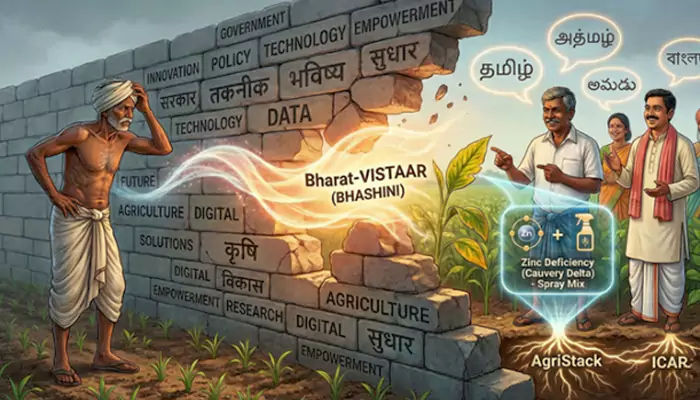
Here is the thing about technology in India: it usually speaks English first, Hindi second, and ignores everything else.
Bharat-VISTAAR is promising to be different. It’s built on the Bhashini platform, meaning it doesn't just translate; it understands dialect. A farmer in Thanjavur can ask, in Tamil, "My crop leaves are turning yellow at the edges," and the AI won't give him a generic "check soil health" response. It will pull data from AgriStack (which knows his specific land coordinates) and ICAR (which knows the local pests), and tell him, "It looks like a zinc deficiency common in the Cauvery Delta this week. Spray this specific mix."
That isn't just information; that is leverage.
The "AgriStack" Brain
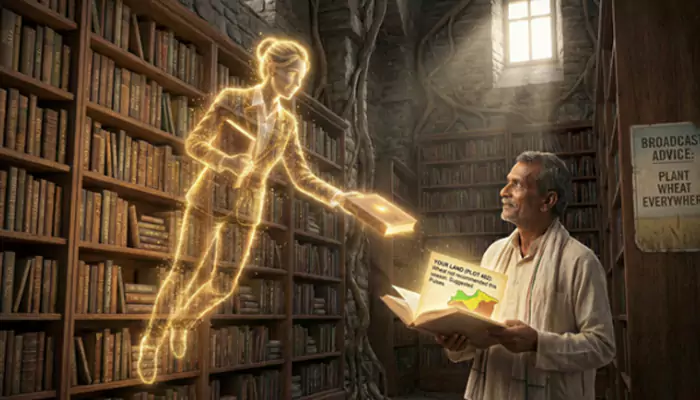
We have been hearing about "AgriStack" - the digital registry of farmers - for a few years now. It sounded boring. Like a digital attendance sheet.
But VISTAAR is the app that finally makes that data useful. Think of AgriStack as the massive library of books, and VISTAAR as the librarian who knows exactly which page to open. By integrating these two, the government is trying to move from "Broadcast Agriculture" (telling everyone to plant wheat) to "Precision Agriculture" (telling you specifically that wheat won't work in your soil this year).
The "Chai Shop" Skepticism
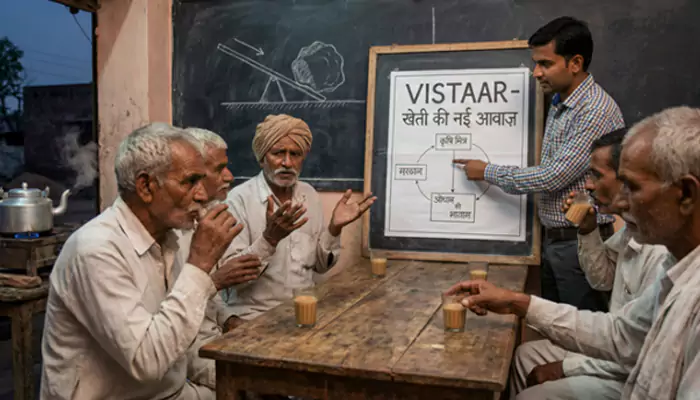
Now, hold on. I can hear the cynics already. "Great, another app. But does the internet work in Bastar?"
It’s a valid question. We love launching digital missiles in areas with 2G bamboo-stick towers.
However, the "Human Touch" in VISTAAR is interesting. The Budget document hints that this isn't just for smartphones. It’s designed to work via voice interaction and even basic feature phones eventually. It’s meant to be used by the Krishi Mitra (the village agricultural friend) as much as the farmer. If the local influencers - the guys at the tea shop who actually sway opinion - start using this tool to settle arguments about fertilizers, that’s when the real shift happens.
Rs 150 crore has been allocated for this. In the grand scheme of a multi-lakh crore budget, that is loose change. But sometimes, the smallest levers move the biggest rocks.
For decades, the Indian farmer has been driving blind, relying on luck and rain gods.
Bharat-VISTAAR proposes to give him a GPS. It might glitch, it might buffer, and it might take time to learn the difference between a dialect in Pune and a dialect in Satara. But for the first time, the expert is in the pocket, not in the capital.