Here are today’s most important updates from the realm of Science and Space.
NASA Discovers New Chemical Clues on Jupiter’s Icy Moon Europa
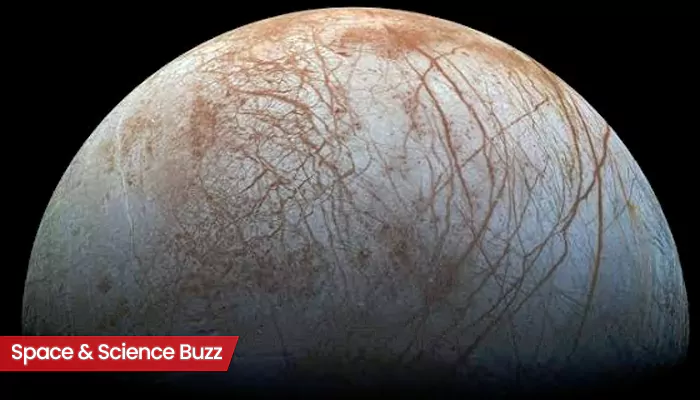
Scientists have taken a fresh look at very old space data and made an exciting discovery on Jupiter's moon Europa. By studying information collected decades ago by NASA's Galileo spacecraft, researchers have found signs of ammonia-bearing compounds on Europa's surface. This new analysis helps scientists understand what may be happening beneath the moon's thick ice, reported NASA. The discovery was made through a composite image created from data collected by the Galileo spacecraft. The close-up view of an area approximately 250 miles (400 kilometers) wide shows a black-and-white mosaic created by combining multiple images taken by Galileo's solid-state imaging camera.
Mars Goes Autonomous: Perseverance Rover Drives Using AI for the First Time
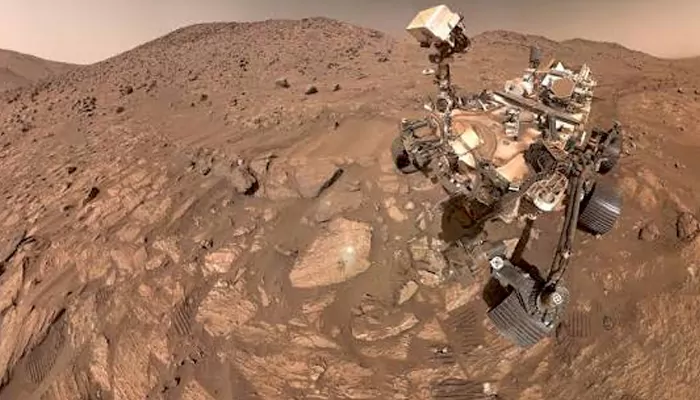
Artificial intelligence is now helping a Mars rover decide where to drive. In a new test, NASA allowed a smart computer system to plan safe paths on the surface of Mars, showing how space exploration is slowly becoming more independent from humans on Earth. For this six-wheeled rover, the team used vision-enabled AI technology to safely navigate the Martian surface without the involvement of human route planners, reported NASA. NASA's Perseverance Mars rover has completed the first artificial intelligence-planned drives on another planet. Conducted on December 8th and 10th and led by NASA's Jet Propulsion Laboratory in Southern California, the test used generative AI to determine Perseverance's waypoints, a complex decision-making process normally performed manually by the mission's human rover planners.
Helix Nebu la Like Never Before: James Webb Reveals Birth Clues of Future Planets
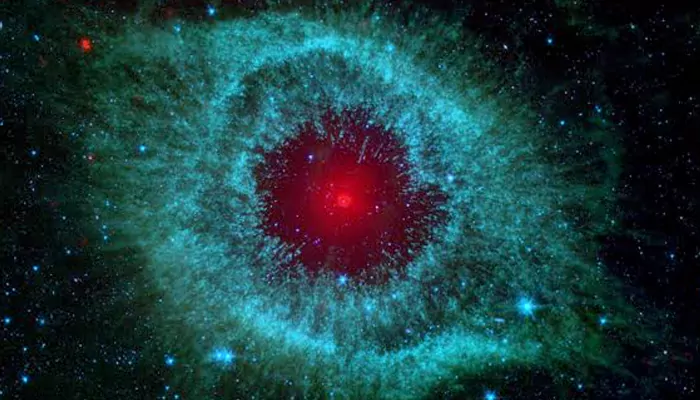
NASA's James Webb Space Telescope has captured an extraordinary view of the Helix Nebula, showing what could be the eventual fate of our own Sun and planetary system. The telescope's high-resolution images reveal how a dying star sheds its gas and dust, recycling material back into space to help form future stars and planets, reported NASA. Webb's Near-Infrared Camera (NIRCam) has revealed columns of gas that appear long-tailed, comet-like, and reveal the inner boundary of the expanding shell surrounding the dying star. Fast, hot winds emanating from the star collide with colder, slower-moving gas and dust previously ejected, shaping the nebula into its distinctive and beautiful structure.
Buried Evidence: Jordan Site Reveals Secrets of Humanity’s First Pandemic
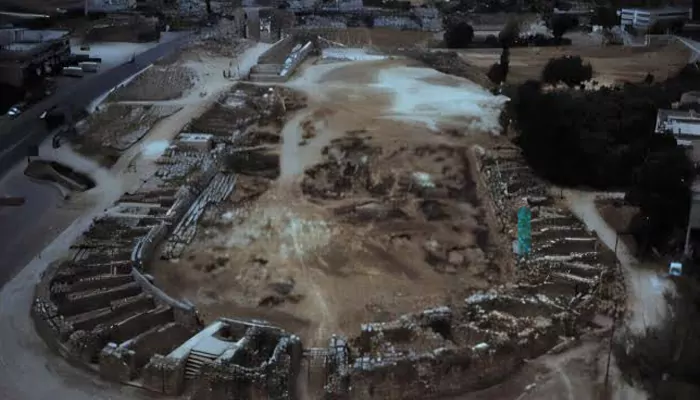
A team of researchers led by the United States has confirmed something that historians have long wondered about. They have verified the first Mediterranean mass grave linked to the world's earliest recorded pandemic. This discovery gives new and clear details about the plague of Justinian, a deadly disease that killed millions of people in the Byzantine Empire between the sixth and eighth centuries. This research was published in February in the Journal of Archaeological Science. Scientists say the results provide a rare and accurate opportunity to understand the lives, movements, and suffering of people during that terrible epidemic.