Here are today’s most important updates from the realm of Science and Space.
RNA Before DNA: Lab Results Boost ‘RNA World’ Origin of Life Theory
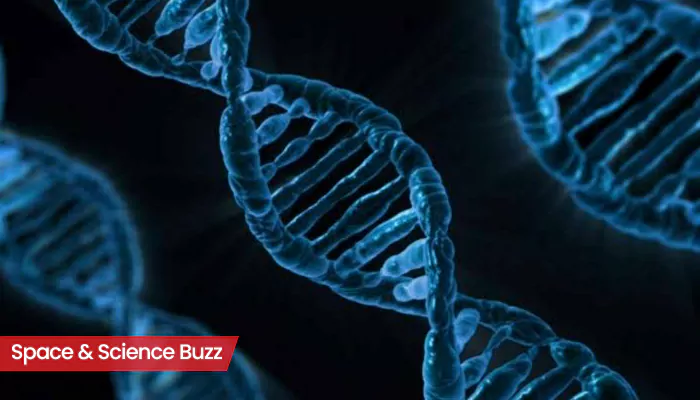
New experiments suggest that RNA, one of the most fundamental molecules of life, could have developed naturally on the early Earth. Researchers simulated 4.3 billion years ago, combining ribose, nucleobases, phosphates, borate, and basalt and then heating and drying the mixture. RNA made without human-directed reactions, a hint that life's building blocks can arise quickly. The results complement a parsec of NASA's OSIRIS-REx mission, which discovered ribose in asteroid Bennu, suggesting the ingredients for RNA may have been delivered through impacts by ancient protoplanets. RNA probably came before DNA, serving as the storehouse of genetic information and driving chemical reactions; a 500-kilometre-wide protoplanet may have brought its components to Earth.
Dark Matter’s Secret Partner? Study Suggests It Interacts With Neutrinos
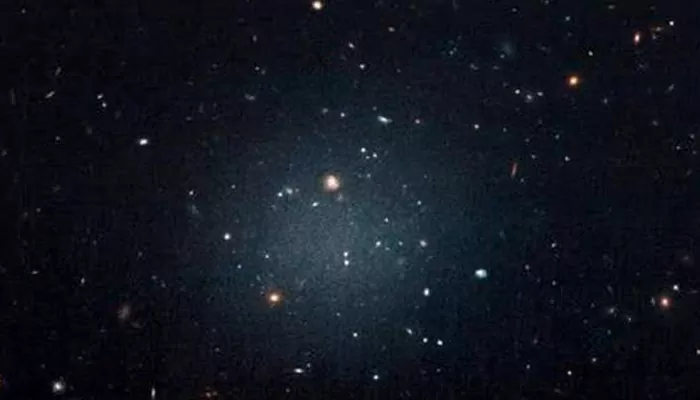
Scientists have moved a step closer to solving one of the universe's biggest mysteries, with new research suggesting that dark matter and neutrinos -- two of its least understood components -- may interact with each other, offering a rare window into the darkest recesses of the cosmos. The findings from the University of Sheffield relate to the possible relationship between dark matter, the mysterious, invisible substance that makes up around 85 per cent of all matter in the universe, and neutrinos, one of the most fundamental and elusive subatomic particles. Scientists have overwhelming indirect evidence for the existence of dark matter, while neutrinos, though invisible and with an extremely small mass, have been observed using huge underground detectors.
Tiny Space Particles Strike Earth Nonstop, ISRO Shares New Insights
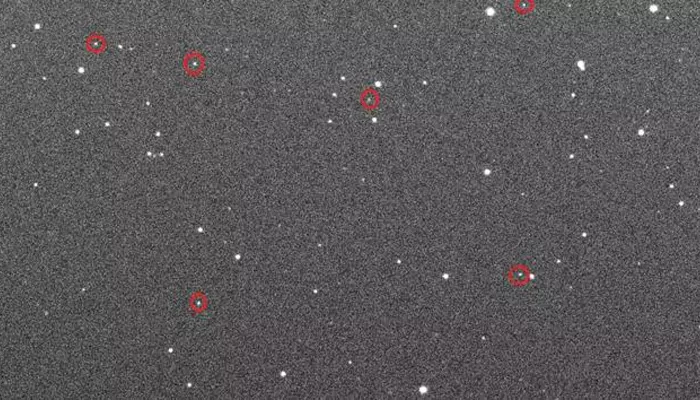
The Indian Space Research Organisation (ISRO) used the first homegrown cosmic dust detector, the Dust EXperiment (DEX), to confirm that a cosmic dust particle hits Earth's atmosphere approximately every thousand seconds (around 16 minutes). While explaining the Interplanetary Dust Particles (IDPs), ISRO said that they are "microscopic shrapnel" from comets and asteroids that form our atmosphere's mysterious "meteor layer", and show up as "shooting star" at night. “The 140 degrees wide-view detector successfully logged signals of orbital debris' (dust) impacts during 01 January to 09 February 2024, confirming the instrument's capability to identify and measure such events," ISRO said.
Why Iceberg A-23A Is Suddenly Blue: Scientists Explain the Meltwater Effect

Forty years later since the iceberg A-23A first broke away from Antarctica's Filchner Ice Shelf, is sopping with blue meltwater and on the verge of complete disintegration as it drifts in the South Atlantic between the eastern tip of South America and South Georgia island. When the MODIS (Moderate Resolution Imaging Spectroradiometer) on NASA's Terra satellite captured this image of what remained of the waterlogged berg on December 26, 2025, extensive pools of blue meltwater were visible on its surface. The "blue-mush" areas are likely the result of ongoing disintegration events, explained Ted Scambos, a senior research scientist at the University of Colorado Boulder. "You have the weight of the water sitting inside cracks in the ice and forcing them open," he said.