Albert Einstein Birthday Spotlight: The Berlin Debate - What Happened When the Monk from Bengal Met the Physicist?
- Devyani
- 6 months ago
- 3 minutes read
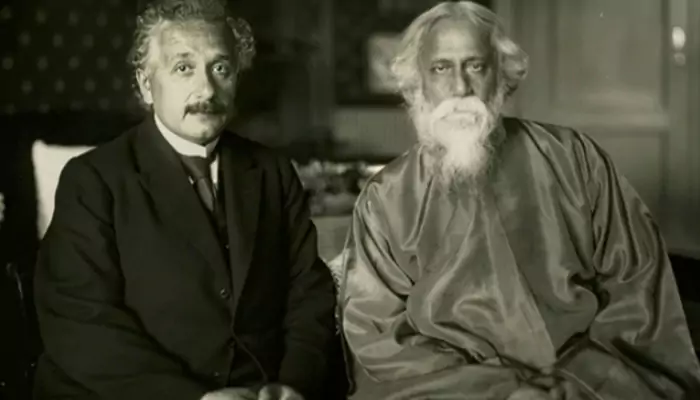
Equations, illusions, and a July afternoon. Here is what happened when the West’s brightest calculator clashed with the East’s ultimate existentialist.
Picture it. Caputh, a sleepy suburb of Berlin, 1930. You have Albert Einstein hosting Rabindranath Tagore - the towering, bearded polymath from Bengal who the European press frequently (and somewhat lazily) romanticized as a wandering monk.
They didn't do small talk.
Instead, they dove straight into the deep end of the cosmic pool. The topic? The actual, physical reality of the universe.
The Table in the Empty Room
Einstein was fiercely protective of objective reality. He believed - needed to believe, honestly - that the universe exists entirely independently of us. If humanity gets wiped out, the Pythagorean theorem still holds up perfectly. The Apollo Belvedere remains a beautiful statue.
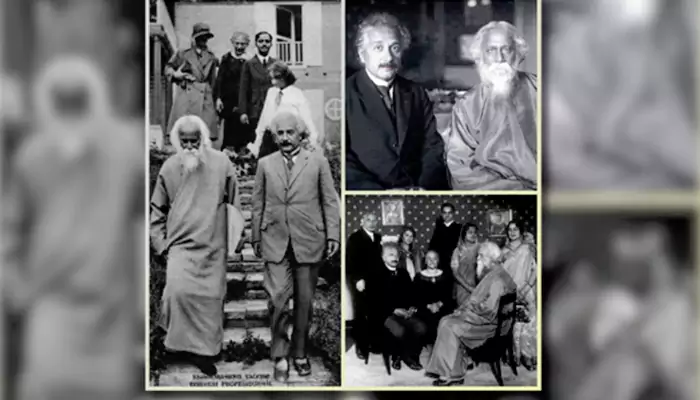
Tagore completely disagreed.
He argued that the world is inextricably tethered to the human mind. Truth and beauty? They are just relationships. Without a human observer to perceive them, they vanish into the void. It’s the sort of heavy existential friction you’d normally expect to find buried in a Camus or Sartre novel, not in a casual afternoon chat between a Nobel-winning physicist and a poet.
"If there would be no human beings any more," Einstein pressed, "the Apollo Belvedere would no longer be beautiful?"
"No," Tagore replied simply.
Einstein didn't buy it. "I cannot prove that my conception is right," he admitted, "but that is my religion."
Two Parallel Lines
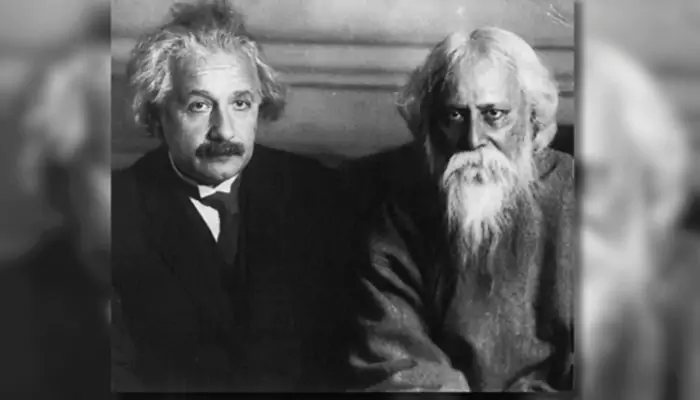
Reading the surviving transcripts of this conversation today is a bit of a trip. It is a polite but incredibly stubborn intellectual wrestling match.
You see Einstein grasping for an anchor outside of human flaw. He wanted a universe governed by neat, indifferent laws. And then there is Tagore, bringing this deeply grounded, human-centric philosophy to the table. For the sage from Bengal, stepping outside of human consciousness to find some absolute, "ultimate" truth was just a fool's errand. A logical impossibility.
They were speaking English, sure. But they were using entirely different dictionaries.
Why This Still Matters
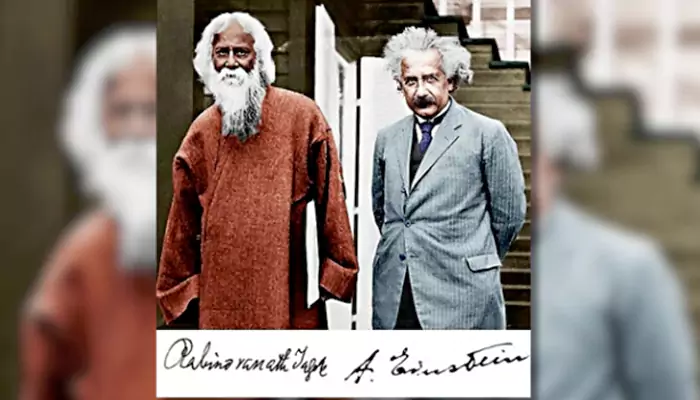
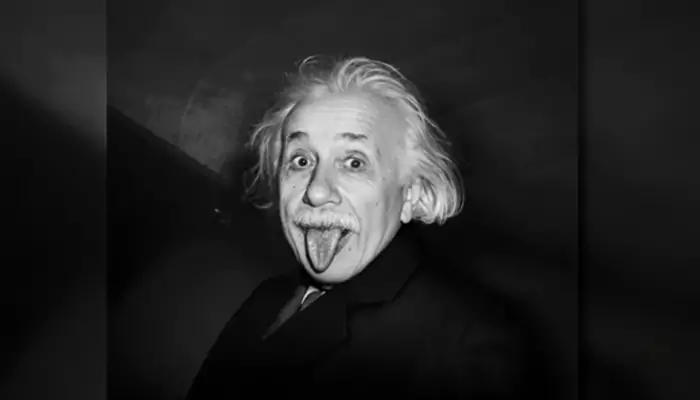
We celebrate Einstein's birthday every March 14, usually by praising his equations and that famous unruly hair. But this specific Berlin debate? It highlights his philosophical boundaries. It shows a mechanical genius confronting the messy, subjective nature of the human soul - and kind of bouncing off it.
There was no winner, obviously. Yet, the tension between cold rationality and human perception remains the ultimate riddle.
As long as we keep looking up at the stars, I reckon we will keep arguing about whether they are actually shining, or if we are just the ones turning the lights on.