Up All Night for a Reason: What Actually Happens to Your Mind and Body on Maha Shivratri Jagran
- Soham Halder
- 16 hours ago
- 3 minutes read
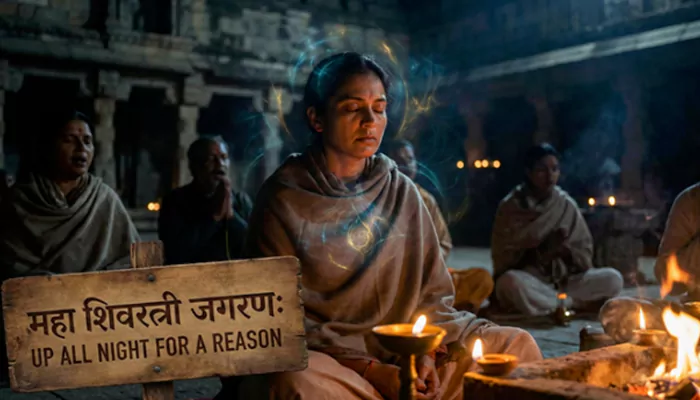
Between the chants and the shadows of the third watch, something shifts inside. It isn’t just exhaustion - it’s an ancient physiological rewiring.
It starts with a bravado fueled by chai. You’re sitting there, spine straight (or trying to be), surrounded by the rhythmic Om Namah Shivaya and the heavy scent of incense. But then 2:00 AM hits. The "Graveyard Shift" of the soul. Your eyelids feel like they’ve been weighted with lead, and your brain starts pleading for a soft pillow.
Most people view the Maha Shivratri Jagran - the mandatory all-night vigil - as a test of willpower or a simple religious box to tick. But if you peer under the hood of human biology, staying awake on this specific night isn't just a feat of endurance. It’s a deliberate hijacking of your nervous system.
The Upward Surge
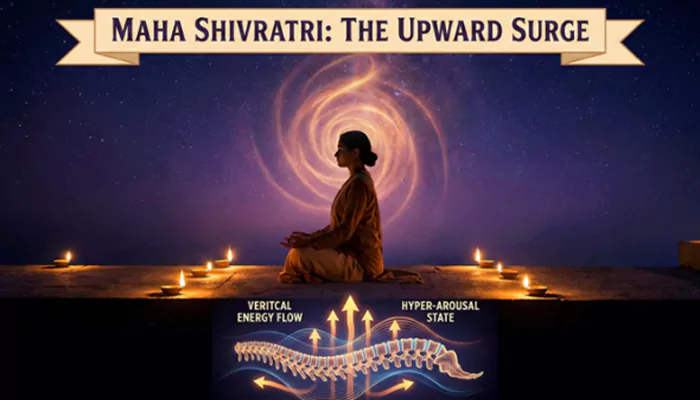
In the yogic tradition, it’s often said that on this night, there is a natural upsurge of energy in the planetary system. Now, whether you buy into the celestial mechanics or not, the physiological reality of keeping your spine vertical while the rest of the world is horizontal is fascinating.
When you refuse sleep, your body enters a state of heightened "hyper-arousal." Normally, your cortisol levels drop at night to let you drift off. During a Jagran, you’re essentially forcing the engine to stay in gear. This creates a strange, liminal headspace - a cocktail of adrenaline and sleep deprivation that, surprisingly, mimics certain meditative states. You aren't just "tired"; you’re vibrating on a different frequency.
Why the Spine Matters
Why can't we just do the Jagran while lying on the couch? (I’ve tried; it ends in a nap every single time).
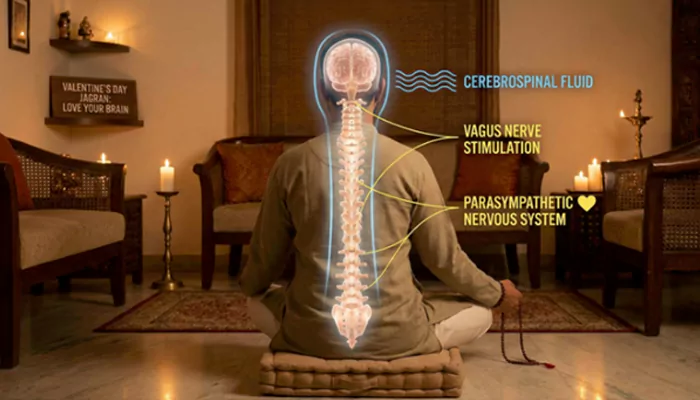
The insistence on a vertical posture is key. From a purely biological standpoint, keeping the spine erect ensures that the cerebrospinal fluid - the stuff cushioning your brain - circulates more effectively. When combined with rhythmic chanting (mantras), you’re effectively performing a low-grade "vagus nerve stimulation." This nerve is the highway of your parasympathetic nervous system. Chanting isn't just noise; it’s a vibration that physically calms the heart and sharpens the prefrontal cortex, even as the rest of the body screams for rest.
The 4:00 AM Clarity
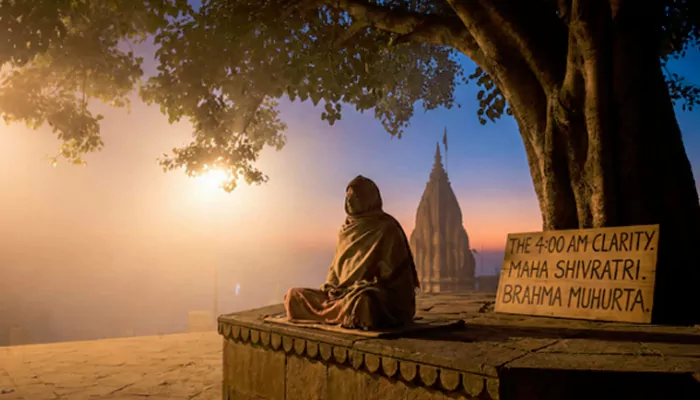
Ever noticed how the air feels different just before dawn? The Brahma Muhurta. By this point, the initial "I’m going to die if I don’t sleep" feeling has usually passed. You’ve broken through a wall.
Neurologically, prolonged wakefulness combined with focused intent can trigger a release of dopamine. It’s a survival mechanism. The brain thinks, "Well, if we aren't sleeping, we must be doing something vital," so it rewards you with a strange, lucid clarity. You feel light. Expansive. Perhaps even a bit "un-stuck" from your daily anxieties.
It’s not just a religious ritual; it’s a total system reboot. You walk out into the morning sun feeling wrecked, yes, but also strangely new.