Union Budget 2026-27 : The 4.3% Deficit Target - How the FM is Balancing Fiscal Prudence with a Growth Spree
- Devyani
- 8 months ago
- 3 minutes read
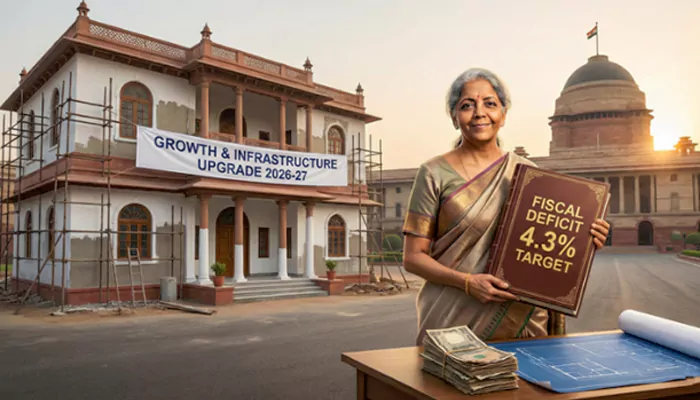
The Finance Minister just pulled off a magic trick - shrinking the credit card bill while upgrading the house. Here is why the boring number '4.3' is actually the most exciting part of this year’s financial blueprint.
If you were hoping for fireworks, you might have looked at the deficit number - 4.3% - and shrugged. It lacks the drama of the pandemic years when we were staring at 9% deficits and wondering if the sky was falling. But in the world of macroeconomics, boring is beautiful. In fact, boring is what gets you upgraded by global rating agencies.
The real story of the Union Budget 2026-27 isn't that we are borrowing less. It’s that we are borrowing less while simultaneously going on the biggest shopping spree in Indian history.
The "Cake and Eat It Too" Paradox
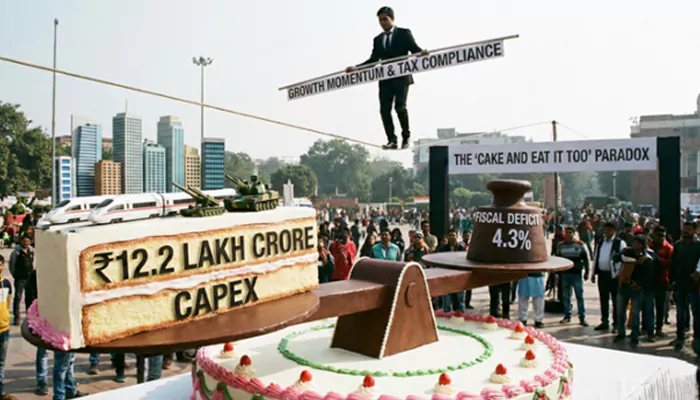
Let's look at the math, which usually doesn't lie, even if politicians sometimes do.
The Finance Minister has committed to a Capital Expenditure (Capex) of ₹12.2 lakh crore. That is a staggering amount of money. It’s a 11.5% jump from last year’s revised estimates. We are building seven high-speed rail corridors, financing new "City Economic Regions," and pouring cash into defense indigenization.
Normally, when a government spends like a drunken sailor, the deficit blows up. Yet, the fiscal deficit target has tightened from 4.4% to 4.3%. How?
It seems the government has finally mastered the art of "fiscal athleticism." They aren't starving the economy to save money; they are relying on the sheer momentum of growth (and some very aggressive tax compliance tech) to pay the bills. The assumption of 10.5% nominal GDP growth might feel optimistic to some, but given the tax buoyancy we’ve seen lately, it’s a gamble that will likely pay off.
The Bond Market breathes Easy

You know who loves this budget? The bond traders.
By sticking to the glide path - aiming for a debt-to-GDP ratio of 55.6% this year, with a laser focus on hitting 50% by 2031 - the FM has effectively told the bond market to chill. Lower government borrowing means there is more money left on the table for private companies to borrow. This is the "crowding in" effect economists love to lecture us about, but for once, we might actually see it in action.
The "New Normal" of Tax

However, there is a catch. You can't fix the deficit without revenue. The implementation of the New Income Tax Act, 2025 (effective April 1, 2026) is the silent engine here. By simplifying the code, the government is betting on volume. They believe that if you make paying taxes less painful than hiring a CA to evade them, people will just pay. It’s a behavioral bet, not just a fiscal one.
This budget doesn't scream. It whispers. It says, "We are steady." And frankly, after the roller coaster of the 2020s, I’ll take it steady. We are spending on assets, not freebies. We are tightening the belt, but not cutting off circulation.
If this is what "fiscal prudence" looks like, I’m sold. Just don't ask me to explain the new capital gains tax structure yet - I’m still working on that one.


.webp)
.webp)