Rule 49P Explained: What First-Time Voters Must Do If Someone Has Already Cast Their Vote
- Devyani
- 10 hours ago
- 3 minutes read
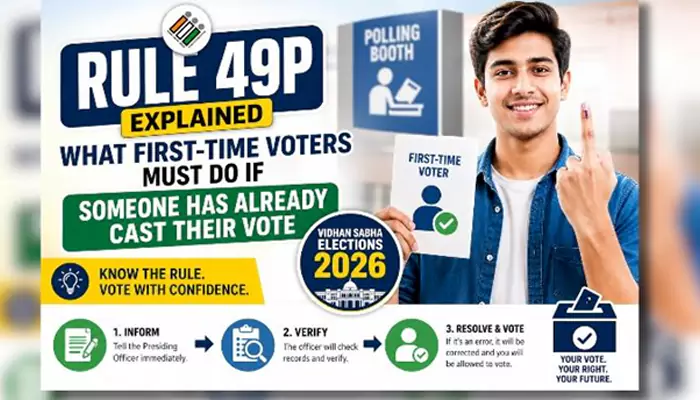
A small rule tucked inside election law, but for a first-time voter, it can be the difference between confusion and clarity at the polling booth.
It usually begins with a raised eyebrow. You step up, give your name, maybe fumble with your ID - and then the polling officer pauses. “Your vote has already been recorded.”
That sentence can feel unreal. Especially if it’s your first time.
Here’s where Rule 49P of the Conduct of Elections Rules, 1961 steps in. Not loudly. Not dramatically. But it’s there, like a quiet procedural safety net.
Put simply, Rule 49P deals with what election officials call a “tendered vote.” In everyday language: if someone else has voted in your name (by mistake or mischief), you still get a chance to assert your identity and record your vote - just not through the usual electronic machine.
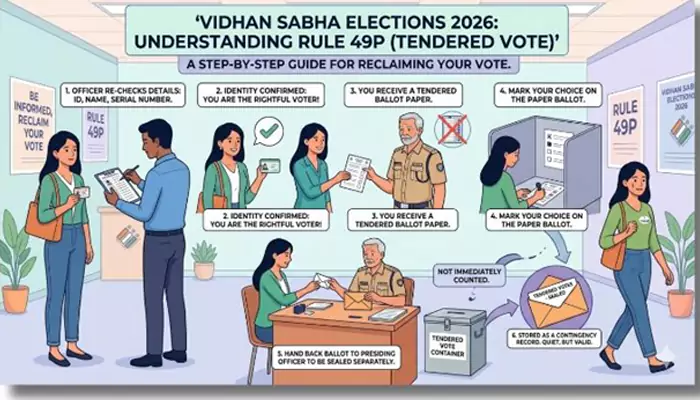
So, what actually happens at the booth? Let’s walk it through, because the process isn’t complicated, just unfamiliar.
First, the polling officer checks the electoral roll again. Details matter - name, serial number, ID proof. If you can establish that you are indeed the rightful voter, you’re not turned away. That’s the key thing.
Instead, you’re offered a tendered ballot paper.
Now, this is where things diverge from the standard routine. You don’t press a button on the EVM. You mark your choice on a paper ballot - old-school, almost nostalgic - and hand it back to the presiding officer. It’s then sealed separately.
Important detail, often missed: this vote isn’t immediately counted with the others. It’s kept aside and only comes into play under specific scrutiny, if needed. Think of it as a contingency record - quiet, but valid.
Why this extra step?
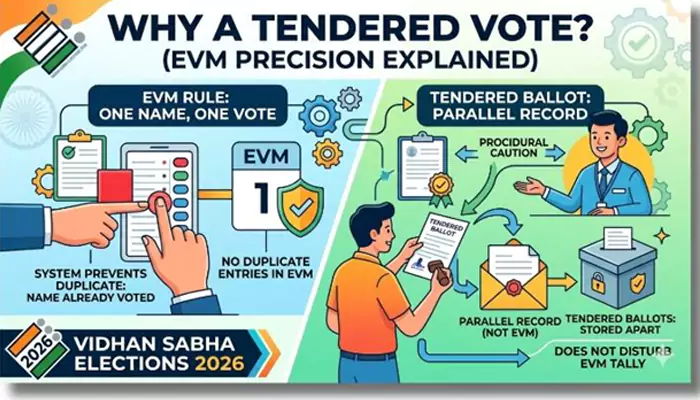
You might wonder - why not just let you vote normally again?
Because the system avoids duplicate entries in the Electronic Voting Machine. One name, one EVM vote. That’s the rule. The tendered ballot acts as a parallel record without disturbing the machine’s tally.
It’s procedural caution. Slightly bureaucratic, yes. But also precise.
For first-time voters: a quick reality check
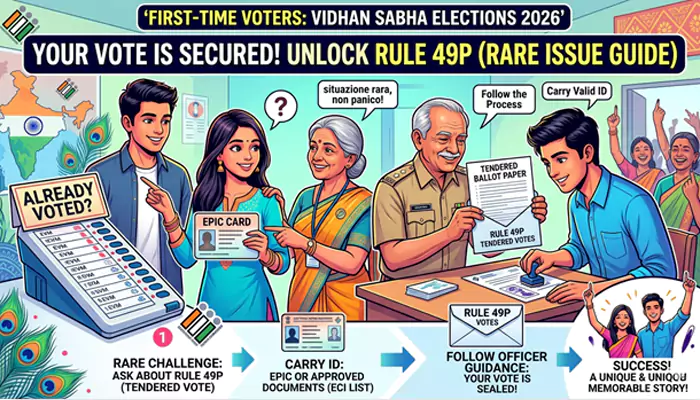
Here’s the thing - this situation is rare. Most voters walk in, vote, leave. Done. But elections operate at scale - millions of names, thousands of booths - so safeguards like Rule 49P exist for those odd, inconvenient moments.
If it does happen to you, don’t panic. Don’t argue endlessly either (tempting, I know). Follow the process. Carry a valid ID - EPIC card or any approved document listed by the Election Commission of India - and let the officers guide you through it.
And maybe, just maybe, treat it as an oddly memorable first voting story. Not ideal, but not a dead end either.