On This Day (Jan. 2): When Robert Clive Defeated Siraj-ud-Daulah to Capture Calcutta
- Rohit Chatterjee
- 9 months ago
- 3 minutes read

The capture of Fort William set the stage for the Battle of Plassey
Before the British regime in India, the Mughals had ruled over the subcontinent for nearly 331 years. However, by the mid-18th century, the Mughal rule was on the verge of collapse as several independent kingdoms rose to power, whereas European forces had reached India.
The East India Company was one such competing European force that wanted supremacy over the French and Portuguese. Therefore, they targeted Bengal, the richest province in India back then.
The Siege of Fort Williams
Bengal wasn’t an easy target for the East India Company, given that Bengal’s last nawab, Siraj-ud-Daulah, was a powerful ruler with a huge number of soldiers and weapons in his arsenal. Not to forget, Daulah had disputes with the East India Company, and therefore, he seized Fort Williams, which was an early British administration building.
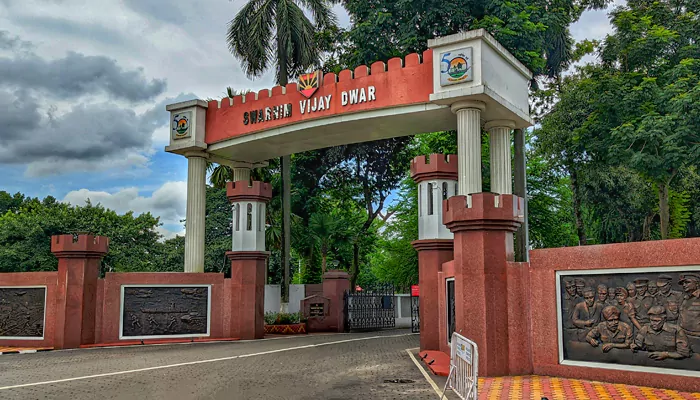
After the siege of Fort Williams, 123 prisoners out of 146 caught were confined to a small dungeon where they d*ed. This dungeon received the moniker of ‘The Black Hole of Calcutta,’ which became the point of justification for the British revenge and conquest.
Unfortunately, on January 2, 1757, i.e., eight months later, Fort Williams was recaptured by the East India Company, and Kolkata (then Calcutta) was under British command. However, Bengal was still under Daulah’s rule.
The betrayal of Rai and Jafar
After losing the fort, Siraj-ud-Daulah had turned to the French for an alliance. He knew that to ensure the survival of his rule and to keep Bengal out of British hands, he needed the help of foreign friends.
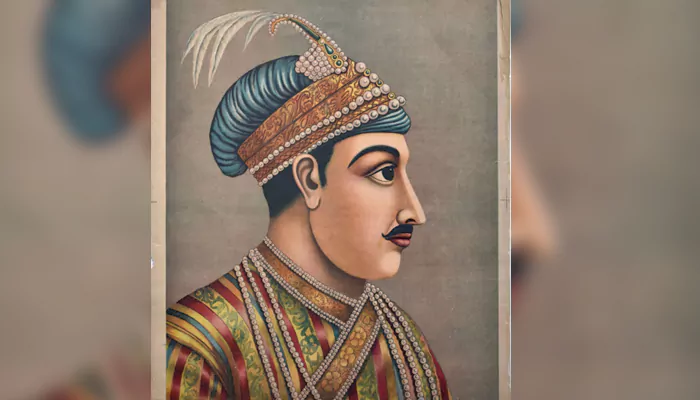
Sadly, he received betrayal from his own people. First, Mahtab Rai, head of the Jagat Seth Bengal banking family, was more worried that Daulah would snatch the wealth of the family in his quest to protect his reign. Therefore, Rai and Lieutenant-Colonel Robert Clive together planned the planning of making Mir Jafar the ruler of Bengal—Jafar was the commander of Siraj’s army. Greed took over loyalty, and Jafar agreed to the plan by Rai and Robert.
Last man standing
The only man standing between the British and Bengal was Siraj-ud-Daulah on June 23, 1757, when the armies of the two sides met at the Battle of Plassey, a location merely 160 kilometres away from Kolkata.
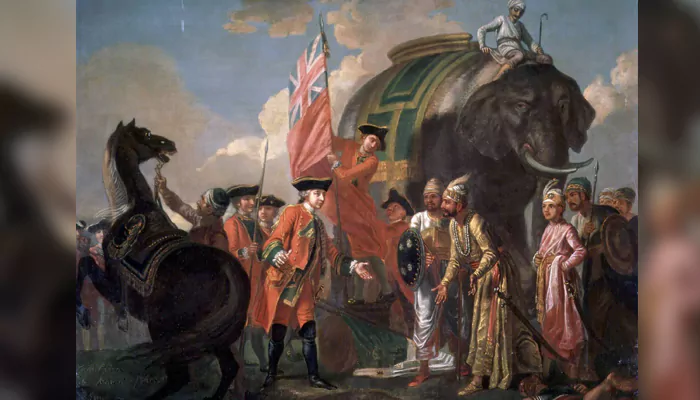
Despite having 50,000 men, including 16,000 cavalry. He also had 50 field guns, a combination of 32-, 24-, and 18-pounders, against Robert Clive’s meagre 3,000 infantry, ten field guns, and two small howitzers; Siraj-ud-Daulah lost due to poor tactics by Mir Jafar, whereas rain also played foul.
Later, Mir Jafar k*lled Siraj-ud-Daulah only to become a puppet of the British Raj. Clive was appointed the governor of Bengal, and this lost battle marked the birth of British India’s Indian empire.
Unfortunately, Siraj-ud-Daulah’s name is rarely mentioned in the history books for the gallant stand he took against the British Raj. Daulah gave away his life at the age of 23 but never got the respect he deserved for his anti-British stance.