Lala Lajpat Rai Birthday Special: Remembering the Revolutionary Whose Life Was Snatched in a Peaceful Protest
- Soham Halder
- 8 months ago
- 4 minutes read
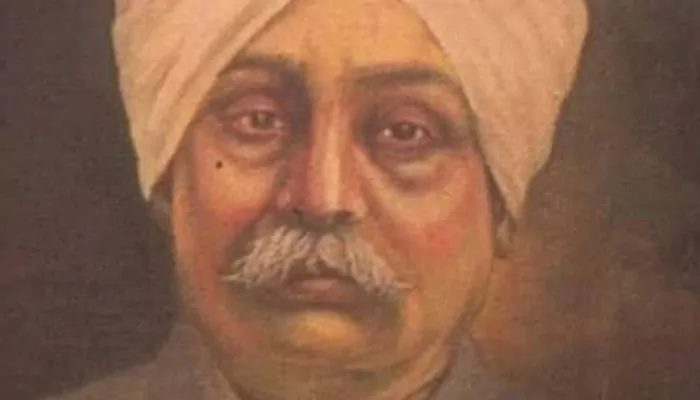
A life lived for freedom, a sacrifice etched in history.
Every year, as India remembers its freedom fighters, Lala Lajpat Rai stands tall as one of the most fearless voices of resistance. Known as the Lion of Punjab, his life was a testament to courage, conviction, and sacrifice. Yet, the tragic manner of his death during a peaceful protest remains one of the most heart-wrenching chapters in India’s freedom struggle.
On his birth anniversary, it is important to look beyond textbook paragraphs and rediscover the man whose fearless spirit continues to inspire generations.
The Making of a Revolutionary
Born on January 28, 1865, in Dhudike, Punjab, Lala Lajpat Rai grew up in an environment that valued education and patriotism. A brilliant student, he pursued law but soon found his calling in India’s fight against British colonial rule.
He believed that true freedom could not exist without social reform, education, and national self-respect. His leadership was instrumental in shaping nationalist movements, especially in northern India.
Alongside Bal Gangadhar Tilak and Bipin Chandra Pal, he formed the iconic Lal-Bal-Pal trio, which became the backbone of assertive nationalism in the early 20th century.
A Voice That Refused to Be Silenced
Lala Lajpat Rai wasn’t just a political leader. He was a prolific writer, reformer, and institution-builder. He championed education for all and played a key role in establishing the Dayanand Anglo-Vedic (DAV) schools, which continue to shape young minds even today.
Through his speeches and writings, he openly criticised British policies, demanding self-rule and civil liberties. His bold stand often led to imprisonment, surveillance, and harassment, but never submission.
The Protest That Changed History
In 1928, the British government sent the Simon Commission to India to propose constitutional reforms without including a single Indian member. The move triggered nationwide outrage.
Lala Lajpat Rai led a peaceful protest march in Lahore, holding black flags and chanting slogans of protest. There was no violence. No weapons. Only voices demanding dignity and justice.
But the British response was brutal.
The police launched a lathi charge on the unarmed protesters. Lala Lajpat Rai was severely beaten. Despite his injuries, he addressed the crowd with historic words:
"Every blow aimed at me is a nail in the coffin of British imperialism."
He succumbed to his injuries on November 17, 1928.
A Martyrdom That Sparked a Revolution
Lala Lajpat Rai’s death shook the entire nation.
It also ignited the fire of rebellion among young revolutionaries like Bhagat Singh, Rajguru, and Sukhdev, who later assassinated British officer J.P. Saunders to avenge his death.
Thus, a peaceful protest turned into a turning point, accelerating India’s march toward freedom.
Why His Sacrifice Still Matters Today
In today’s world of instant reactions and polarised debates, Lala Lajpat Rai’s life reminds us of:
- The power of peaceful resistance
- The importance of fearless leadership
- The strength of moral conviction
He proved that true courage lies in standing firm without hatred, and that peaceful protests, when rooted in justice, can shake empires.
Beyond a Freedom Fighter: The Human Side
Despite his fiery public image, those close to him described Lala Lajpat Rai as deeply compassionate and disciplined. He believed that freedom was incomplete without social reform especially the upliftment of women and marginalised communities.
His life reflected a rare balance of intellectual depth, emotional strength, and moral clarity.
As we celebrate Lala Lajpat Rai’s birthday, let us remember not just his martyrdom, but the values he lived by fearlessness, integrity, and selfless service.
His life teaches us that even peaceful voices can rattle mighty empires, and that sacrifice for justice never goes in vain.
The Lion of Punjab may have fallen, but his roar continues to echo in India’s soul.