
Women's Day Special: The Power of the Registry: Why Mandatory Female Ownership in PMAY is a Marriage Game-Changer
- Devyani
- 7 months ago
- 3 minutes read

Forget the gold jewelry and lavish wedding gifts. The ultimate flex in modern Indian matrimony is a government-stamped property deed with her name in bold ink.
Honestly, if you look at the average Indian wedding, the sheer volume of gold exchanging hands could probably fund a tech startup, yet when the honeymoon phase inevitably fades and the actual gritty business of living together starts, all those heavy polki necklaces don't mean much because they just sit in bank lockers gathering dust.
Real power? Real, tangible negotiating power in a marriage? It doesn't sparkle. It lies in a stack of incredibly boring, green-stamp paper.
For generations, the trajectory was brutally simple. A woman leaves her father's house to live in her husband's house, and maybe, if she outlives him, she'll stay in her son's house. Always a guest. Seldom a landlord.
Enter the Acronym
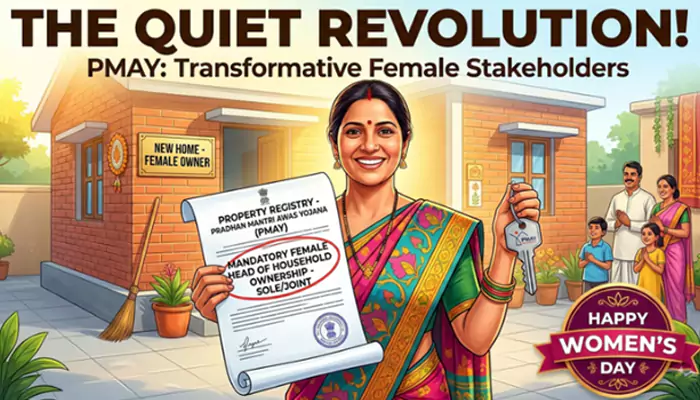
Then came the Pradhan Mantri Awas Yojana (PMAY). On paper, it’s just another massive infrastructure push by the government to build affordable homes. But hiding inside the bureaucratic fine print is a brilliant bit of social engineering: the mandate that the house must be registered in the name of the female head of the household, or at least as a joint owner.
I believe it’s the quietest revolution we've seen in our lifetimes. Utterly transformative.
Having her name on that registry changes the entire domestic dynamic from the ground up. It just does. When a woman owns the brick and mortar of the aangan she sweeps every morning, the age-old, terrifying threat of "get out of my house" during a heated argument completely vanishes. Poof. Gone.
She isn't just a dependent who happens to manage the kitchen logistics anymore; she is a legal, documented stakeholder in the family's largest financial asset.
The Ripple Effect of Real Estate

And here is the thing that people often miss - it offers access to formal credit. Banks like property owners, they don't care much for unpaid care work at all really. If she wants to start a small tailoring business or a cloud kitchen, that PMAY house is her collateral. It forces financial institutions to finally see her.
We talk about a big game about women's empowerment around early March every year. We hand out pink roses at the office. We cut a cake. We share aesthetic quotes on Instagram. But true equality doesn't arrive in a bouquet, it arrives in a title deed.
So, as we celebrate the women holding up half the sky this Women's Day, perhaps we should also applaud the dry, administrative policies that ensure they actually own the ground they are standing on. Because a house isn't just a shelter. It’s an anchor.