Forget Shark Tank: Why the 'Lakhpati Didi' is the Real Startup Icon We Should Celebrate this Women's Day
- Devyani
- 7 months ago
- 3 minutes read
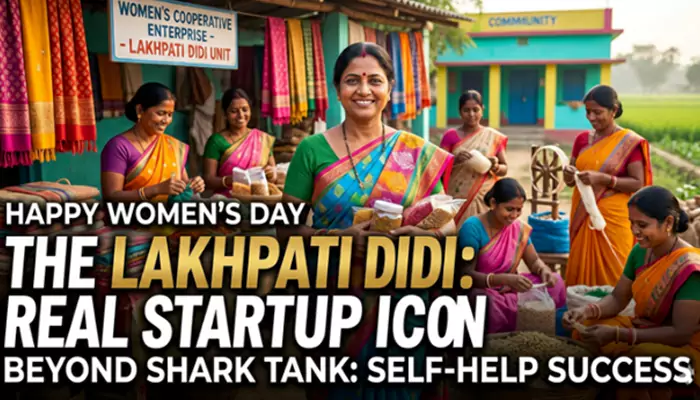
Move over, Silicon Valley unicorns. The actual blueprint for sustainable economics is being written by rural self-help groups - and they don’t even need a pitch deck.
We spend a ridiculous amount of time obsessing over pitch decks. You know the drill. A charismatic founder in a fleece vest stands in front of a camera, promises to "disrupt" something entirely trivial like laundry delivery, and suddenly millions in venture capital change hands. Sure, it makes for great television.
But honestly? The real startup mindset isn't happening on a soundstage, and it definitely isn't brewing in a co-working space. It’s happening in village courtyards.
Let's talk about the 'Lakhpati Didi'.
If you’ve been analyzing the recent Union Budget trends or mapping out financial literacy campaigns lately, you’ve probably noticed the shift. The government’s aggressive push to elevate millions of women in Self-Help Groups (SHGs) into the "Lakhpati" bracket - earning a sustainable household income of at least one lakh rupees annually - is quietly rewiring the rural economy.
Bootstrapping, But Make It Literal
Think about the sheer logistics of it.
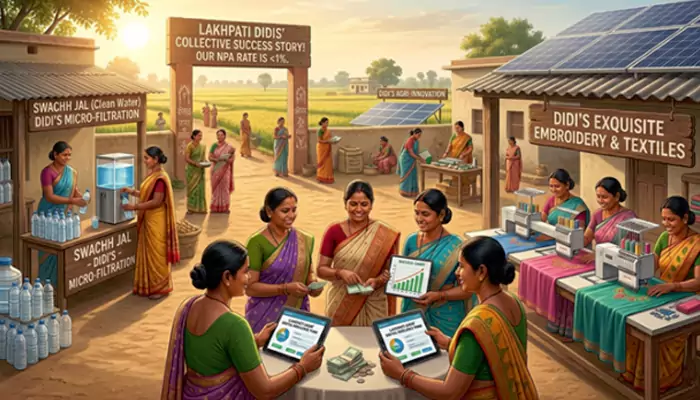
These women aren't dealing with angel investors. They are pooling micro-savings. Fifty rupees here. A hundred rupees there.
They run drone-spraying services, manage local poultry supply chains, and manufacture LED bulbs. It is arguably the most authentic form of bootstrapping I’ve seen in my entire career analyzing digital strategy and market messaging.
There is zero bloated marketing budget. No vanity metrics. If Lakhpati Didi’s business model fails, she doesn't get to pivot and write a reflective LinkedIn post about her "learnings." Her family skips a meal. The stakes are terrifyingly real.
Perhaps that’s exactly why their success rate is so staggering. When the NPA (Non-Performing Asset) rates of these rural women's groups are compared to corporate loan defaults, the corporate guys look, well, a bit embarrassing. Women pay their debts. They reinvest in their communities. It’s a closed-loop ecosystem of economic resilience.
Changing the Narrative
This International Women’s Day, my feed will inevitably fill up with corporate panels celebrating female executives. Which is fine - I am glad we are having those conversations about glass ceilings and board representation.
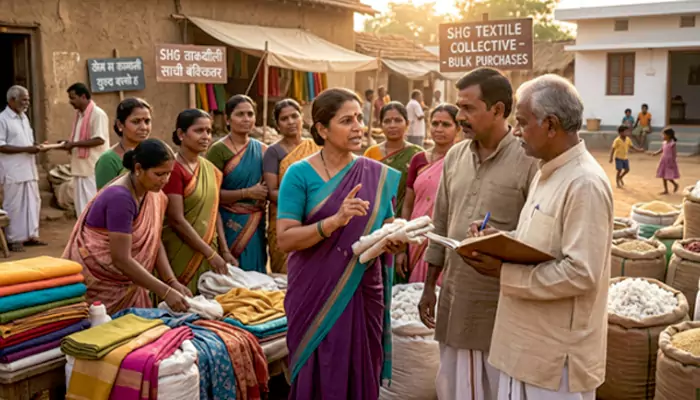
Yet, I can't help but feel we are missing the bigger picture. True financial independence doesn't just look like a corner office. Sometimes, it looks like a woman in a rural district successfully negotiating a bulk raw material purchase for her SHG, completely changing her family's trajectory in a single generation.
We don't need to hand them a microphone or put them on a reality show. They are too busy actually running the economy. But maybe, just maybe, it’s time we started taking notes.