Jan 26, 1950: The Hand That Wrote India's Constitution - Meet Prem Behari Narain Raizada, The Calligrapher Who Made History
- Devyani
- 8 months ago
- 4 minutes read
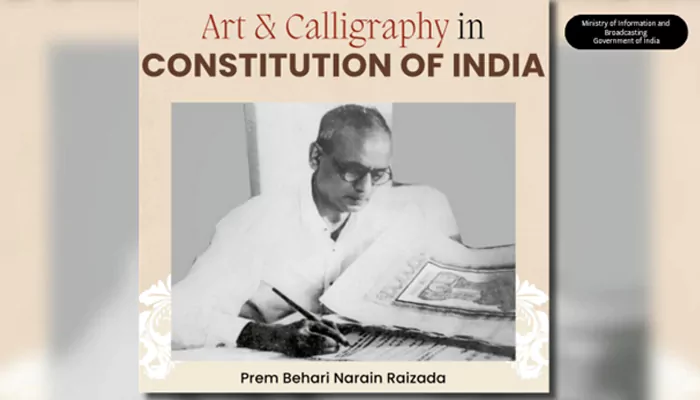
Before we had the cloud, we had a room in Delhi, 303 nibs, and a man who refused to take a paycheck.
Let’s be honest. In 2026, the idea of writing anything by hand feels almost rebellious. We dictate to our phones; we tap screens; we let autocomplete finish our thoughts. If you make a mistake? Backspace. Delete. Undo. It’s easy. It’s safe.
Now, imagine staring at a blank sheet of parchment that is destined to become the most important document in your country’s history. You have a pen in your hand. There is no delete button. There is no “Version 2.0.” You have to get it right the first time, every single time, for 251 pages straight.
(@ddnews_official/Instagram)
That was the reality for Prem Behari Narain Raizada, the man whose hands quite literally shaped the Constitution of India. On this 77th Republic Day, while we watch the parades and scroll through digital tributes, it’s worth pausing to remember the guy who did the heavy lifting - ink, sweat, and silence included.
Not Your Average Government Contractor
It starts with a meeting that sounds like something out of a movie script. The year is the late 1940s. The drafting committee, led by Dr. B.R. Ambedkar, has finalized the text. But how do you present it? Print it? Type it? No, that felt too cold for a nation that had just fought so hard for its soul. It needed to be art.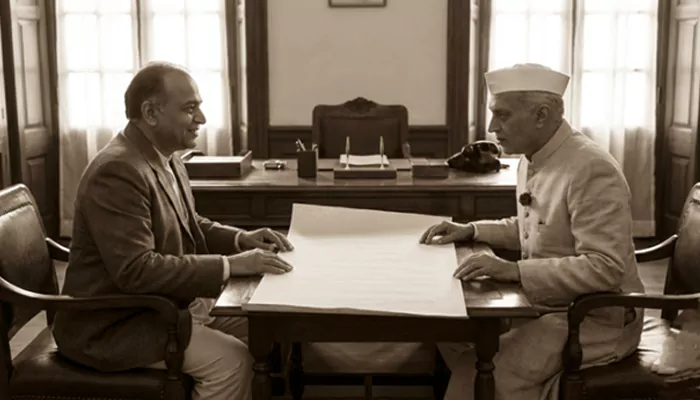 So, Jawaharlal Nehru approaches Raizada. Now, Raizada wasn’t just some random clerk. He came from a family of traditional calligraphers; his grandfather, Master Ram Prasad Saxena, was a legend in the field, a scholar of Persian and English who had raised Prem Behari after his parents died. Nehru asks him the awkward question: “How much will you charge?”
In a world where everyone has a price, Raizada’s answer was a mic drop. “Not a single penny,” he told the Prime Minister. “By the grace of God, I have all the things and am quite happy with my life”.
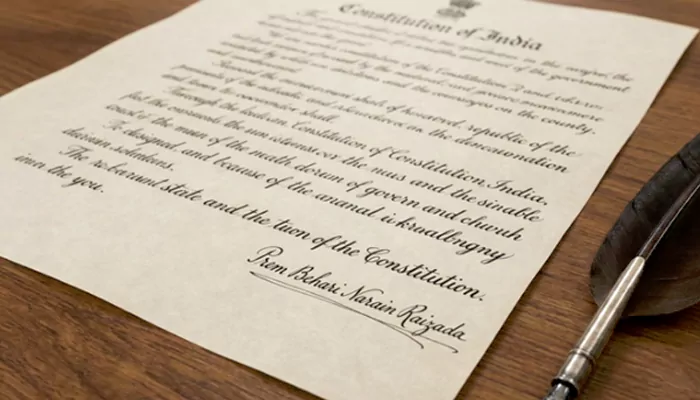
But he did have a condition. A request that was both humble and incredibly bossy. He wanted to sign his name on every single page of the document. And on the very last page? He wanted his name alongside his grandfather’s. Nehru agreed. Best deal the government ever made, if you ask me.
The Room, The Nibs, The Grind
They gave him a room in the Constitution House (now the Constitution Club). For six months, this was his universe.
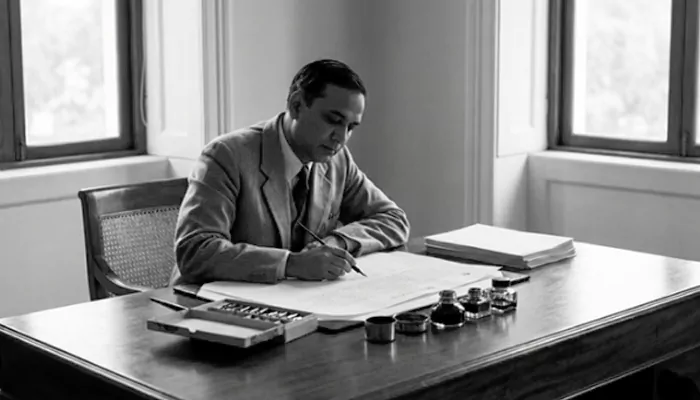
Raizada didn’t use a ballpoint. He used No. 303 nibs imported from England and Czechoslovakia, fitted into wooden holders. Four hundred and thirty-two of them, to be precise. He dipped them into black ink and began to write in a flowing, italic style that looks as sharp today as it did 76 years ago.
Picture the pressure. The artists from Shantiniketan, led by the legendary Nandalal Bose, were simultaneously illustrating the borders with scenes from Indian history - Mohenjo-Daro, the Ramayana, the freedom struggle. Raizada had to match that grandeur with just text. If his hand shook, if the ink blotted? The page was ruined.
Why It Matters Now
(@radioazimpremjiuni/Instagram)
We often talk about the architects of the Constitution, referring to the legal minds. And rightly so. But we rarely talk about the craft of it. The physical act of putting pen to paper is an act of commitment. When Raizada wrote "We, the People," he wasn't just copying text; he was etching a promise.
Today, the original copy is kept in a helium-filled case in the Parliament Library to stop the paper from decaying. But the ink? That hasn’t faded.
So this January 26th, when you see the flag go up, maybe take a second to think about Prem Behari Narain Raizada. The man who didn’t want money, just a little corner of the page to say, “I was here. I wrote this.” That’s a flex we can all respect.