Jan 26, 1950: India Became a Republic But Kept the British Queen on Currency - The Confusing First Year Explained
- Devyani
- 8 months ago
- 3 minutes read
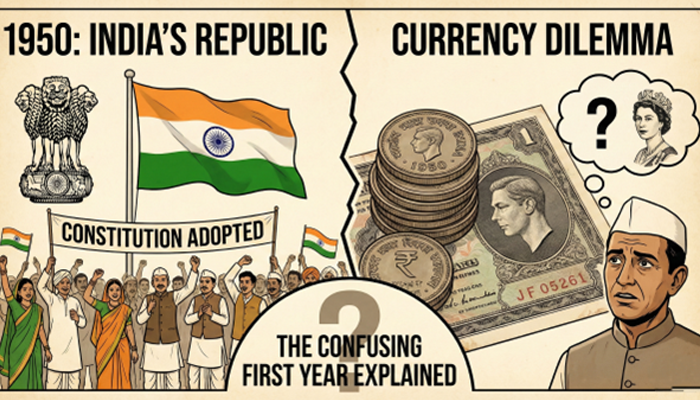
India declared itself a republic on January 26, 1950. But Queen Elizabeth's dad was still on the coins, and that overlap tells a story about patience over pride.
Imagine this. It is Republic Day 1950. The parade is thundering down Rajpath. Nehru has just sworn in the new republic. You buy a cup of chai. The vendor hands you change with the face of King George VI. Wait, what?
That is exactly what happened. The first coins of Republic India, the Anna Series, were minted on August 15, 1950, replacing the King's portrait with Ashoka's Lion Capital from Sarnath. But pre-independence coins, those with George VI minted up to 1947, stayed legal tender for months, maybe a year in some places. Banknotes were similar; RBI notes with the King's image circulated alongside new Lion Capital designs until supplies ran low. Confusing? Sure. But it was deliberate.
The Practical Side of Patriotism
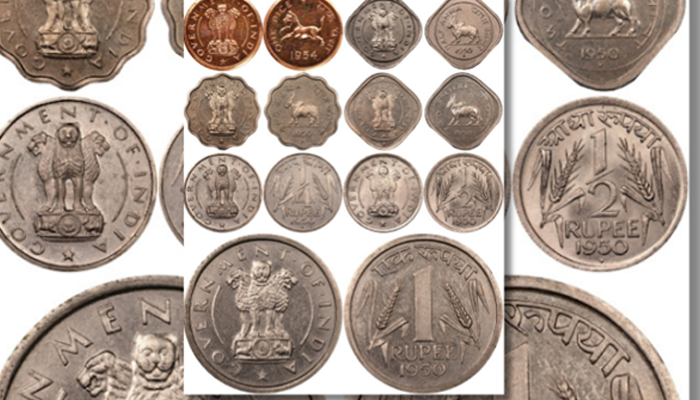
Changing money is not like changing a flag. You cannot just snap your fingers and make every rupee vanish. Post-partition India was broken, chaotic; metal shortages were real, printing presses overloaded. Demonetising everything would have sparked panic buying, black markets, shops shutting down. So they phased it. Old coins stopped being minted. New ones rolled out slowly, starting with small denominations like pice, anna, quarter rupee. The 1950 one-rupee piece, nickel, 11.66 grams, Lion Capital obverse, "1 RUPEE" in English and Devanagari reverse, felt solid, promising. By 1951, most pockets had the new stuff. Full transition came with 1957 decimalisation, rupee into 100 paise.
Notes lagged too. Gandhi was floated early but passed over for symbols; Lion Capital watermark became standard. Colonial notes faded as new ones were printed.
What Was on Those First Republic Coins?
No Queen, by the way. George VI was gone by 1950 minutes. The Anna Series had seven pieces: 1 piece (copper-nickel), 1/2 anna, 1 anna (bronze), 2 anna, 1/4 rupee, 1/2 rupee, 1 rupee (nickel). Obverse: Sarnath lions. Reverse: value, wheat sheaf for smaller ones, rupee symbol for larger. Mint marks from Bombay, no London anymore.
People noticed the change. Felt it in the weight. But old coins bought the same chai, same train ticket. No one rioted over portraits.
Why It Matters on the 77th

Fast forward to 2026, our 77th Republic Day. We pay with UPI, scan QR codes, and barely touch cash. That first year's overlap feels like ancient history, a footnote. But it is a sharp reminder. Nations are not born clean. They stumble out messy, pragmatic.
Declaring sovereignty is one thing. Rewiring an economy another. India chose stability over symbolism, letting the Queen's ghost linger in change jars until it did not. Slightly undignified? Perhaps. But it worked. No hyperinflation, no collapse. The republic stood firm.
Today, when every debate feels like it demands instant purity, that patience hits differently. The coin with the old king's face bought time for the new lions to roar. And in the end, that is what republics do; they endure the awkward transitions.