In Memoriam: Nikola Tesla -- The 'Mad Scientist' Who Dreamt of Giving Free Energy to the World
- Rohit Chatterjee
- 2 months ago
- 3 minutes read
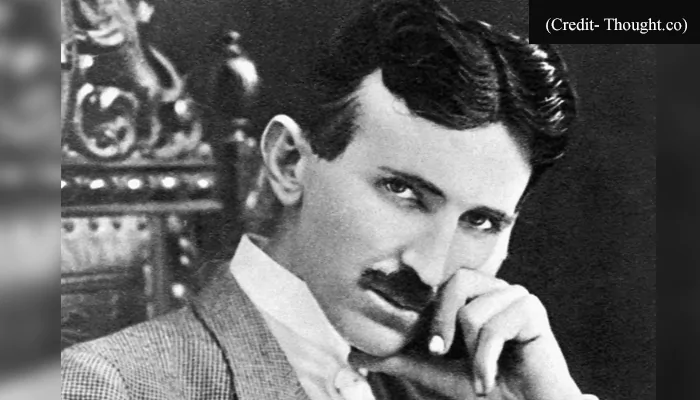
Tesla invented alternating current and the polyphase alternating current system, because of which the mass production of power supply is possible today
Tesla—today, this name is known in several parts of the world because it is the electric vehicle company of multimillionaire Elon Musk. However, many may not be aware that Elon Musk used this name to pay homage to Nikola Tesla, the American-Serbian scientist who gifted the world with the invention of the alternating current electric supply system, among many.
Despite being a major scientific name in humankind’s history, Tesla passed away alone and in poverty in a hotel room on January 7, 1943, at the age of 86. On his death anniversary, we recall Tesla’s vision of giving free electricity to the world. Yes, once upon a time, Tesla, who was called a “mad scientist” because of his outlandish ideas, thought of a world that would have free electricity in every corner.
Wardenclyffe Tower
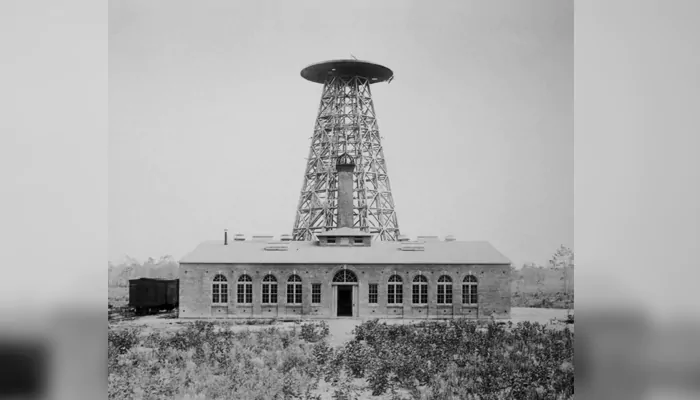
One of Tesla’s outlandish ideas was to transfer electricity in a wireless manner without the usage of cables or wires. He also believed that relying on fossil fuels would become problematic, and therefore, he wanted the world to be free of such a burden. Therefore, he built the Wardenclyffe Tower in New York, a colossal structure through which he envisioned transferring wireless electric energy via using the earth’s magnetic field and rotation.
A failed dream
Tesla’s dream was not possible with what we know about modern-day physics. Before setting up the Wardenclyffe Tower, he had set up a large coil in megavolt ranges in Colorado Springs to produce artificial lightning. However, at one point, a generator had completely burnt because of the experiment, and he had realised that it wasn’t going to be an easy task.
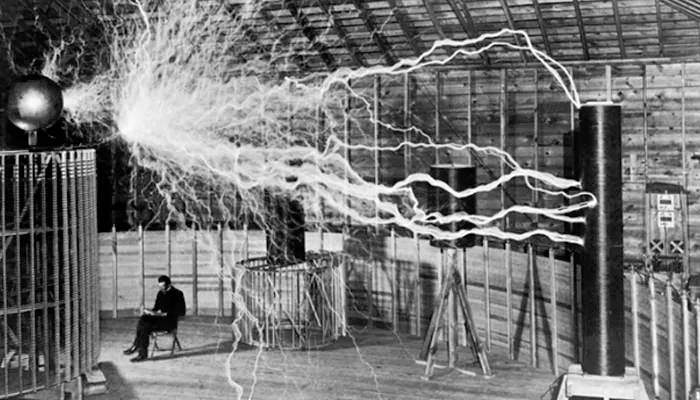
By 1902, many investors had started calling Tesla’s vision a hoax, and by 1906, Tesla himself had a breakdown, because of which his project remained unfinished. In fact, he was left with a loan of nearly 20,000 US dollars.
Not possible today
Even today, modern-day physics states that short-distance wireless transfer of electricity is possible. For example, wireless charging of smartphones is an example of wireless transfer of electricity. However, transferring electricity wirelessly is not possible because the efficiency decreases with range. Not to forget, according to the inverse-square law, energy disperses as it radiates, and therefore, by the time the energy reaches its destination, only a tiny fraction remains, whereas most gets wasted.
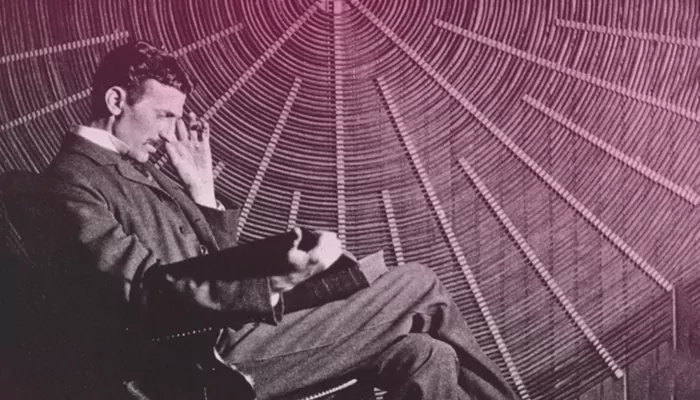
In short, Tesla’s vision was for the benefit of all humankind, but it wasn’t in line with the laws of physics known to the world. Nonetheless, Tesla was one of the reasons behind the world's reliance on the AC electrical system and wireless communication technologies such as radio and remote control.
On his death anniversary, this article pays homage to the man who passed away penniless and alone, but today, his work is being acknowledged and used in several scientific fields.