
Celebrating Vijay Diwas: India's Pioneering First Missile Strike at Sea - A Naval Breakthrough in 1971
- Devyani
- 10 months ago
- 4 minutes read
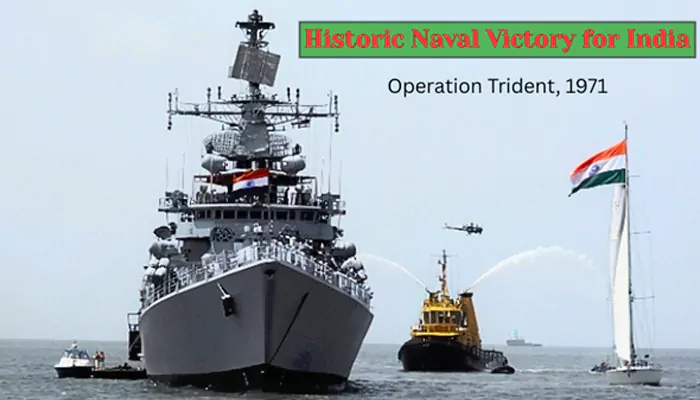
On Vijay Diwas, the spotlight quietly swung seaward - to a handful of missile boats that proved India could rewrite naval playbooks from the Arabian Sea itself.
Vijay Diwas, observed on 16 December, marks a decisive 1971 victory that reshaped the map of South Asia and paved the way for the birth of Bangladesh. It is a day to remember how India’s armed forces worked in rare sync on land, in the air, and crucially, across the ocean approaches to the subcontinent. Tucked inside those commemorations is a quieter story: a pioneering missile strike at sea that signalled India’s arrival as a modern maritime power.
The Night of the Missile Boats
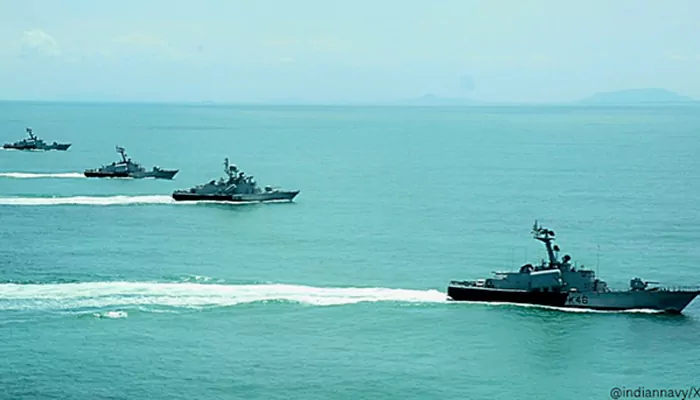
INS Nipat, INS Nirghat and INS Veer (22 Killer Squadron)
On 4 December 1971, a compact task group slipped out from India’s western coastline, built around three newly inducted Vidyut‑class missile boats - INS Nipat, INS Nirghat and INS Veer - from what became famous as the “Killer” missile squadron. Each carried four Soviet‑origin Styx surface‑to‑surface missiles, giving these small, fast craft a punch far beyond their size, while two larger escorts - INS Kiltan and INS Katchall - and the tanker INS Poshak provided radar cover and fuel.
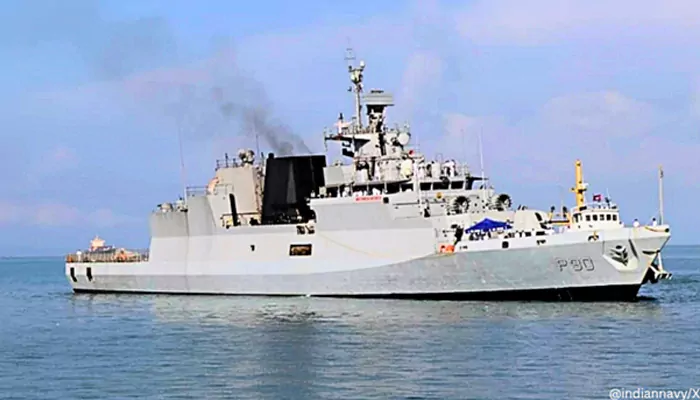
Indian Navy Ship INS Kitan (P30)
Moving under radio silence on a moonless night, the group closed in on a heavily defended port on the Arabian Sea, acquired multiple surface targets at long range and fired a coordinated volley of missiles that destroyed ships and shore installations before turning back towards home waters without losing a single Indian sailor.
India’s First Missile Strike at Sea
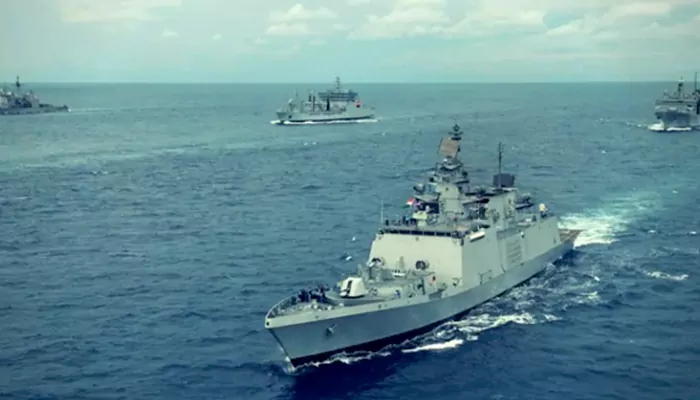
Operation Trident
For India, this operation - later named Operation Trident - was a first in several ways: it marked the maiden use of ship‑launched anti‑ship missiles by the Indian Navy, and one of the earliest successful missile‑boat strikes anywhere in the region. The gamble showed that a fleet did not need only big destroyers and carriers to shape events at sea; a handful of small, missile-armed craft, properly led and cleverly positioned, could dominate a coastline and keep much larger adversary units at bay. The success cemented the reputation of the 25th Missile Boat Squadron - later the 22nd Missile Vessel Squadron - which would go on to receive the President’s Standard, while 4 December itself is now observed as Navy Day in honour of that breakthrough attack.
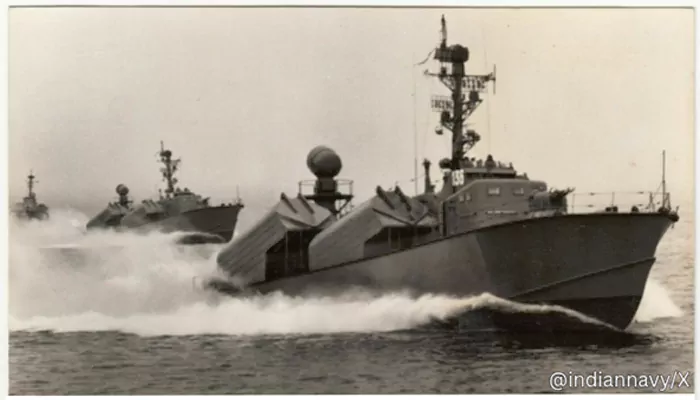
25th Missile Boat Squadron
How This Breakthrough Feeds Into Vijay Diwas
Sea control during the 1971 campaign meant India could move troops, relief supplies and equipment securely along its coasts, and project power towards the east without constantly looking over its shoulder in the west. Missile strikes from the Arabian Sea, combined with carrier‑based air operations and a tight naval cordon in the Bay of Bengal, boxed in opposing forces and helped create the conditions that led to the swift, decisive outcome now remembered as Vijay Diwas on 16 December.
In simple terms, what happened at sea turned a difficult, grinding campaign into one where India could dictate tempo - and that’s why veterans still describe these missile boats as having “punched far above their weight,” even decades later.
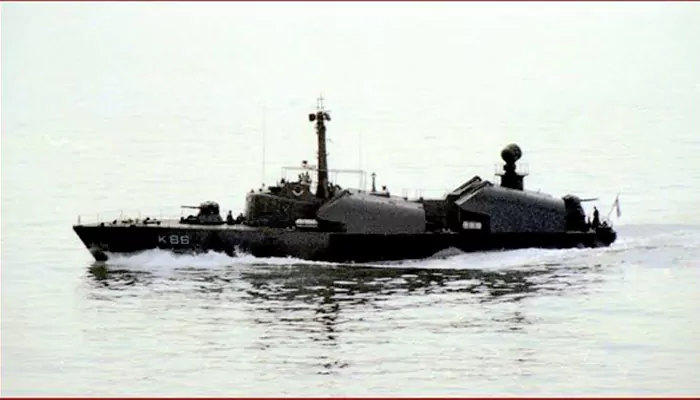
INS Nipat, Operation Trident (1971)
In an era of precision drones, long‑range cruise missiles and satellite tracking, that 1971 strike still feels oddly current - proof that innovation isn’t only about gadgets, but also about daring to use existing tools in ways nobody quite expects.
So when Vijay Diwas comes around and timelines fill with tributes, it’s worth sparing a thought for those compact grey hulls and the crews who showed that India’s victory story also runs through saltwater and signal flares, not just parades on dry land.