Birthday Special: Netaji's Parallel Pound - Azad Hind Coins That Could've Crashed the British Pound in Days
- Devyani
- 9 hours ago
- 4 minutes read
One man, one bank, and the audacity to print a revolution on a promissory note.
History, if you look closely enough, isn't just written in ink; sometimes, it’s stamped into metal. And sometimes, it’s printed on a piece of paper that promises you a future that hasn't happened yet.It’s 1944. The place is Rangoon. The air is thick, probably smelling of monsoon damp and high-stakes desperation. In a building that would soon become the heartbeat of a ghost government, Netaji Subhas Chandra Bose isn't just planning a military offensive. He is doing something far more dangerous. He is printing money.
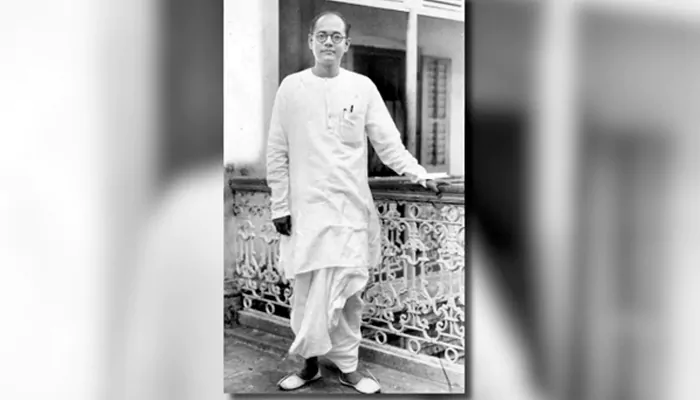
Today, the man turns 129 (in spirit, at least), and while we light candles for the soldier, we often forget the economist who knew exactly where to hit the British Empire. Not just in the jaw. But in the wallet.
The Bank That Wasn't There
Imagine the sheer nerve. You don't have a country yet. You don't have a treasury. But you open a bank.
(@thebetterindia/Instagram)
The Azad Hind Bank wasn't a symbolic gesture; it was an act of financial warfare. Established in April 1944, this wasn't some back-alley operation. It had branches. It had shareholders. It had a paid-up capital of ₹5 million, collected from the tear-stained donations of Indian expatriates in Burma and Malaya.
(@thechlioschronicles/Instagram)
They gave everything. Gold ornaments, life savings, land deeds. There’s a story - maybe apocryphal, maybe not - of a man named Iqbal Singh Narula who offered silver equal to Netaji’s weight. Heavy.
Why? Because the British Pound Sterling wasn't just currency; it was a leash. To break the leash, you had to make the metal at the end of it worthless.
The "Parallel Pound"
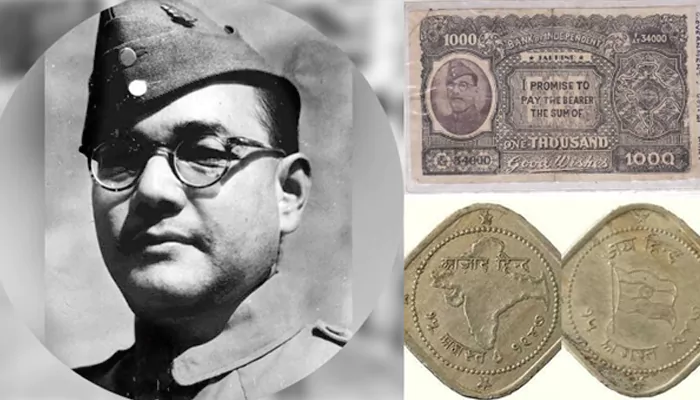
Here is where it gets interesting. The Azad Hind currency - technically Promissory Notes - was designed to function as legal tender the moment the Indian National Army (INA) set foot on Indian soil.
(@coinhunter_1968/Instagram)
They were crude, yes. Printed on one side because, well, war shortages. But look at the details. The inscriptions didn't say "I promise to pay the bearer on demand." They carried something heavier: "I promise to pay the bearer on demand... after the liberation of India." That is not a banknote. That is a bet.
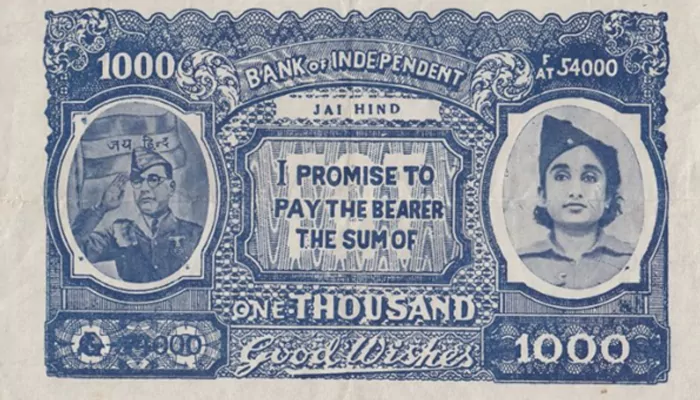
And the coins? They were even more direct. They didn't have the resources to mint millions of new coins from scratch, so they improvised. They took British silver rupees - the very symbols of colonial oppression - and stamped "PGAH 1943" (Provisional Government of Azad Hind) right over King George VI’s face.
Think about the psychology of that. Every time a British soldier or a loyalist bureaucrat handled that coin, they were touching their own obsolescence. It was a viral marketing campaign before the internet existed.
The Crash That Could Have Been
So, could it have crashed the Pound? In days? Maybe not days. But let’s play the "what if" game.If the INA had held Imphal. If the Japanese supply lines hadn't snapped. The plan was to declare British currency invalid in liberated territories. Imagine the panic. A run on the banks in Bengal. The total loss of faith in the "Company Rupee.
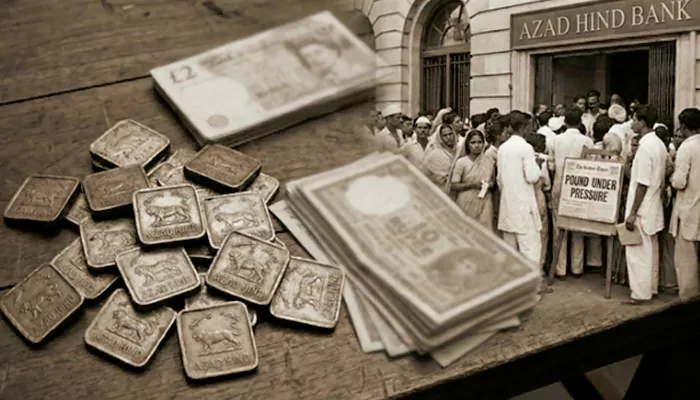
"Financial systems run on trust. Netaji knew that if you could make the people trust a piece of paper signed by him more than a piece of paper signed by the Viceroy, the Empire collapses. You don't need to defeat every soldier if you can bankrupt the government paying them.
The Legacy of a "Bad" Cheque
We know how it ended. The plane crash (or the mystery, take your pick). The surrender. The notes became worthless paper, souvenirs tucked into old trunks, discovered decades later by grandkids who didn't understand why a 1000-rupee note had a picture of Bose on it instead of Gandhi.
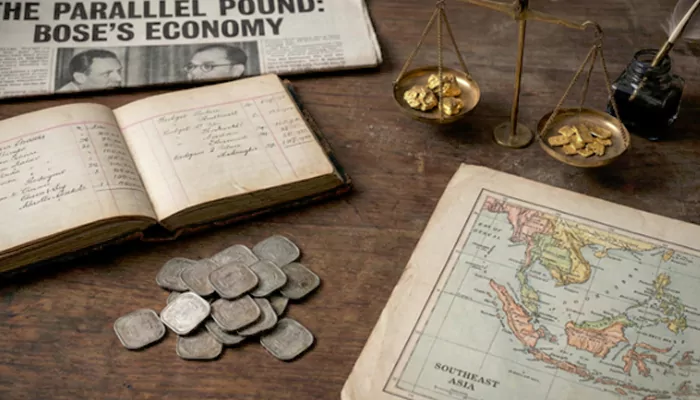
But for a few glorious, terrifying months, there was a parallel economy. A "Parallel Pound.”
It serves as a reminder. Independence wasn't just won with non-violence or blood. It was also fought for with ledgers, with gold weighed on scales, and with the audacious idea that a country exists the moment you print its name on a bill.
Happy Birthday, Netaji. You didn't just give us a direction; you tried to pay for the ticket, too.