On This Day (Jan. 9): When India's First Expedition to Antarctica Felt Like a James Bond Movie as Stated by Scientists
- Rohit Chatterjee
- 3 weeks ago
- 3 minutes read
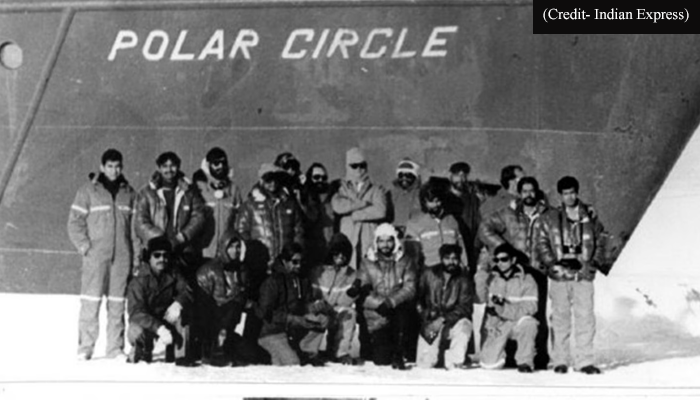
Aboard the MV Polar Circle, the ship left from Goa in 1981
India, as a free, sovereign nation, is less than a century old, i.e., 79 years old, to be precise. And while several countries are as old as India, the evolution that the country has undergone in eight decades is truly commendable. Be it becoming a nuclear-powered state, space travel, or, in this article’s case, reaching Antarctica far off from Asia, India has ticked off major milestones across categories.
Speaking about India’s first expedition to Antarctica, the country on this day, i.e., January 9, 1982, reached the site of the South Pole for the first time. To celebrate the milestone, here’s the lesser-known story of one of India’s major scientific expeditions on snow.
The backdrop
As per an Indian Express report, India set foot on Antarctica for the first time in 1982, but Antarctica was on the nation’s mind since the 1960s, when other countries were trying to establish military control in the region. Fortunately, in 1959, 12 countries signed the Antarctic Treaty, which prohibited any kind of military operation in the region.
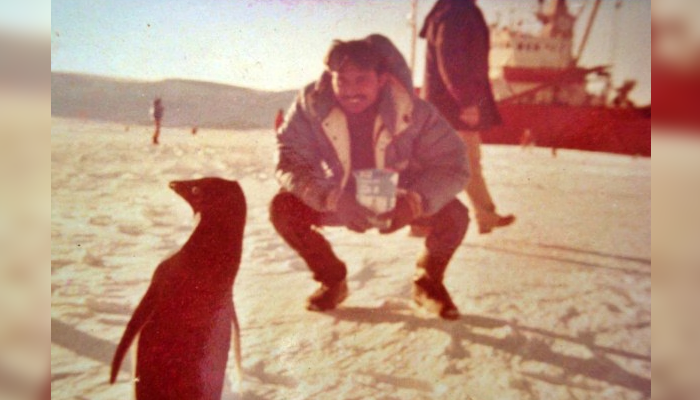
(Credit- Indian Express)
Although India wasn’t part of that group, Dr. Giriraj Singh Sirohi, an Indian biologist, spent 100 days at the McMurdo Station in the South Pole as part of the United States Antarctic Research Program. The same year, Indian meteorologist Lt. Ram Charan went to the Wilkes Station with the Australian National Antarctic Research Expeditions.
Formation of the Department of Ocean Development
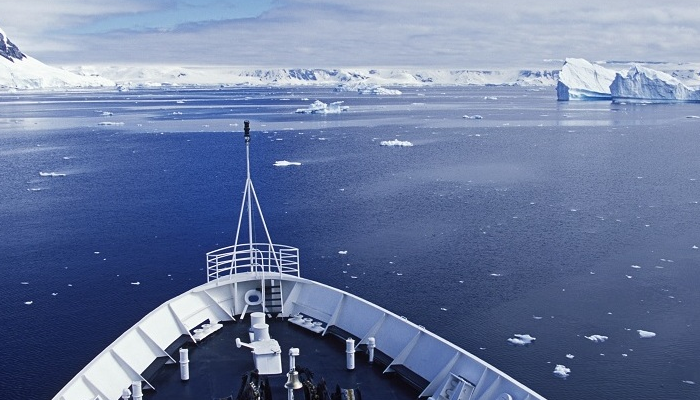
Such visits to Antarctica sparked an interest in exploring the snow desert, and then Indira Gandhi’s government formed the Department of Ocean Development in May 1981. The Indian Express article reports that Operation Gangotri was the name of the mission, and a chartered vessel was hired from Norway to take the Indian expedition team. Not to forget, diplomacy with NATO nations was also put to use to prevent the news from leaking.
Training for what?
Led by marine biologist Dr. S. Z. Qasim, a crew of 21 was handpicked from various institutions, which included oceanographers, meteorologists, biologists, geologists, a geophysicist, a radio communication expert, and several navy personnel. However, none of them were told about where they were heading and for what sort of mission.
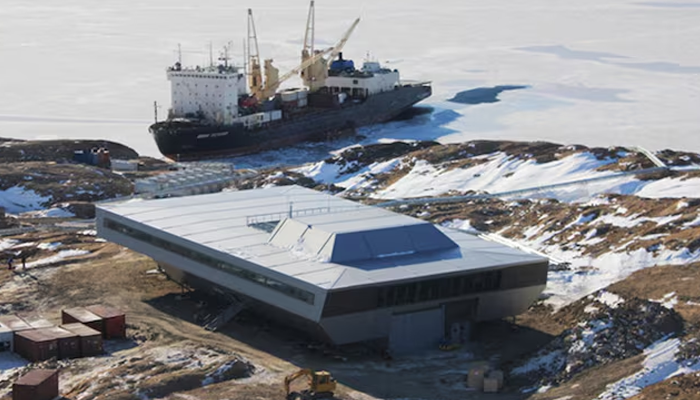
Speaking to the Indian Express, Dr. Amitava Sengupta, a radiophysicist and a member of the first expedition, revealed, “We were also taken around the Bay of Bengal for seven days. There were six or seven of us who had to be trained, and because this was top secret, the trainers were not allowed to know what we were going to be trained for. So, he (the ship’s captain) gave us all kinds of training, even how to use a p*stol. They thought we were being trained for some secret offensive operation. We were not allowed to tell any of this outside. We couldn’t tell our wives. We felt like we were in a James Bond movie.”
A month-long journey
The team left from Goa on December 6, 1981, and set foot on Antarctica for the first time on January 9, 1982. For several foreign nations, the news of India reaching Antarctica wasn’t a pleasant one. For example, the Indian Express article reports British magazine ‘New Scientist’ publishing a story about the expedition with the headline, “Indians quietly invade Antarctica.”
In 1983, India set up its first base station named Dakshin Gangotri, followed by Maitri in 1989 and Bharati in 2012, and the upcoming new station, Maitri II, is likely to replace Maitri soon.