India Gets its National Anthem on this day : From Bollywood to Sports Stadiums, How Jana Gana Mana Got Modern Makeovers - AR Rahman, Vishal-Shekhar & Viral Remixes
- Devyani
- 8 months ago
- 4 minutes read

52 seconds that hold a billion of us together, even when the beat drops.
Let’s be honest. For a long time, the National Anthem was something you stood still for. It was the crackle of a school assembly loudspeaker, the shuffling of feet in a cinema hall, the solemn, rigid reverence of a government function. And it was beautiful, yes. But it was distant. It was a hymn from 1950, preserved in amber.
(@thebetterindia/Instagram)
But something shifted. I can’t pinpoint the exact Tuesday it happened, but somewhere between the turn of the millennium and the rise of the Virat Kohli era, Jana Gana Mana stopped being just a protocol. It became a feeling. It got loud. It got remixed. And today, on the anniversary of the day it officially became ours (January 24, 1950), it’s worth asking: how did a poem by Tagore become a stadium banger?
The Rahman Reset
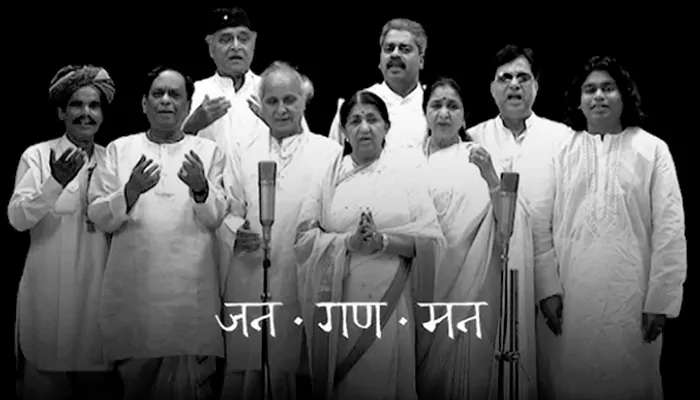
If you were around in 2000, you remember. That was the year AR Rahman and Bharat Bala decided that patriotism needed a bassline. They didn’t just record a song; they bottled a mood.
Before that, we had the military bands. But Rahman gave us Lata Mangeshkar standing in the wind, her voice fragile and iron-strong all at once. He gave us Bhimsen Joshi and wildly different textures of Indian voices colliding into a single harmony.
(@reels.talkies/Instagram)
It wasn’t stiff. It was intimate. It was the first time many of us felt that goosebump-inducing "current" that comes from the melody itself, rather than just the duty of it. That album, Jana Gana Mana 2000, did the impossible: it made the anthem cool. It took it out of the textbook and put it into our Walkmans.
When the Stadium Sings Back
(@icc/Instagram)
Fast forward a decade or two. The real "modern makeover" didn’t come from a studio. It came from the bleachers. You have to credit the energy of modern Bollywood composers like Vishal-Shekhar for shifting the sonic landscape of patriotism. They didn't just remix the anthem; they injected a high-octane adrenaline into the idea of India. Their sound - heavy on drums, unapologetic, loud - mirrored a new India that wasn’t afraid to make noise.
(@music_ki_duniya__1213/Instagram)
And you see it now in sports. Watch a cricket match at Wankhede or Eden Gardens. When the anthem starts, the music fades out, and 50,000 people take over. It’s messy.
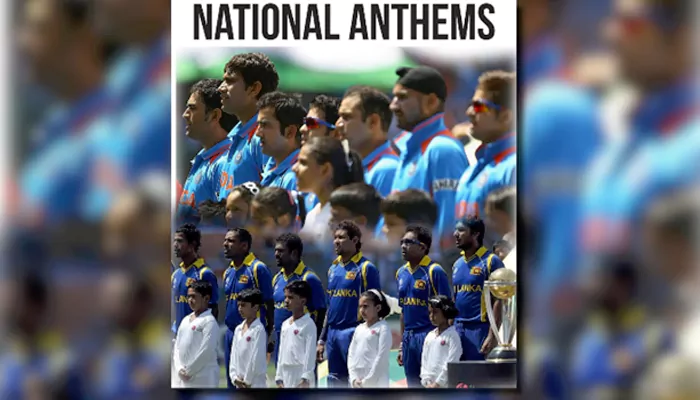
It’s off-key. It’s loud enough to rattle your ribcage. That acapella roar? That’s the modern remix. It’s not about getting the notes right; it’s about claiming the song. It’s a transition from "I am singing this because I have to" to "I am singing this because I am here."
The Viral Age and the Purists
The Silent Anthem featuring speech-impaired students performing in sign language
(@officialsocialsamosa/Instagram)
Of course, the internet had to get involved. We’ve seen everything from the sublime to the questionable. There was the "Silent Anthem" - a video featuring kids with hearing impairments performing the anthem in sign language - which arguably hit harder than any orchestral version ever could. Then you have the viral instrumental covers, like the Iranian girl playing it on the Santoor, proving that the melody travels across borders without needing a passport.
(@indians/Instagram)
Sure, the purists get nervous. Every time a new "version" pops up on YouTube, someone in a comment section yells about sanctity. And I get it. You don’t want to turn a prayer into a pop song. But isn’t there something electric about a teenager in a bedroom in Ohio or a garage band in Pune trying to find their own connection to those lines?
The 52-Second Glue
So here we are, 76 years later. The song that was adopted on this day in 1950 has survived remixes, rock versions, and cinema bans. It has evolved from a gentle Bengali poem into a thunderous declaration.
(@wildvoiceschoirindia/Instagram)
Maybe that’s the point. A National Anthem isn’t supposed to be a museum piece. It’s supposed to be alive. It’s supposed to sound like the traffic outside, the cheering in the stadium, and the quiet humming in a kitchen. It changes because we change.
And honestly? As long as it still makes the hair on the back of your neck stand up when the last note hits, they can remix it all they want. It’s still ours.