Charlie Chaplin’s Birthday: The Fascinating 1931 Clash When The Iconic Tramp Debated Mahatma Gandhi
- Devyani
- 1 month ago
- 2 minutes read
One wanted machines to liberate the working class. The other saw the spinning wheel as salvation. It was brilliantly awkward.
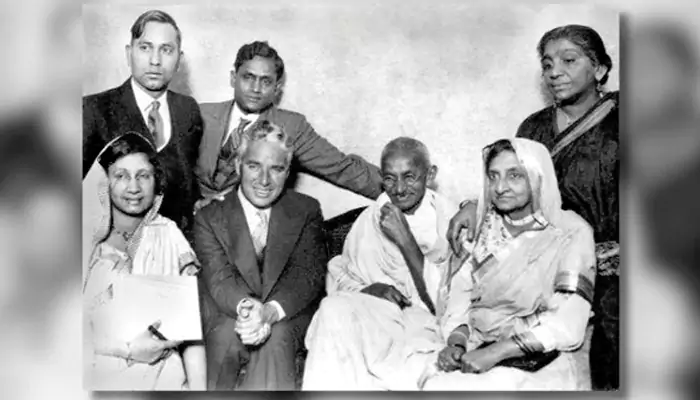
It was 1931, somewhere in the murky damp of London’s East End. Two of the most recognizable faces on the planet finally sat down together inside a rather unassuming house. The funny thing? Mahatma Gandhi had absolutely zero clue who Charlie Chaplin was. I believe someone actually had to quickly whisper to the Mahatma that this fellow was a famous "funnyman" before he even agreed to the meeting.
The Loom Meets the Lens
Chaplin didn't waste time on pleasantries. He basically went straight for the philosophical jugular. The actor, a guy deeply scarred by the grinding gears of Victorian poverty - and the genius who would eventually direct Modern Times - just couldn't wrap his head around Gandhi’s strict boycott of modern machinery.
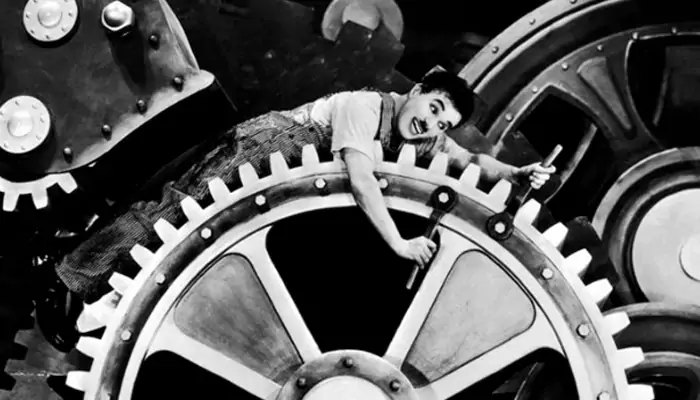
To Chaplin’s mind, machines were the ultimate liberators. They were supposed to free humanity from grueling, back-breaking drudgery. Less labor, more time to actually live. It makes total sense on paper, doesn't it?
A Different Kind of Math
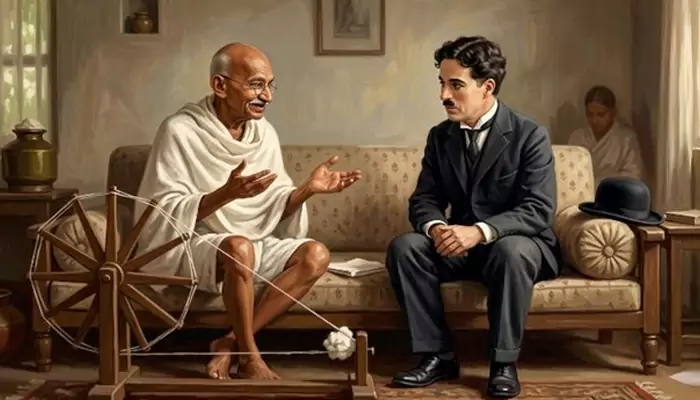
Gandhi, however, wasn't having any of it. He patiently, probably with that characteristic toothless smile, dismantled Chaplin’s Western-centric utopia.
The spinning wheel wasn't anti-progress. It was pure survival. Gandhi explained that India’s reality was fundamentally different. Yes, machines save labor. But when you have millions of starving, colonized people desperate for any kind of work, "saving labor" isn't a luxury. It is, quite literally, an economic death sentence. You can almost picture Chaplin sitting there on the sofa, quietly absorbing this entirely alien worldview. The interaction wasn't exactly hostile - more like two massive intellects operating on completely different frequencies.
The Echo
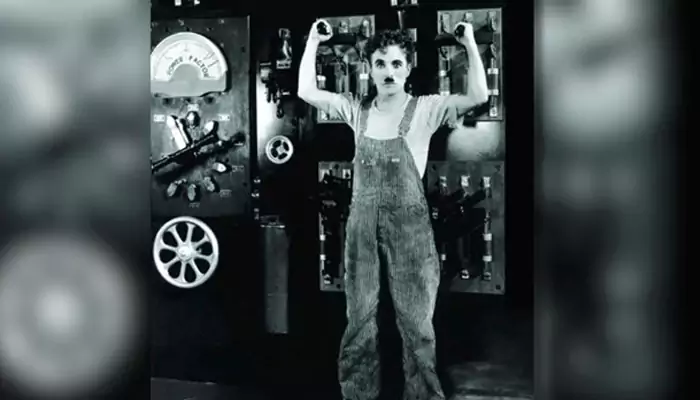
Fast forward five years. Chaplin releases Modern Times, a brilliant, chaotic masterpiece showing a factory worker being literally swallowed whole by the cogs of industrial mechanization.
Did that London meeting plant the seed? Perhaps. It seems their brief, slightly clumsy collision in Canning Town left a lingering mark on the actor. And honestly, looking around today as we constantly argue about artificial intelligence taking over our livelihoods... that 1931 debate feels uncomfortably fresh.
We haven't really solved it, have we? We are just having the exact same argument, over a century later, just with sleeker machines.