Remembering Alfred Hitchcock: The Bizarre Ways Bollywood Turned His Darkest Thrillers Into Singing, Dancing Melodramas
- Devyani
- 5 months ago
- 3 minutes read
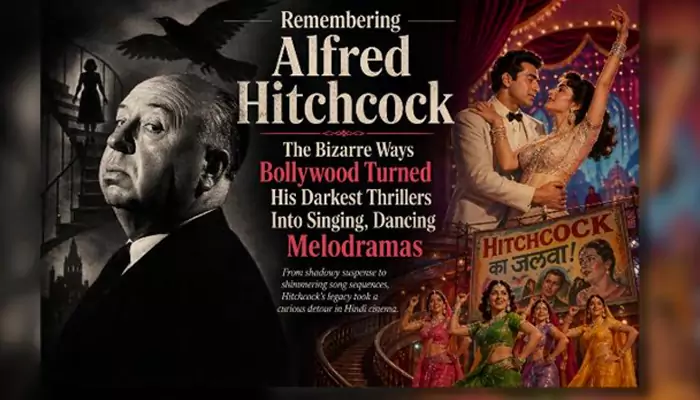
From shadowy suspense to shimmering song sequences, Hitchcock’s legacy took a curious detour in Hindi cinema.
Somewhere between a knife’s glint and a playback singer’s high note, things get reinterpreted. That’s perhaps the politest way to describe how Alfred Hitchcock’s brooding, tightly-wound thrillers found new life in Bollywood. Not quite homage, not exactly imitation. Something else. Something louder.
You take a film like Psycho. Spare, unsettling, almost clinical in its dread. Now imagine adding a romantic subplot, a few duets in the rain, and a moral wrap-up that reassures rather than disturbs. Odd? Maybe. But that’s precisely the alchemy at play.
Borrowed Plots, Local Pulse
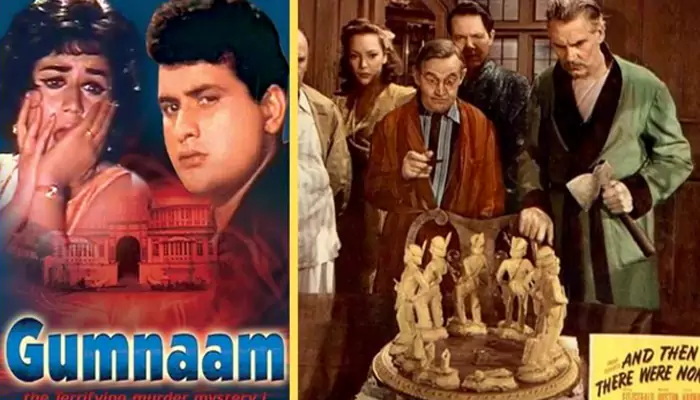
Bollywood has long had a habit of “borrowing” (a generous word, perhaps) from global cinema. Hitchcock, with his knack for suspense and psychological tension, proved irresistible. Films like Gumnaam (1965), loosely inspired by And Then There Were None - yes, Agatha Christie, but filtered through Hitchcockian tension - wrapped mystery in melody.
Or take Teesri Manzil (1966). Not a direct lift, but the DNA is there: crime, mistaken identity, a creeping sense that something’s off. Yet the film doesn’t sit in silence. It grooves. Shammi Kapoor dances. Asha Bhosle sings like the stakes aren’t life or death.
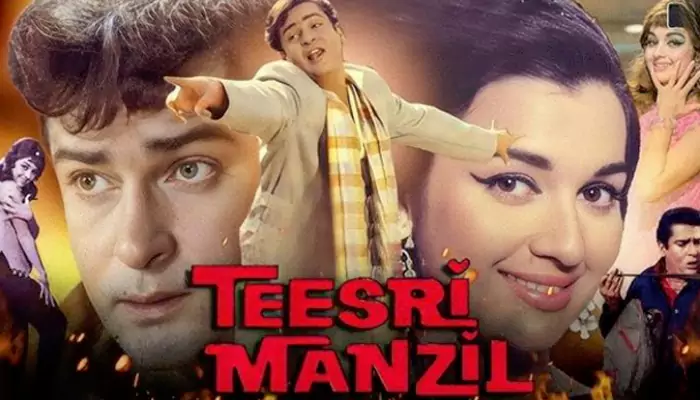
That’s the pivot. In Hitchcock, silence is a weapon. In Bollywood, music is the release valve.
Why the Songs?
It’s easy to scoff - purists often do. But context matters. Hindi cinema has always been a composite art form, where storytelling isn’t confined to dialogue or plot. Songs carry emotion, exposition, sometimes even resolution. Removing them would be like asking a monsoon to skip the rain.
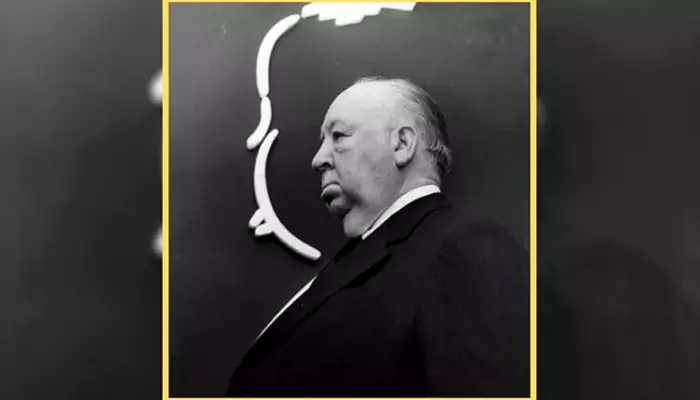
So when filmmakers adapted (or loosely echoed) Hitchcock, they weren’t just copying. They were translating. Cultural remixing, if you like. A thriller in India couldn’t be all shadows and unease; audiences expected rhythm, color, a certain fullness.
And honestly, sometimes it works. Not in the same way, but in its own register.
The Tension That Survived
Despite the tonal shifts, something of Hitchcock endures. The fascination with the “ordinary person in extraordinary danger.” The slow drip of suspicion. The idea that danger isn’t always visible - it lurks in the familiar.
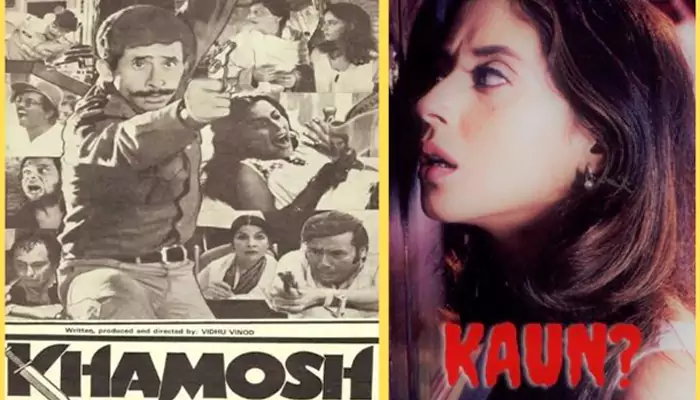
Films like Khamosh (1985) and even later works such as Kaun? (1999) shows a more restrained borrowing, closer in spirit to Hitchcock’s minimalism. Fewer songs, tighter frames, more psychological play. It’s as if the industry occasionally remembers the original blueprint and decides to honor it - quietly.
A Legacy, Slightly Offbeat
Perhaps it’s unfair to measure these adaptations against Hitchcock’s originals. They were never trying to be carbon copies. They were, in a way, conversations - across continents, across sensibilities.
Still, there’s something fascinating about the journey. A scream in a motel shower becomes a chorus in a moonlit garden. Suspense, re-scored.
And maybe that’s the point. Stories travel. They change clothes. They pick up new habits. Sometimes they even break into song.