Birthday Special: The Rebel Leader's Style File: How Netaji Subhash Chandra Bose's Sharp Suits and Military Uniforms Made Him India's First Fashion Icon
- Devyani
- 8 months ago
- 4 minutes read
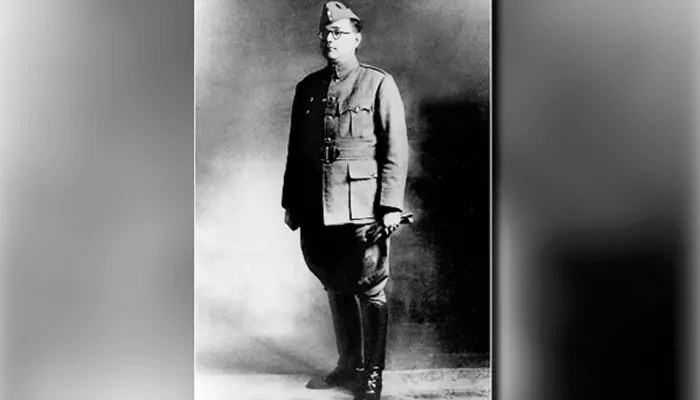
The man who stared down an empire didn’t just wear a uniform; he weaponized it.
History books have a bad habit of flattening people. They turn flesh-and-blood revolutionaries into sepia-toned statues, stiff and silent. But Subhash Chandra Bose? He was never silent, and he certainly wasn't stiff - unless you’re talking about the starch in his collar.
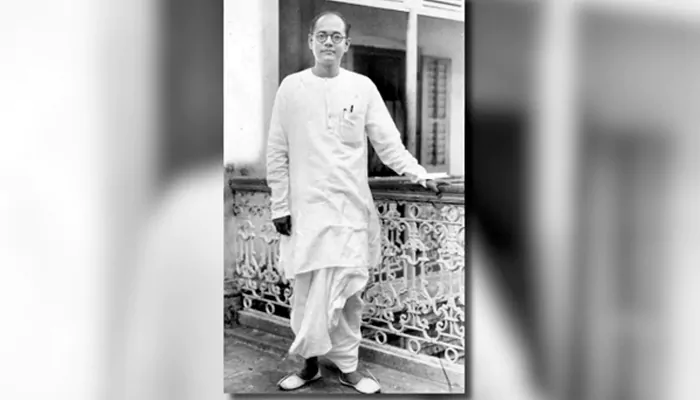
Today, on his birthday, we usually talk about his military tactics or his mysterious disappearance. But let’s zoom in a bit. Let’s look at the fabric, the cut, the sheer audacity of his wardrobe. Because before he was "Netaji," he was a man who understood something crucial: power isn't just taken; it’s projected.
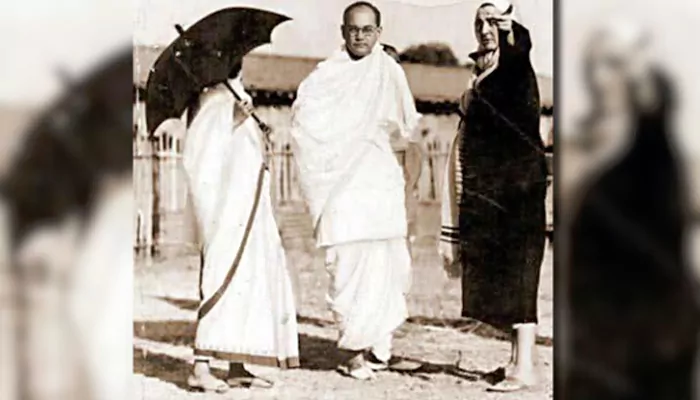
When you look at photos of the Indian freedom struggle, there is a lot of khadi. It’s beautiful, symbolic, and humble. It says, "I am one with the people." Bose respected that, sure. But his style said something else entirely. It said, "I am your equal. Actually, I might be your superior."
The Psychology of the Greatcoat
In the early 1940s, while the world was tearing itself apart, Bose was in Berlin, then Tokyo, building an army from scratch. He wasn't just recruiting soldiers; he was building a brand. The British officers in India wore their uniforms like armor - polished boots, Sam Browne belts, peaked caps angled just so. It was designed to intimidate.
So, what did Bose do? He didn't reject the uniform; he appropriated it.
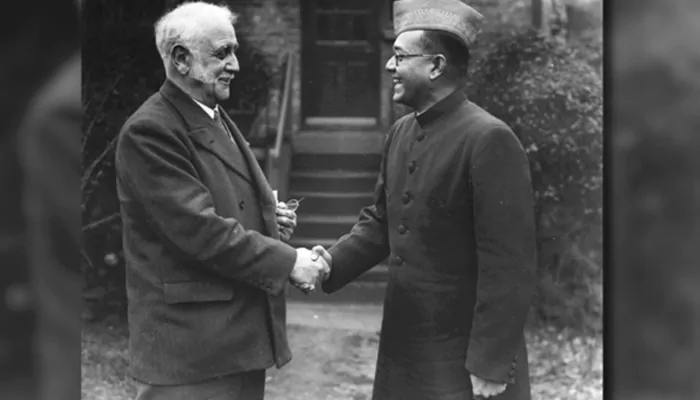
Labour politician and editor of the Daily Herald, George Lansbury greeting Subhas Chandra Bose Indian Nationalist leader and supporter of the Axis in WW II. (Image: Getty Images)
He stepped into high boots and breeches. He donned the greatcoat. When he stood before the Indian National Army (INA), he wasn't dressed like a "native rebel" in the eyes of the colonial gaze. He was the Supreme Commander. That visual shift was psychological warfare. By adopting the military aesthetic of the oppressor - and wearing it better, frankly - he shattered the visual hierarchy of colonialism. He wasn't asking for freedom; he was dressed to seize it.
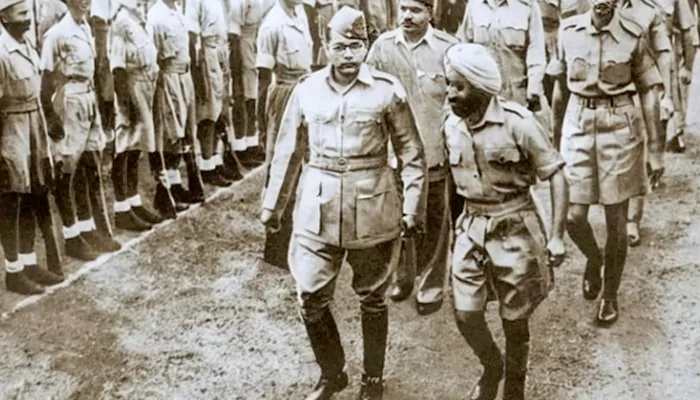
A uniform that commands respect
Beyond Khaki: The European Suit
But before the boots, there were the suits. We often forget the Bose of Vienna and Berlin. The man who could walk into a European salon and hold court in fluent German. His suits were sharp, tailored, European cuts. This wasn't vanity (okay, maybe a little vanity - the man knew he looked good). It was diplomacy.
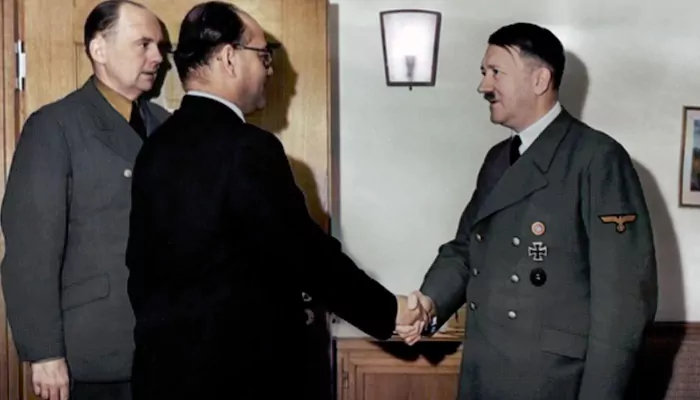
Netaji meets Hitler
To negotiate with the Axis powers - Hitler, Tojo, Ribbentrop - you couldn't look like a supplicant. You had to look like a statesman. The crisp lapels, the heavy wool overcoats, the fedoras - it was a visual language that demanded to be taken seriously at the high table of geopolitics. He was telling the world that India was modern, capable, and ready to govern itself.
The Spectacles That Saw Everything
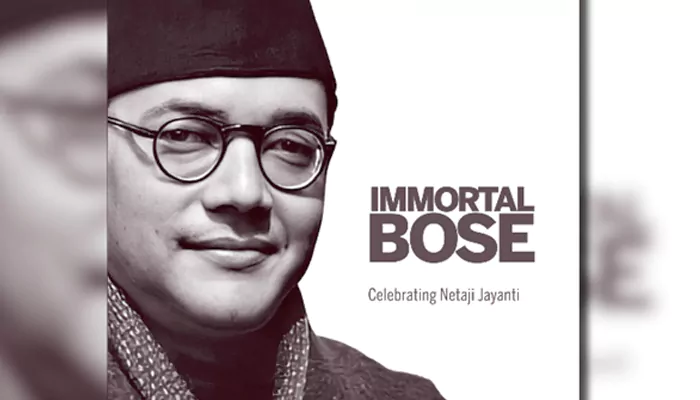
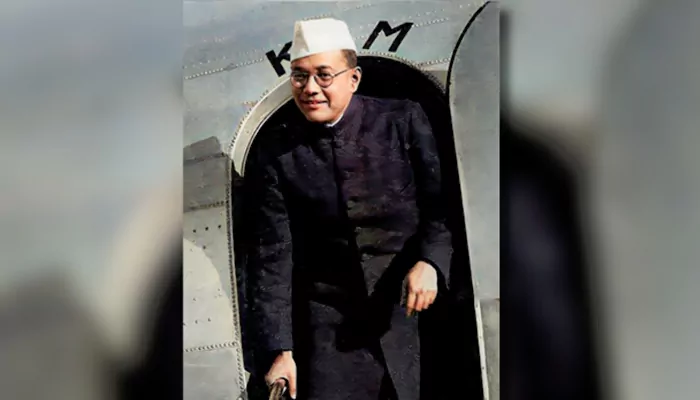
And then, the glasses. Those iconic round frames. In an era where leaders often hid their frailty, Bose made his spectacles part of his persona. They gave him an intellectual edge, a professorial seriousness that balanced the military grit. It’s a look that says, “I have read Clausewitz, and I have also read the Vedas.”
They weren’t just functional; they were a trademark. You see a silhouette with those glasses and a cap today, and you don’t need a name tag. You know who it is.
A Legacy Stitched in Defiance
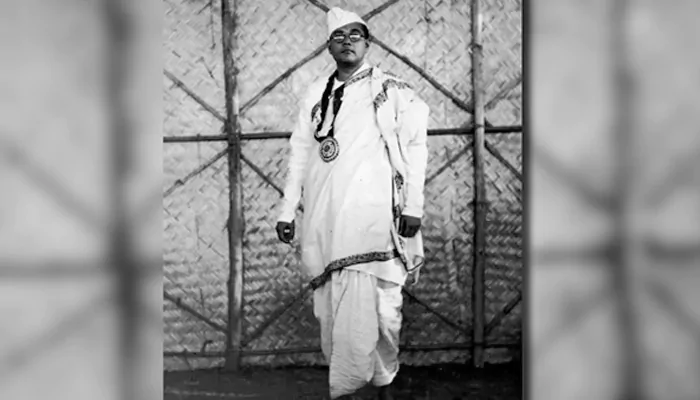
So, why does this matter now? Because in a world of fast fashion and fleeting trends, Bose’s style reminds us that what you wear is a tool. He curated his image with the precision of a film director. He knew that to lead an army of hungry, tired, desperate men against the mightiest empire on earth, he had to look invincible.
He didn't just dress for the job he had; he dressed for the country he wanted to build. Disciplined. Modern. Unafraid. Happy Birthday, Netaji! You wore it well.