
The Emergency Alert You Love to Hate Is Taking a Break: Understanding the Centre's Decision on Cell Broadcast Messages
- Soham Halder
- 3 months ago
- 4 minutes read
.webp)
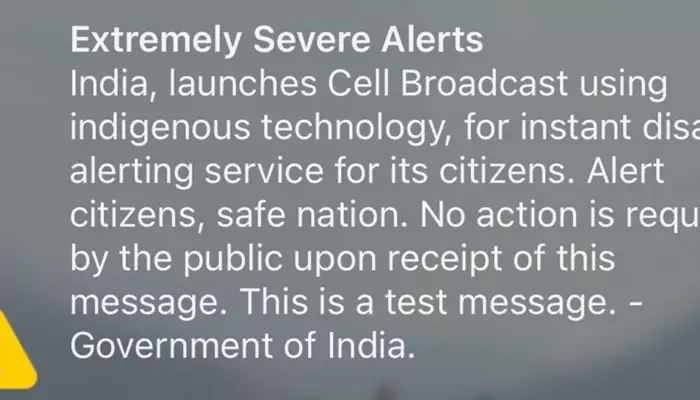
If you own a smartphone in India, chances are you have experienced it at least once, a sudden loud alert tone interrupting a meeting, a phone call, a movie, or even a peaceful afternoon. Over the past few years, emergency test alerts sent through the Cell Broadcast System became a familiar, and sometimes frustrating, part of daily life.
Now, the Centre has temporarily suspended the cell broadcast service, bringing a pause to the alerts that often caught users by surprise. While many people may welcome the break, the decision has also renewed interest in understanding why these messages existed in the first place and why they remain an important part of India's disaster preparedness strategy.
The pause may be temporary, but the conversation around emergency communication is likely to continue.
What Is the Cell Broadcast Service?
The Cell Broadcast System is a technology that allows authorities to send messages directly to mobile phones within a specific geographic area.
Unlike regular text messages, these alerts do not depend on phone numbers or contact lists. Instead, they are broadcast through mobile networks and can reach a large number of users almost instantly.
The system is designed to deliver urgent information during emergencies such as natural disasters, severe weather events, public safety threats, or other critical situations.
Its main purpose is simple: ensure important information reaches people quickly when time matters most.
Why Were People Receiving Test Alerts?
Many of the alerts people received in recent years were part of testing exercises. Before relying on any emergency communication system during a real crisis, authorities need to verify that it works properly across different devices, networks, and regions. These tests helped identify technical issues and improve the reliability of the service.
While the alerts were intended to strengthen preparedness, they often generated mixed reactions. Some users appreciated the effort, while others found the unexpected sounds disruptive or annoying. The temporary suspension may offer relief to those who were tired of frequent testing notifications.
Why Emergency Alerts Matter
Although many people associate these alerts with inconvenience, their importance becomes clear during emergencies. Natural disasters, floods, earthquakes, cyclones, and other crises often require immediate public action. In such situations, traditional communication channels may not be fast enough.
A cell broadcast message can reach millions of people within seconds, providing instructions that could help protect lives and reduce confusion. The effectiveness of such systems has been demonstrated in several countries where emergency alerts have played a key role during disasters.
Public Annoyance vs Public Safety
The debate surrounding cell broadcast messages highlights a common challenge in public safety initiatives. People generally support emergency preparedness in principle, but repeated testing can sometimes lead to frustration. Loud alert sounds, especially when received unexpectedly, can feel intrusive.
However, experts often point out that emergency systems must be tested regularly to remain effective. A system that works flawlessly during testing is more likely to perform well when a real emergency occurs. Finding a balance between public convenience and public safety remains an ongoing challenge.
What the Temporary Suspension Means
The Centre's decision to temporarily suspend the service does not mean the technology is being abandoned. Rather, it represents a pause in the current phase of testing and implementation. The broader goal of building a reliable emergency communication network remains unchanged.
As technology evolves and systems improve, future alert mechanisms may become more targeted, efficient, and user-friendly. The long-term objective continues to be ensuring that critical information can reach citizens quickly when required.
A Reminder of the Technology Around Us
The discussion around cell broadcast alerts serves as a reminder that many public safety systems operate quietly in the background until they are needed.
Most people rarely think about emergency communication infrastructure during normal times. Yet these systems can become extremely valuable during crises. Their effectiveness often depends on preparation long before an emergency occurs.
Final Thoughts
The temporary pause in cell broadcast messages may come as welcome news for smartphone users who grew tired of unexpected alert tones. However, the decision also offers an opportunity to appreciate the purpose behind the system.
While emergency alerts may occasionally feel inconvenient, they exist to support public safety during situations where every second matters. The challenge moving forward is not whether such systems should exist, but how they can be improved to balance effectiveness with user experience.
After all, the alert you ignore today could be the warning that matters tomorrow.