Sharmila Tagore at 80: Celebrating a Legendary Career Through 10 Timeless Films and Iconic Songs
- Devyani
- 3 months ago
- 3 minutes read

Turning 80, Sharmila Tagore’s film legacy reads like a time capsule - spanning art house gems, breezy romances, and ballads audiences still hum without noticing.
Sharmila Tagore made her debut when she was barely 14, in Satyajit Ray’s “Apur Sansar” (1959), where her silent, luminous Aparna made critics take notice. Most actors ease in, but that's not Sharmila. Ray would cast her again, notably in “Devi” (1960), reimagining what a woman’s frailty (and grit) looked like on film.
Reinventing the Heroine
Sharmila Tagore and Shammi Kapoor in Kashmir ki Kali. Deewana hua badal refuses to age - a timeless classic indeed!
(@oldbollywoodlover/Instagram)
In “Kashmir Ki Kali” (1964), the “Diwana Hua Badal” girl with blown-out eyeliner and fresh snow flirted playfully - a far cry from her earlier work. Only three years later, she donned a swimsuit in “An Evening in Paris” (1967), a pop-culture bombshell before Bollywood was ready.
The Golden Hits
Prolific in both Hindi and Bengali cinema, her signature films crisscross decades:
Sharmila Tagore in ‘Apur Sansar’ - a legacy film by Satyajit Ray
(@nobrodersshop/Instagram)
- Apur Sansar (1959): Gentle and layered, Aparna’s quiet love story makes an unlikely modernist classic.
- Devi (1960): As Doyamoyee, caught between mysticism and ruin, she delivers haunting grace.
- Anupama (1966): The battered, withdrawn Uma - a sensitive turn in Hrishikesh Mukherjee’s heartbreak anthem.
- Kashmir Ki Kali (1964): Classic Rom-com with Sharmila’s twirls and Shammi’s antics.
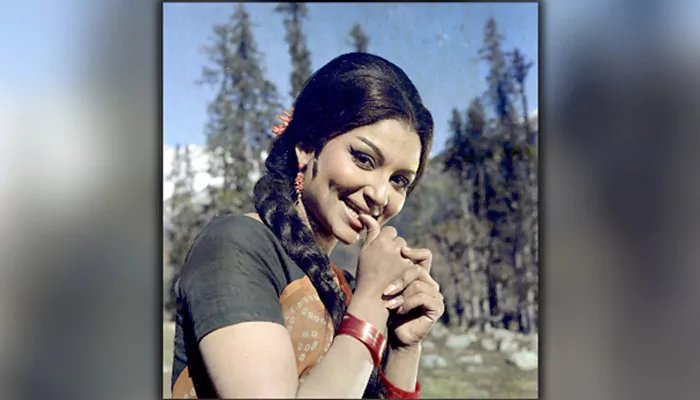
Sharmila Tagore in Aradhana
- Aradhana (1969): Sharmila plays an innocent lover and a single mother. Tracks such as “Kora Kagaz Tha Yeh Man Mera,” “Roop Tera Mastana” still sound fresh.
- Safar (1970): Tension-filled, understated performance as the fragile Neela.
- Amar Prem (1972): “Raina Beeti Jaye” - melancholic grace as Pushpa, every line etched in popular memory.
Sharmila Tagore and Rajesh Khanna in Amar Prem
- Mausam (1975): Sharmila plays a double role - complex, sometimes explosive. The “mainstream” film that won her a National Award.
- Chupke Chupke (1975): Classic comedy. With Dharmendra, Tagore proves comic timing is another ace.
- Gulmohar (2023): A comeback after 13 years - Tagore, now family matriarch, peels back layers of loss and reunion.
Songs That Stayed
From Chupke Chupke
Try not humming “Roop Tera Mastana” or “Kora Kagaz Tha Yeh Man Mera” (Aradhana), “Diwana Hua Badal” (Kashmir Ki Kali), or “Raina Beeti Jaye” (Amar Prem), and see how long you last. “Ab Ke Sajan Sawan Mein” (Chupke Chupke), “Do Din Ki Zindagi” (Satyakam), and “Saara Pyaar Tumhara” (Anand Ashram) all showcase that breezy poise and a kind of longing found nowhere else.
Not Just a Star, a Shape-Shifter
She broke set rules: first Indian actress to appear in a swimsuit, first to effortlessly switch between Bengali art house, big-banner Bollywood, and later, charming OTT matriarchs. The range? Both “mother to Rajesh Khanna” and “mod heroine in Paris” - you’d be hard-pressed to find a contemporary who tried as much, so bravely.
Eighty years on, Sharmila Tagore’s career isn’t just longevity. It’s that rare mix of risk and rhythm - the same qualities that make “Kashmir Ki Kali” as re-watchable as “Mausam.” If “timeless” is overused, maybe for her, it finally fits. Wishing a very Happy Birthday to you, Sharmila!