Remembering Pandit Ravi Shankar: Discover His Raga Recordings That Changed Indian Classical Music Forever
- Devyani
- 10 months ago
- 3 minutes read
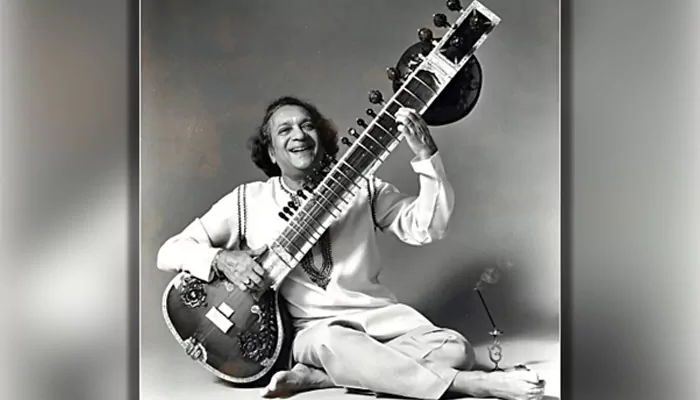
A sitar, a stage, and a sea of possibility - Pt. Ravi Shankar’s raga masterworks forever altered what Indian classical music could sound and mean.
Some musicians preserve tradition. Ravi Shankar, though, stretched it until the old world sang something utterly new. Upending established approaches, he introduced innovative raga structures, reworked the sitar itself (adding sympathetic strings for a richer, more haunting palette), and invited tabla players to step forward with jaw-dropping solos, not just accompaniment.
Pandit Ravi Shankar and Table maestro Ustad Alla Rakha performing at the Monterey International Pop Festival, 1967
(@thelegendsofmusic/Instagram)
At his concerts (Carnegie Hall, Monterey Pop, Woodstock - wherever!), you’d often get Bhairavi or Yaman at sunrise, or a raga from his own hand - like Parameshwari or Rasiya - which blended South Carnatic cycles with North Indian melodic lines. People walked in whispering about “exoticism;” they left on fire for something altogether freer.
The Recordings That Changed the Game
Ravi Shankar’s “The Sounds of India” (1958)
Find the full album here:
Shankar’s discography is a living archive. “The Sounds of India” (1958) introduced U.S. and U.K. listeners (hello, Beatlemania’s raga phase) to sonorous alap, quicksilver jor, and rapid-fire jhala, compressing a typical all-night raga session into a single LP.
“Ragas and Talas” - Ravi Shankar Collection
(@WorldInstrumentsMusic/YouTube)
He’d follow with “Ragas & Talas” (1959) and “India’s Master Musician” (1959), each delving further: intricate Raga Jog, meditative Yaman Kalyan, and mystical Malkauns - with jaw-dropping improvisation of the norm. “West Meets East,” a series with Yehudi Menuhin, let two traditions converse as equals - sitar and violin riffing off each other, not a diluted hybrid but something richer.
“West meets East” - A Ravi Shankar and Yehudi Menuhin Collaboration
(@paperpotgoods/Instagram)
Genius, Globally Transmitted
Volume 1 of “The Living Room Sessions” - a musical album by Pandit Ravi Shankar
(@marcoalbani9865/YouTube)
Zoom forward - “The Living Room Sessions” (2011–2012) are stripped back, no huge audience, just Ravi coaxing stories from strings, sometimes pausing mid-riff. Many cite “Raga Puriya–Kalyan” (from the GRAMMY-winning 2001 album “Full Circle”) as a desert-island recording - emotion, geometry, instant time travel.
Pandit Ravi Shankar and Ustad Ali Akbar Khan (renowned sarod player) in a jugalbandi
(@hcmaeofficial/Instagram)
Crucially, Shankar wrote thirty-one ragas himself, including Bairagi, Rasiya, and Banjara. Not just variations - new frameworks for melody and spirit, now considered modern standards. Plus, his dual solos with Ali Akbar Khan? They’ve set the bar for jugalbandi - two soloists as equals, redefining what partnership means onstage.
Generation-Spanning Ripples
When The Beatles’ George Harrison became a student of Pandit Ravi Shankar. Harrison first played the sitar in one of the band’s most popular song ‘Norwegian Wood’
(@thecreativejuicee/Instagram)
If you’ve whistled Beatles tunes with a drone in the background, or heard sitar in jazz or trance, you’ve felt his shadow. George Harrison called him “the Godfather of World Music” for good reason. Shankar’s scale exercises, sargam sessions, and patient teaching - whether at the Kinnara School of Music or far from home - are preserved in recordings still sampled by contemporary musicians.
What’s left behind? A living vocabulary. Indian music that’s endlessly exportable and also, somehow, always coming back home, changed just enough. That’s not just legacy. That's a revolution. Remembering the maestro on his 13th death anniversary, may his divine souls forever rest in melody.