William Shakespeare’s Birthday: The Hilarious, Dramatic 'Desi' Insults We Unknowingly Stole From the Bard
- Devyani
- 5 months ago
- 3 minutes read
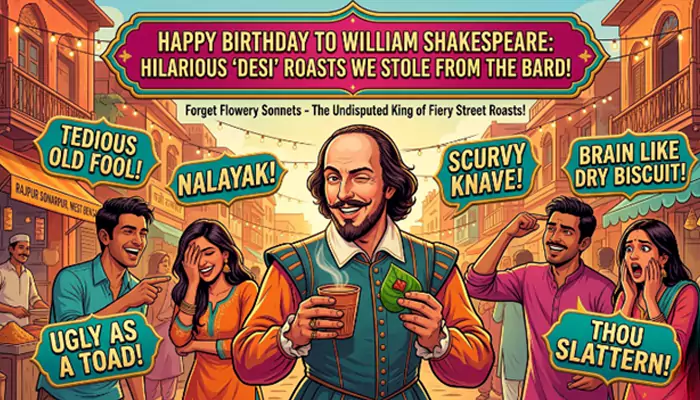
Forget the flowery sonnets - the Bard of Avon was actually the undisputed king of the fiery, street-level roast.
Honestly, if you think about it, the man was an absolute menace.
April 23rd rolls around, and suddenly everyone starts quoting Romeo and Juliet like they didn't sleep through high school English. We completely gloss over William Shakespeare’s true genius, though. It wasn't romance. It was the unapologetic savagery.
We often credit authors like Kafka or Dostoevsky with capturing our deepest, most profound existential dread. Yet, when it comes to pure, unadulterated petty drama? The Bard holds the crown. And the funniest part is how seamlessly his 400-year-old shade mirrors our everyday desi comebacks.
The Original "Angutha Dikhana"
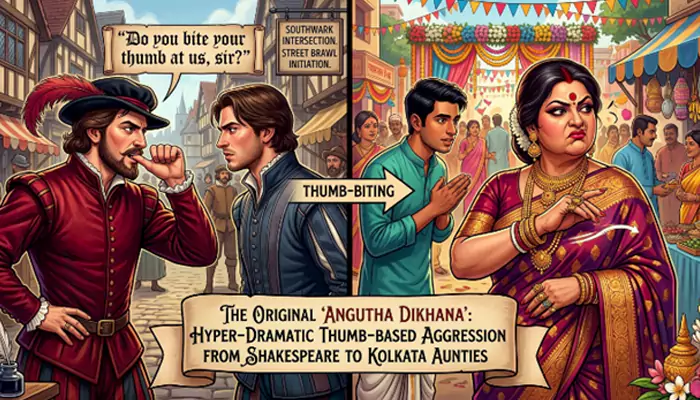
You know that dramatic auntie who abruptly turns her face away and scoffs when you don't greet her properly at a wedding? Or the classic angutha dikhana (showing the thumb) when someone spectacularly betrays you?
Shakespeare literally wrote the playbook on thumb-based aggression. In Romeo and Juliet, the opening street brawl starts with a guy biting his thumb at his rivals. "Do you bite your thumb at us, sir?" It sounds terribly polite to our modern ears, but back in the 1590s, that was the equivalent of a loud, highly offensive hand gesture during a traffic jam at a South Kolkata intersection. It carries that exact same flavor of hyper-dramatic, "what are you looking at" energy.
"Pigeon-Liver'd" and Other Animal Slanders
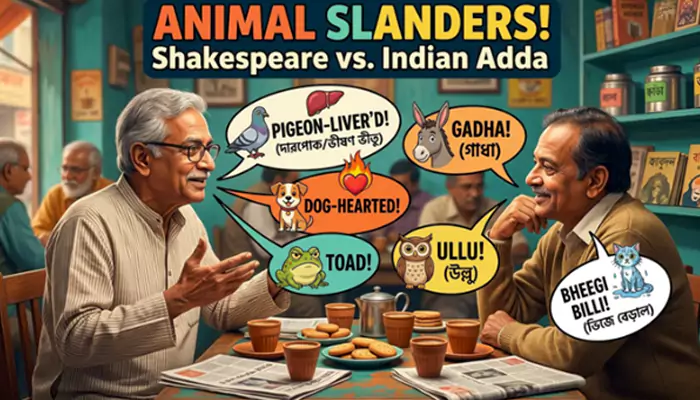
Then there are the wildlife comparisons. We Indians love calling someone a gadha (donkey) or an ullu (owl) when they do something foolish. Shakespeare was doing this constantly, although he leaned a bit more heavily into poultry and amphibians.
Calling someone "pigeon-liver'd" (from Hamlet) is the exact emotional equivalent of calling someone a darpok or a bheegi billi (wet cat). It implies you completely lack the guts to face a difficult situation. He also coined "dog-hearted" and routinely called people "toads." I mean, if you have ever witnessed a proper neighborhood adda devolve into a heated political argument over tea, you have definitely heard variations of these exact animalistic insults flying across the table.
The Master of the "Yo Mama" Joke
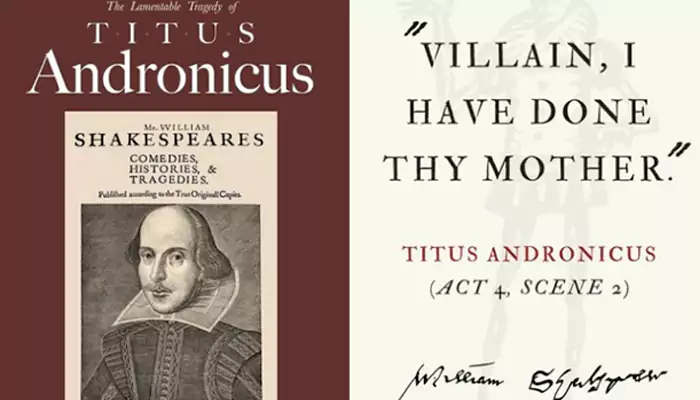
I hesitate to even bring this one up, but he genuinely did it first.
If you thought the classic street-level "teri maa ki..." was a modern invention, you need to think again. In Titus Andronicus, a character is insulted by his enemies, and his comeback is remarkably blunt: "Villain, I have done thy mother."
I remember reading that line for the first time and having to pause my reading completely. Wait, did Shakespeare just drop a "Yo Mama" joke in the middle of a tragedy? He absolutely did, and it remains a masterpiece of sheer audacity.
It just proves that no matter the century, or whether you are wearing a ruffled Tudor collar or a faded kurta, human nature does not change much. We are all essentially just trying to get the last word in.
So, perhaps you should raise a glass to old Will today. Do it not for the poetry, but for giving us the historical permission to be gloriously, creatively petty.


.WEBP)