The Next Pandemic is in a Cage: Why World Wildlife Day is Actually About Human Survival
- Devyani
- 7 months ago
- 3 minutes read
We have all romanticized the tiger, but the actual threat to our future is currently being smuggled in a plastic crate.
I still have a mild flinch reaction when someone mentions Dalgona coffee. Honestly, who doesn't? We spent two years trapped indoors baking banana bread because a microscopic pathogen jumped from a wild animal into a human host. Yet, here we are, approaching another World Wildlife Day, and the mainstream conversation is still mostly focused on adopting panda orphans.
Don't get me wrong - pandas are great. But the stakes are slightly higher than cute Instagram reels.
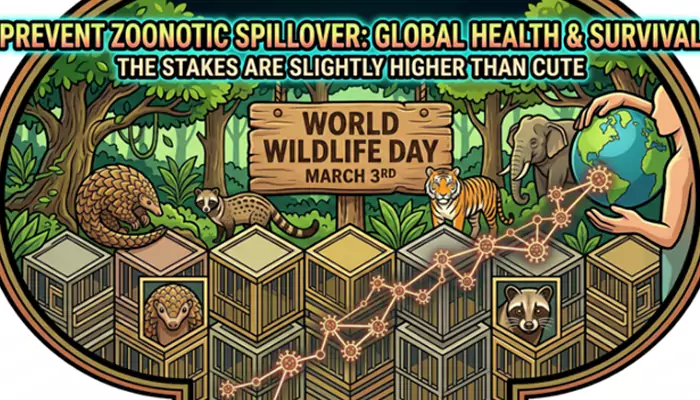
Zoonotic spillover. It sounds like a bad sci-fi trope, something Camus might write if he were exploring epidemiology instead of existential dread. When we bulldoze old-growth forests to build strip malls, or cram pangolins and civets into stacked cages at illegal wet markets, we aren't just committing ecological crimes. We are basically playing Russian roulette with global health.
The Blueprint of a Spillover
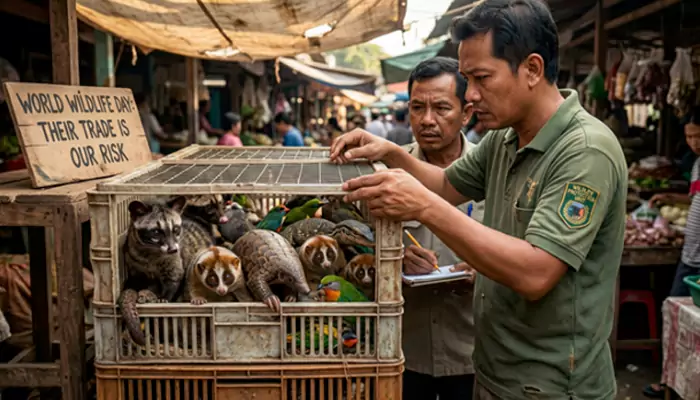
Think about a typical Sunday morning in a bustling Indian fish market. You are haggling over the price of a fresh Katla or Tyangra - it is chaotic, noisy, but relatively safe. Now, take that same frantic energy, but instead of river fish, swap in unregulated, highly stressed exotic wildlife.
Stress sheds viruses. It is just a biological reality. When you mix different species that would never ordinarily cross paths in nature, swap their bodily fluids, and throw humans directly into the middle of the mess, you get 2020 all over again. Pathogens love a crowded, unsanitary elevator ride.
Self-Preservation, Not Just Conservation
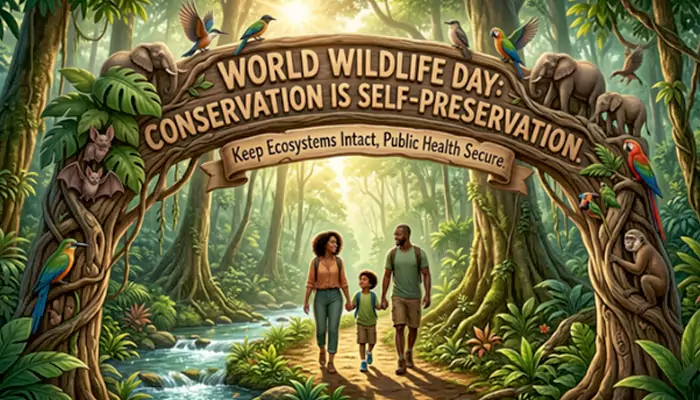
We urgently need to rebrand this whole wildlife conservation thing. Protecting ecosystems isn't just a charity project for tree-huggers. It is arguably the cheapest, most effective public health insurance policy humanity possesses. The United Nations Environment Programme (UNEP) has explicitly stated that tampering with nature and exploiting wildlife are primary drivers of disease emergence.
It seems wildly obvious, right? Leave the bats alone, and they leave us alone. Keep the forests intact, and the viruses stay put.
So maybe today, we skip the generic tiger forwards on WhatsApp. The real conversation isn't really about saving nature for nature's sake. Nature will survive; biology is incredibly stubborn. It will just shake us off like a bad case of fleas if we push it too far.
The cages we need to dismantle aren't just the literal ones holding smuggled reptiles. They are the cognitive ones making us think we are somehow immune to the consequences of our own greed.